What Does "Archive" Mean in Email?
To archive an email means to move it from your primary inbox to a separate mailbox location where you can access it at a later time.
You can use archive to:
- Clear your inbox of emails you’re done with, leaving only actionable messages
- Safely retain emails you may need again instead of deleting them which permanently removes them
- Locate archived emails using an Archive folder or keyword search
Does Archiving Free Up Storage?
The #1 myth when it comes to archiving email is that it frees up storage space. Remember, an archive is a safe place to keep those messages that you may need again down the road. So, yes, archived emails consume space.
The only way to regain storage space is to delete an email, not archive it. And keep in mind that deleted messages are normally sent to a Trash or Deleted Items folder and continue to use up space until the folder is emptied.
There is an exception to this rule if you’re using the classic version of Outlook on Windows and set up AutoArchive which does free up space. You can read more about this in an upcoming section.

How Archiving Works Differently Across Email Providers
Archiving is a specific action available across email providers. However, the way in which archiving works, where the emails go, and whether or not automatic archiving is available depends on your email service provider.
| Provider / client | Where archived emails go | Separate Archive folder? | Frees up storage? | Native auto-archive? |
|---|---|---|---|---|
| Gmail | All Mail (no Archive folder) | ❌ No | ❌ No | ✅ Via filters (web only) |
| Outlook | Archive folder (same mailbox) | ✅ Yes | ❌ No | ✅ Classic Windows only (PST) |
| Yahoo Mail | Archive folder | ✅ Yes | ❌ No | ✅ Via filters (web only) |
| Apple Mail (Mac/iPhone) | Archive folder per account | ✅ Yes | ❌ No | ❌ No (use rules/Clean Email) |
| Zoho Mail | Stays in original folder, marked archived | ❌ No | ❌ No | ✅ By date/count |
The Outlook Archive Confusion Explained
If you’re an Outlook user, then you may see two different archive options, depending on your Outlook version. Let’s clear up any confusion you may have regarding which one to use.
- Archive button: Moves emails to the Archive folder in your mailbox. This feature is available in all Outlook versions and does not free up Outlook storage space.
- AutoArchive: Moves emails to a local PST file on your computer and is automated based on age. The feature is available in the classic Windows Outlook version only; not in the New Outlook, on the web, Mac, or mobile. This option does free up Outlook storage space.
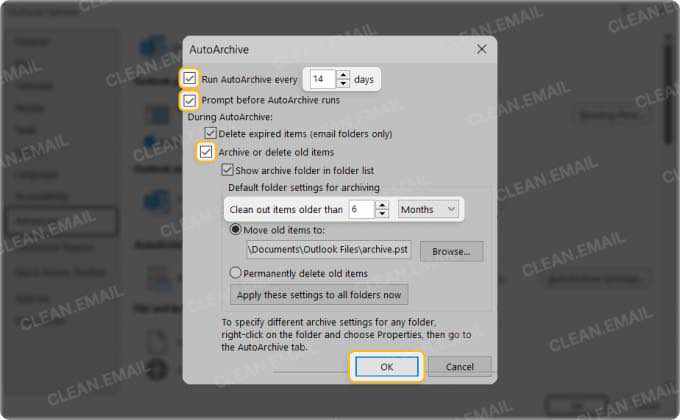
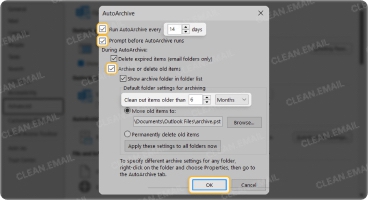
Learn more about how to find archived emails in Outlook along with details on using Outlook AutoArchive.
Archive vs Delete — The Universal Decision Guide
When it comes time to remove an email, you may wonder if you should archive it or delete it. The answer comes by asking yourself, “Will I ever need this email again?”
If the answer is yes or even maybe, then archive it.
If the answer is no, then delete it.
For some common scenarios, review this quick decision table with the suggested action to take. Note that these are not hard and fast rules; you should adjust per your particular situation.
| Email Type | Archive | Delete |
|---|---|---|
| Receipt | ✅ Yes | ❌ No |
| Newsletter | ❌ No | ✅ Yes |
| Completed project thread | ❌ No | ✅ Yes |
| Spam or junk | ❌ No | ✅ Yes |
| Legal document | ✅ Yes | ❌ No |
| Notifications | ❌ No | ✅ Yes |
While archive versus delete is an overarching decision, not a provider-specific one, you can still find more details in our guides for Gmail archive versus delete and Outlook archive versus delete.
Why Did My Archived Email Come Back?
When you archive an email and someone replies to it or a message in the thread, that archived email returns to your inbox.
This isn’t a bug or issue with the system; it’s intentional behavior and applies to the archive action in Gmail, Outlook, and Yahoo Mail.
Your email provider sees this reply as a new message and highlights it in bold in your inbox like your other new unread emails.
Automating Archive — When It Makes Sense
Automatic archiving is a feature you can use to clear messages out of your inbox that you want to save for later, and do so without lifting a finger. You simply set up a rule to automatically archive emails based on conditions.
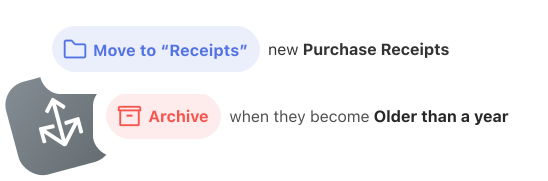
This is a convenient way to keep your inbox clean, especially when you use it for specific types of emails you receive often. For instance, you might auto-archive purchase receipts, old emails based on age, or recurring newsletters that you want to read later.
It’s available with some email providers as a dedicated feature and may even be part of a company retention policy. But you can also use tools like inbox filters to auto-archive in Gmail, Yahoo Mail, and other email services.
To set up automatic archiving on your mobile device, you can check with your particular provider; however, many mobile email apps lack this feature. In this case, you can look at third-party tools like Clean Email which provides Auto Clean for mailbox rules on any device.
Find the Right Guide for Your App
Ready to archive some messages? Here are guides for how to archive emails with the most popular email providers and apps.
Gmail: How to Archive Emails in Gmail and Unarchive Them
Outlook: How to Archive Emails in Outlook
Apple Mail: How to Archive Emails on Mac and Where is Apple Mail Archive?
Yahoo Mail: How to Archive Yahoo Mail to Organize Your Mailbox
iPhone: How To Archive Email On iPhone In 2026
Zoho Mail: Archiving Emails in Zoho Mail
Archive Across Platforms and Providers With Clean Email
As an alternative to archiving with your particular provider or email app, consider Clean Email. This tool serves as a solid archiving solution because of its advanced feature set.
It’s ideal for cross-device automation since Outlook’s AutoArchive is available on desktop only and Gmail and Yahoo Mail filters can’t be created or edited on mobile devices. With Auto Clean, you can auto-archive on any device and with any connected IMAP account.
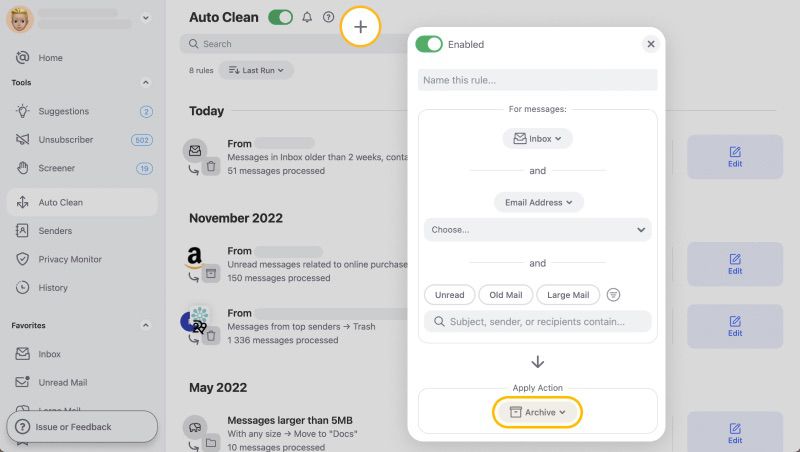
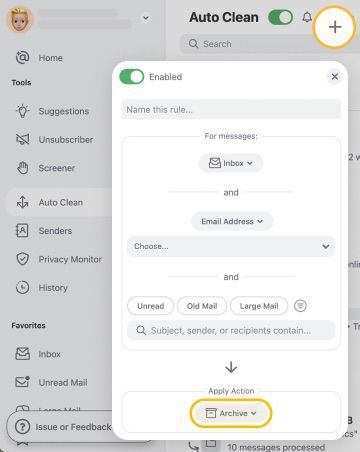
Clean Email also provides a dedicated Archive folder which is a huge advantage over some providers. For instance, finding archived emails in the Gmail web and mobile apps can be time-consuming without such a folder.
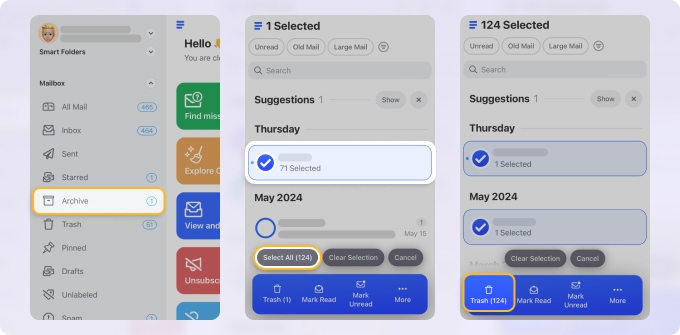
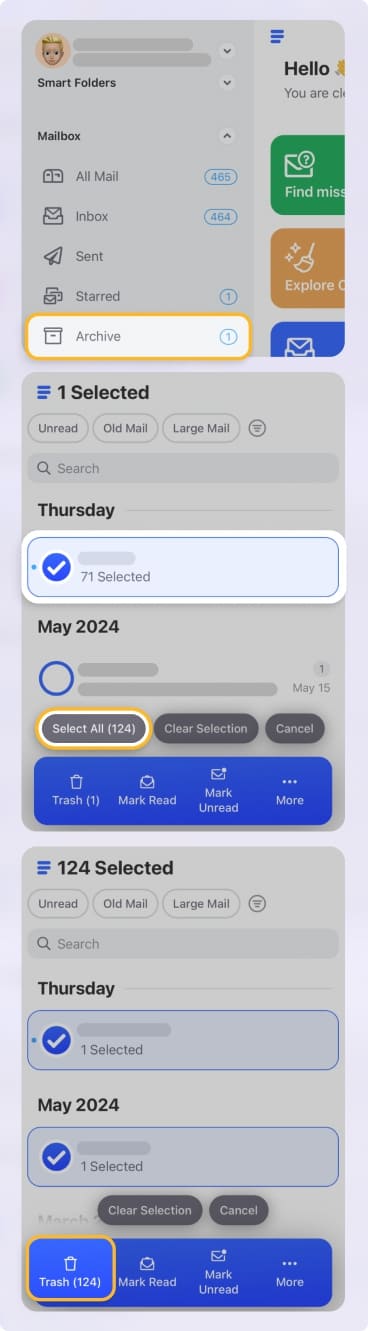
Finally, you can perform bulk actions in Clean Email for more efficient archiving. Whether you have hundreds or thousands of messages, you can mass archive Gmail, Outlook, or Yahoo Mail messages in just a few steps and without any performance impact.
FAQs
What does it mean to archive an email?
Archiving an email removes it from your inbox and places it in a dedicated mailbox area where you can retrieve it later.
Does archiving emails free up storage?
No, archiving emails does not free up storage space. Archived messages are stored for you to view again later which consumes space.
What is the difference between archive and delete?
Archiving an email stows it away in case you need it later. Deleting an email removes it from your inbox, often sending it to the Trash, where it’s automatically and permanently deleted after a certain number of days (the number of days depends on provider).
Why do archived emails come back to my inbox?
When you receive a reply to an archived message or email thread, this returns it to your inbox as a new unread email.
What is Outlook AutoArchive?
The classic version of Outlook on Windows provides an AutoArchive feature for automatically archiving emails based on age. This creates and places the emails in a separate file on your computer at a frequency of your choosing.
Does Gmail have an Archive folder?
No, Gmail does not have an Archive folder. To locate archived emails in Gmail, you must use the Search feature to find them or browse in All Mail.