Gmail Archive Vs Delete: Meanings, Examples And Core Concepts

Written by Sandy Writtenhouse

When managing your inbox, are you unsure if you should archive an email or delete it? We’ll explain the concepts and answer questions like “does archive mean delete,” and if not, “what does archive mean in Gmail?” We’ll then move onto what happens when you archive an email in Gmail, how labels and filters apply, which action actually impacts storage space, and much more.

Gmail Archive Vs Delete: What’s the Difference?

Oftentimes, there’s confusion surrounding the terms “archive” and “delete” in Gmail. Let’s start with basic definitions of each.


Archive

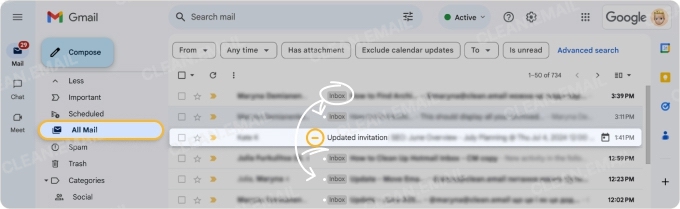
To archive an email in Gmail means that the message is removed from your Inbox, but still accessible any time you need it. When you archive a message, this removes the Inbox label, and emails are then viewable in All Mail, rather than your Inbox.

💡 Tip: Learn more about the differences between the Inbox and All Mail in Gmail.

Delete

To delete an email in Gmail means that the message is moved from its current location to the Trash folder. It remains in the Trash for 30 days before it’s automatically and permanently removed — unless you manually empty the Trash ahead of time.

When to Use Archive Vs Delete in Gmail

If you’re unsure of when it’s best to archive an email in Gmail rather than delete it, here are a few examples.

📌 Archive emails you may need again later. This might include messages with attached files, receipts for important purchases, research you need for reference, and conversations (threads) that may resume.

📌 Delete emails you know you won’t need again. This might include spam and junk, promotional messages, newsletters, and irrelevant or outdated emails.

Archive Vs Mute Vs Mark as Read

While deleting an email in Gmail is the clear choice for unwanted messages, you may be wondering how archiving is different from muting or marking a message as read. After all, these are other options for “quieting” yet retaining emails.

Archive Vs Mute

To mute an email in Gmail means to silence the conversation and archive it. When you mute an email, this moves it from your Inbox to All Mail. While this may sound just like archiving, there is one major difference.

With all of this in mind, mute is a better choice than archive if the conversation is complete and you no longer want to see the replies, but you don’t want to delete the message thread.

Archive Vs Mark as Read

To mark as read for an email in Gmail means to simply remove the bolding in your Inbox and assign an Unread status. When you mark a message as read, this does not move, silence, or attach a label to it. You can use the Mark as Read feature for emails that you’ve reviewed but want to keep in your Inbox.

How to Archive or Delete on Your Device

Now that you know the difference between archive and delete and when it’s best to use each, you’ll need to know how, right? Here’s how to do both on desktop and mobile.

In Gmail on the web, do one of the following:

How to archive or delete emails in Gmail

In the Gmail mobile app, do one of the following:

How to delete emails in the Gmail mobile appHow to delete emails in the Gmail mobile app
Swipe to archive or delete emails in GmailSwipe to archive or delete emails in Gmail

Bulk Archive and Delete: Gmail Limits Vs Clean Email

If you’re performing an inbox cleanup, you may be considering archiving or deleting Gmail messages in bulk. Luckily, you can archive or delete in bulk on the web and mobile devices. However, there are some limitations to keep in mind.

Gmail allows bulk archiving or deleting on web and mobileGmail allows bulk archiving or deleting on web and mobile

To overcome these limitations in Gmail, consider Clean Email as an alternative tool for mass archiving or deleting Gmail emails.

Select All emails on mobile using Clean EmailSelect All emails on mobile using Clean Email
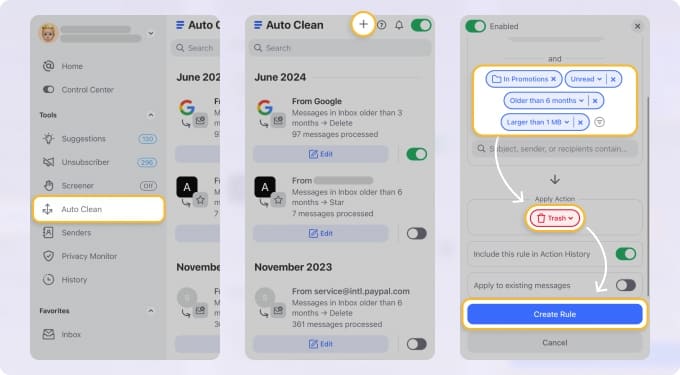
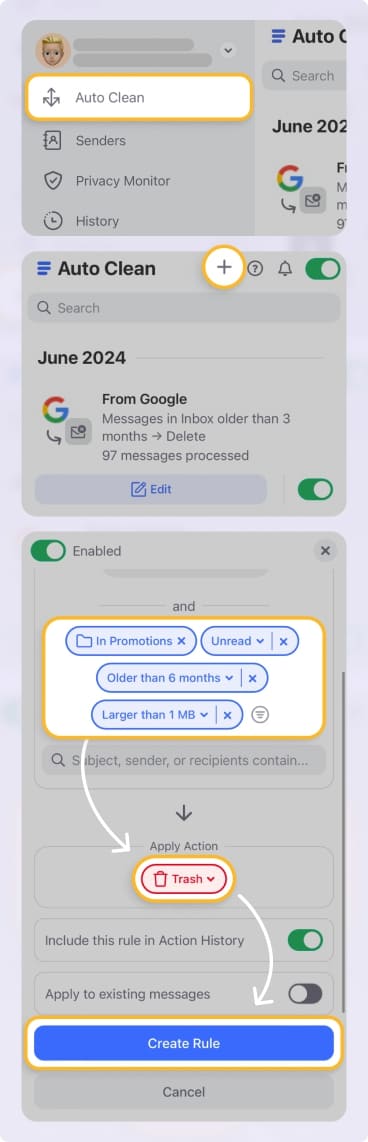
Auto-Delete Old Emails with Attachments in Clean EmailAuto-Delete Old Emails with Attachments in Clean Email

For a quick rundown of the differences between bulk actions in Gmail versus Clean Email, check out the table below.

Gmail Clean Email
Archive folder ❌ No ✅ Yes
One-step delete ❌ No, emails go to Trash ✅ Yes,
emails can be immediately deleted*
Email selection limit 50 per page by default No limit
Progress tracking for bulk actions ❌ No ✅ Yes
Consistent process on mobile ❌ No ✅ Yes
Automation management for archiving and deleting Web only Web and mobile

*All selected emails are permanently removed from your mailbox and cannot be restored. Make sure that you double-check your selections before choosing Delete.

💡 Tip: While Gmail doesn’t provide a way to easily see who sends you the most emails or what takes up the most space for a solid clear-out, Clean Email lets you group emails by sender, clean messages by age and size, and delete permanently in one step.

Delete old emails on iPhone with Clean EmailDelete old emails on iPhone with Clean Email

How Archive Works with Labels, Filters, and Gmail Rules

With our focus turning to the archive action, you may be wondering how archiving an email affects Gmail labels and filters. Let’s take a look.


Labels

As mentioned earlier, when you archive an email in Gmail, this removes the Inbox label and applies an Archive action. This allows you to search for archived emails later, as there is no Gmail archive folder or menu option.

How archive works with LabelsHow archive works with Labels

If you have other labels on a message and then archive it, that email will contain all labels. For instance, if you label a message as Work and then archive it, that email retains the Work label. This means that you can view the archived email in either Work or All Mail.

Filters

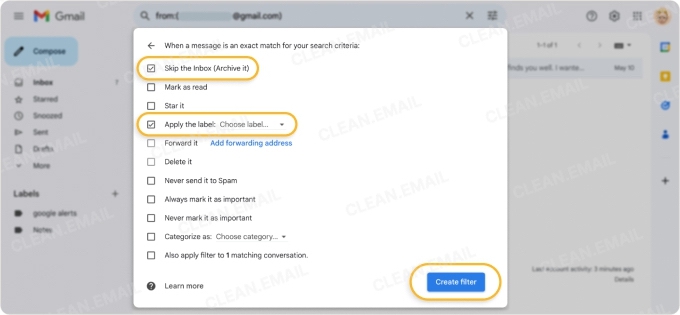
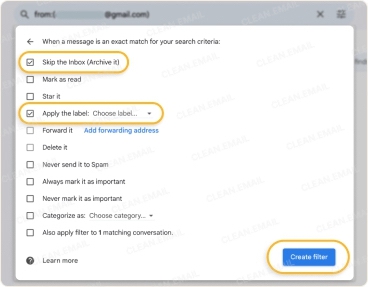
If you create automated filters to manage incoming messages, you’ll notice an option to archive as “Skip the inbox (Archive it).” This action does exactly what it says — the email will not display in your Inbox, but instead go directly to All Mail.

If you want to apply a label to incoming emails and archive them, this is possible. Simply mark the Skip the inbox and Apply the label actions. You can then view the archived email in All Mail or the label in the menu.

How archive works with FiltersHow archive works with Filters

Newsletters, Promotions, and Subscriptions

One of the most common questions Gmail users have surrounding archive versus delete is when it comes to mailing list emails. Should you archive or delete newsletters, promotional messages, and miscellaneous subscription emails?

The answer comes down to, again, whether or not you’ll need the message later.

Archive Example

For instance, take a newsletter that you want to read but simply don’t have time immediately. Obviously, you wouldn’t want to delete the newsletter because you want to read it. If you prefer it not clutter your inbox, you can archive it and search for it later.

📌 Alternatively, you can use Clean Email’s Read Later feature. With it, you can either manually or automatically move messages that you want to check out another time to the Read Later folder for quick access.

How to add an email to a Roll-Up in Clean EmailHow to add an email to a Roll-Up in Clean Email

Delete Example

As another example, say you receive promotional emails that you have no interest in whatsoever. In this case, you would want to delete them rather than archive them.

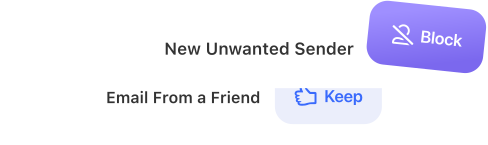
📌 Alternatively, again, you can use a Clean Email feature, Unsubscriber. With it, you can easily unsubscribe from emails and do so in bulk for a clean sweep of existing messages along with future ones.

Unsubscribe from all LinkedIn emails at once with Clean EmailUnsubscribe from all LinkedIn emails at once with Clean Email

As a bonus, you can use Unsubscriber to temporarily pause subscriptions for a fast cleaning and resume again when you’re ready.

Pause subscription emails and unpause them in Clean EmailPause subscription emails and unpause them in Clean Email

Storage Impact: What Actually Frees Space in Gmail

Along with some confusion over archive versus delete in Gmail are misconceptions over what actually consumes storage space with these two actions.

Do archived emails count toward Gmail storage? Yes, archived emails take up storage space like any other message.

Does deleting emails free space immediately? No, deleted emails go to the Trash where they continue consuming space until they’re removed.

When is storage actually reclaimed from Trash? If you allow emails in the Trash to be automatically removed, you’ll reclaim space after the 30-day timeframe mentioned earlier. If you manually empty the Trash, you’ll reclaim that storage space within 24 to 48 hours.

How do attachments versus email text affect storage? An attachment, regardless of type or size, is part of the email content and thus, consumes storage space along with the message.

Finding and Recovering Archived or Deleted Emails

If after you archive or delete emails in Gmail, you want to review or restore those messages, where do you begin? We’ll explain how to find archived and deleted messages along with how to remove archive from a Gmail email and how to recover a deleted message.

Archived Emails

To find an archived email in Gmail, you can certainly open All Mail and manually scan for the messages. Unfortunately, this can take a significant amount of time. Instead, perform a simple search by entering in:archive into the Search box to see all archived emails.

How to find archived email in GmailHow to find archived email in Gmail

To recover an archived email in Gmail, you just move it to your inbox. Select the message and choose Move toInbox in the options menu.

Move an archived Gmail email to Inbox to recover itMove an archived Gmail email to Inbox to recover it

💡 Tip: Unlike Gmail, Clean Email provides a dedicated Archive folder, both on the web and mobile. This saves you an enormous amount of time when looking for archived emails in Gmail.

Archive folder feature in Clean EmailArchive folder feature in Clean Email

Deleted Emails

To find a deleted email in Gmail, select Trash in the left-hand menu. Remember, messages remain in the Trash for only 30 days before they’re automatically and permanently removed.

To recover a deleted email in Gmail, locate the message in the Trash. Select the email and choose Move toInbox in the toolbar.

How to find a deleted email in GmailHow to find a deleted email in Gmail

⚠️ Warning: If you want to restore a deleted message, you must do so before the 30-day timeframe! After that time, the email is permanently removed from Gmail and unrecoverable. An exception may apply if you have a Google Workspace account and the administrator has set a specific retention policy.

💡 Tip: Wondering how to delete archived emails in Gmail? Simply select the archived messages you want to remove and delete them using the same steps above.

A Simple Decision Framework

As we’ve walked through descriptions and examples for when you should use archive and delete in Gmail, this final reminder of when to use which should assist in taking the guesswork out of handling your messages.

📌 Archive if:

📌 Delete if:

Long-Term Inbox Strategy

When it comes down to managing your Gmail mailbox long-term, this should include more than just archiving or deleting emails. And it’s important to remember that simply archiving everything isn’t an effective strategy for email organization.

For instance, if you seek to achieve inbox zero, archive and delete do fit into the process. But you must also remember to delegate to team members who can handle the tasks and take care of those messages you can do quickly.

And if you’re cleaning your Gmail mailbox due to clutter or storage limits, automations such as Clean Email’s Auto Clean rules for effortlessly managing emails and Smart Folders for quick and easy organization are efficient, time-saving features.

Automatically filters emails in Clean EmailAutomatically filters emails in Clean Email

The bottom line

Using archive and delete when needed along with combining Gmail and Clean Email gives you a solid and effective long-term email management plan.

Try Clean Email for Free
*****4.5based on 3,300 user reviews
Get Started
InboxClean Your Mailbox

Use tools like Cleaning Suggestions and Smart Folders to help you quickly clean out an overloaded inbox

Mute unwanted emailsUnsubscribe

Keep unwanted emails out of your inbox by unsubscribing—even from email lists that don’t have an unsubscribe link

Clean your emailsKeep it Clean

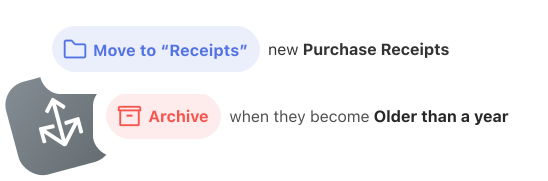
Automate repetitive tasks with Auto Clean rules to archive emails as they become old or to sort them into folders

Background
Use filters to find emails you want to clean.Arrow
Screener FeatureArrow
UnsubscribeArrow
Auto CleanArrow
Sender SettingsArrow