Key Takeaways
- There are four methods to auto sort emails in Gmail: Category tabs, Priority Inbox, Filters, and Smart Folders in Clean Email.
- Sorting in Gmail can fail due to filters being overridden, misconfigurations, conflicting filters, and missing features on mobile.
- There are fixes for the most common sorting problems in Gmail as well as third-party tools that can tackle your frustration by making the task simpler.
- Choosing the sorting method that works best for you is key to saving time and better overall mailbox management.

The Four Gmail Sorting Methods
Struggling with how to get Gmail to automatically sort emails? Unlike many other email providers, Gmail doesn’t offer columns or selection boxes to pick a sort order.
Instead, you can choose from four different methods to auto sort emails in Gmail.
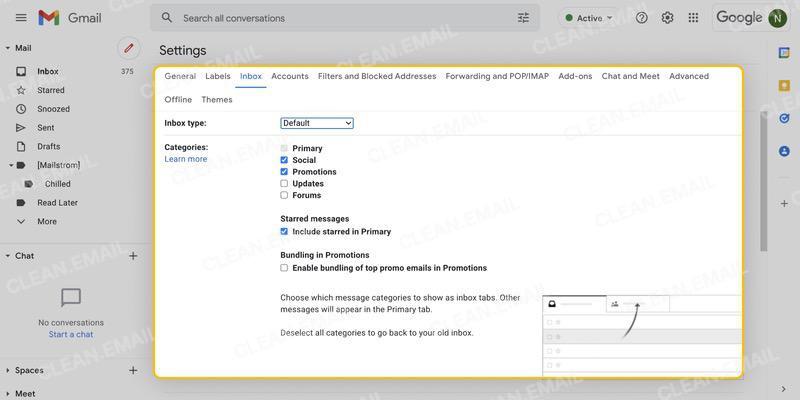
- Gmail category tabs provide the layout for the Default inbox type. The tabs include Primary, Promotions, Social, Updates, and Forums. If an email doesn’t fall into one of the four categories, it lands on the Primary tab. You can choose which Gmail categories to display using the options in the Settings.
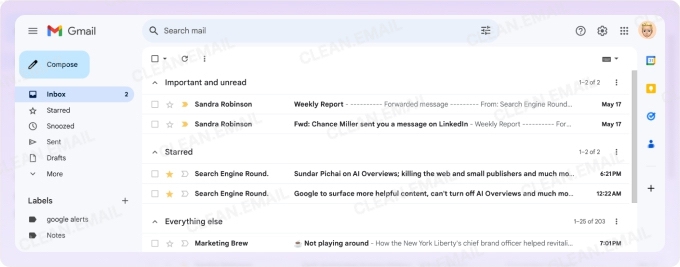
- The Priority Inbox lets you choose the sections to display. You can pick from Important, Unread, Important and Unread, and Starred or choose particular labels. The final section in the Priority Inbox displays everything remaining.
- Gmail Filters (inbox rules) sort incoming emails automatically based on conditions and actions you set up. You can use criteria like sender, subject, keyword, size, or date within to mark, star, label, delete, archive, or categorize messages.
- Smart Folders and sorting options in Clean Email are alternative methods for Gmail. Smart Folders automatically filter related emails into over 30 categories for you. You can also manually filter by label, status, star, or sent by as well as sort your emails by age, size, and number of messages.
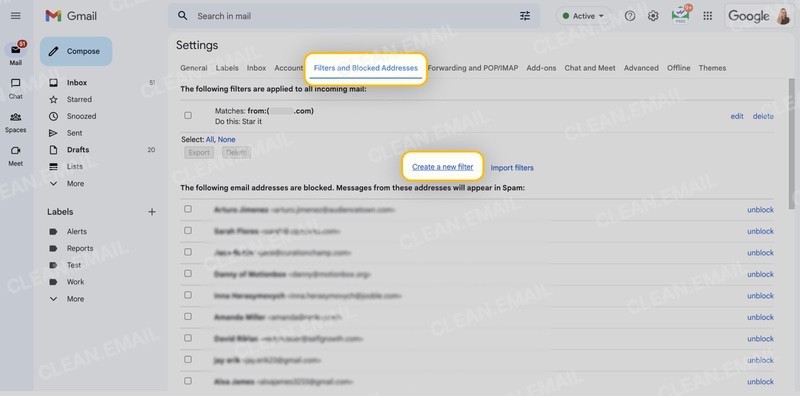
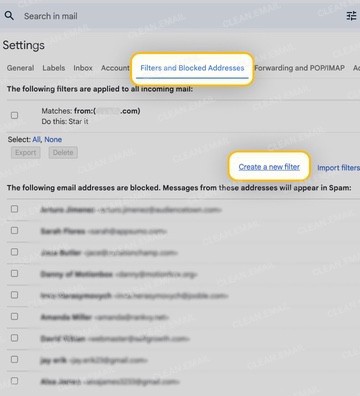
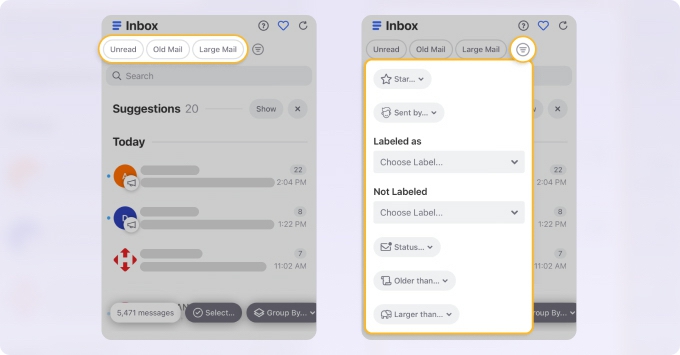
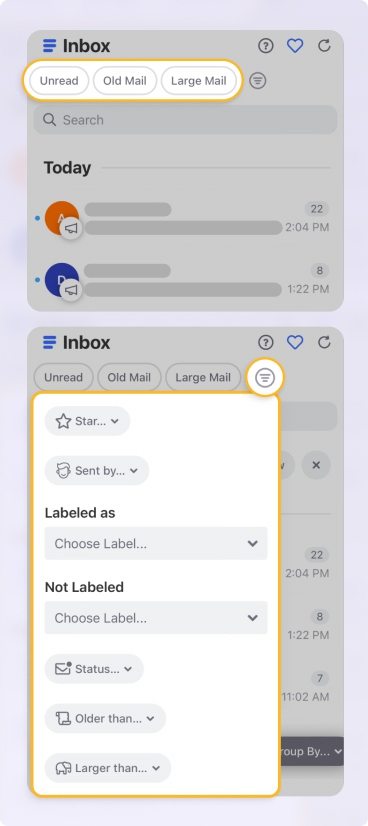
Here’s a summary of each method and its details:
| Setup Required | Works on Mobile | Applies to Existing Emails | Customization Level | Best For | |
|---|---|---|---|---|---|
| Gmail Tabs | Yes, setting configuration | Yes | No | Medium | Sorting by category |
| Priority Inbox | Yes, setting configuration | Yes | No | Medium | Sorting by importance or status |
| Filters/Rules | Yes | Yes (after desktop setup) | Optional (when creating the filter) | High | Sorting automatically |
| Smart Folders / Sorting options (Clean Email) | No | Yes | Yes | Medium | Sorting by related emails, age, size, or number of emails |
Why Gmail Sorting Keeps Failing
When it comes to Gmail’s sorting methods, no single one is perfect. And unfortunately, many users have experienced problems that caused enormous frustrations and time-consuming attempts at solutions.
Here are the five most common problems with Gmail’s sorting options along with causes and fixes.
Tabs Misfiling Emails
Users have reported the Promotions tab no longer working, important emails going to Promotions rather than Primary, and random changes to the category tabs.
Cause: The likely cause is an incident that occurred in January 2026 when Gmail experienced an overload of its spam checking systems. Along with messages not being scanned for spam, emails were not labeled correctly for the Promotions and Social tabs.
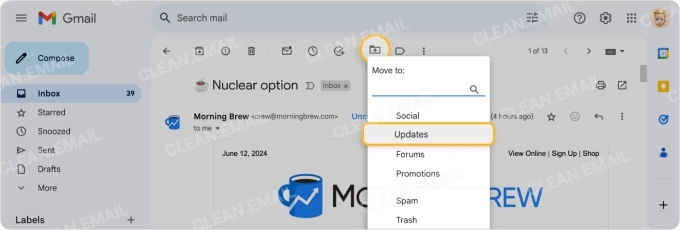
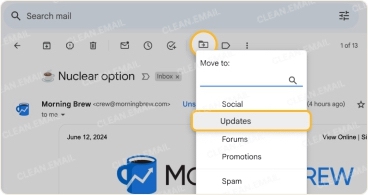
Fix: Retrain the system by dragging the misfiled email to the correct tab or using Move to in the toolbar. You can also look for a button on the message that lets you recategorize the email.
Filter Works But Email Still Lands in Primary
If you set up a filter and notice that emails aren’t acting accordingly, you’re not alone. Users have had issues with filters for certain senders being ignored and filters to apply labels still placing messages on the Primary tab.
Cause: Gmail’s system can override filters you create. For instance, Gmail can force filtered emails marked as Important into your Inbox or Primary tab.
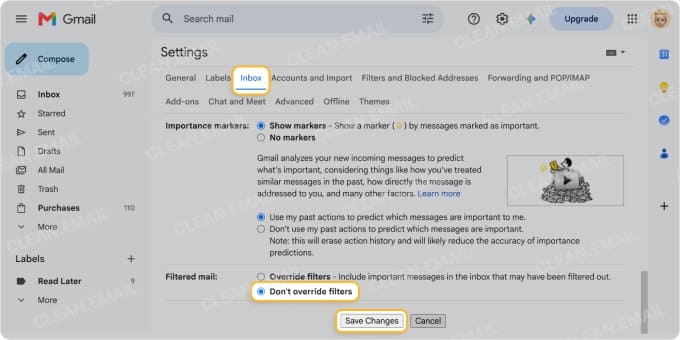
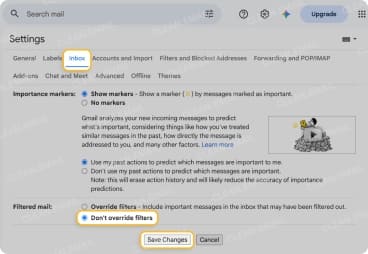
Fix: You can stop Gmail from superseding your filters by going to Settings → See all settings → Inbox. Next to Filtered mail, mark Don’t override filters and click Save Changes.
Existing Inbox Stays Unsorted
When creating a Gmail filter to automatically sort incoming emails, users have complained that their Inbox remains untouched and remaining emails are still a mess.
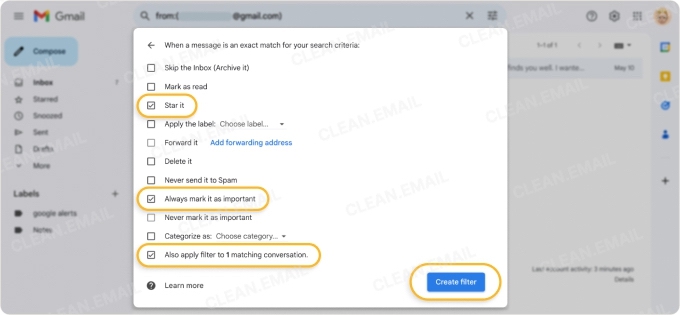
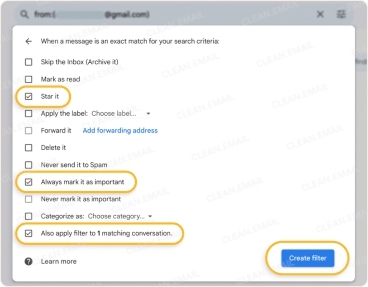
Cause: During the filter setup, you must mark the checkbox to Also apply filter to matching conversations in order for the action(s) to affect existing emails. This functionality is only available during the filter creation process.
Additionally, Gmail’s filters apply to new messages you receive, it does not rescan your mailbox for matching messages later.
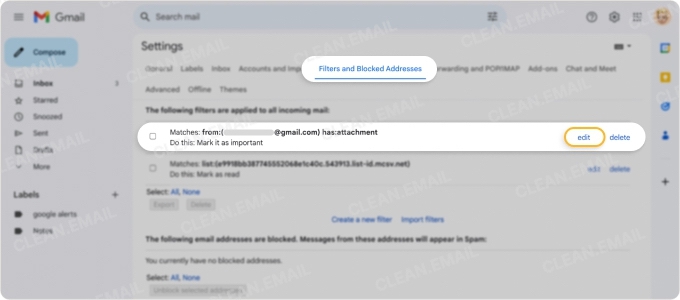
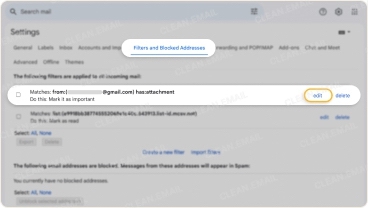
Fix: Edit the filter (Settings → See all settings → Filters and Blocked Addresses) to include the Also apply filter to matching conversations option.
Alternatively, you can use Clean Email’s Smart Folders which automatically filter related messages for you and do not require any setup or configurations.
Too Many Filters Conflicting
If you have many filters set up in Gmail, the way in which they work isn’t clear. Users have become aggravated trying to figure out which filter runs first or feeling that their filters are fighting each other.
Cause: Gmail’s system applies filters in the order that you create them and there is no way to reorder your filters.
Fix: Visit Settings → See all settings → Filters and Blocked Addresses to see the order of the filters you’ve set up. You can then delete the filters you no longer need and recreate the rest to run in the order you want them.
Can’t Sort on Mobile
One of the biggest frustrations for those who only use the Gmail mobile app is the lack of sorting ability – more specifically, no way to set up automated filters.
Cause: While you do have options to use Category Tabs and the Priority Inbox on your mobile device, you cannot create filters in Gmail’s mobile app.
Fix: Set up the filters you want in Gmail’s web app. These then apply to emails you receive on your mobile device.
Alternatively, check out Clean Email’s mobile app for iOS and Android. Not only can you use the same sorting options as the web app but also use the Auto Clean feature to create Gmail rules on any device.
Auto Sorting Options in Clean Email
Above, we mentioned Clean Email’s Smart Folders and sorting options for Gmail. If you’re experiencing hindrances and struggles with Gmail’s sorting capabilities, Clean Email is definitely worth considering and you can try it for free.
Smart Folders hold messages related to topics like Travel, Online Shopping, Job Search, Automated Messages, Dating Apps, and more, with over 30 folders total.
There are no rules to build, no settings to configure, and no setup required to use Smart Folders – they’re automatically created for you. You can also perform bulk actions such as archive or delete on hundreds or thousands of emails.
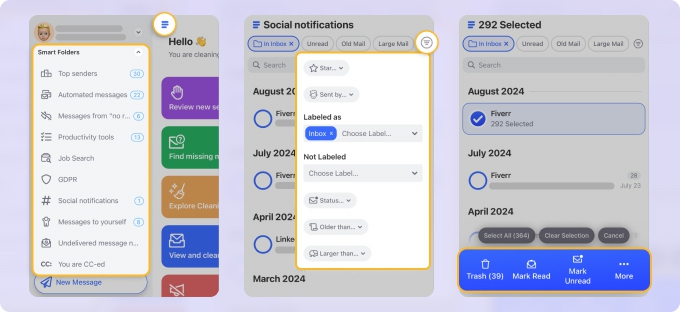
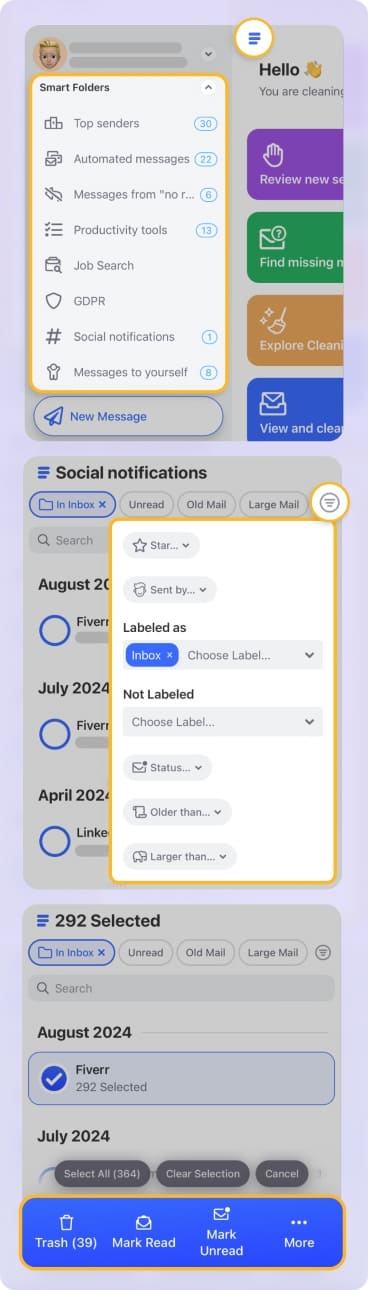
You can also filter, group, and sort emails in various ways using Clean Email:
- Filter by labeled, unlabeled, status, starred, sent by, size, or age.
- Sort by newest, oldest, number of messages, or size.
- Group by sender, domain, recipient, address, subject, date, or label.
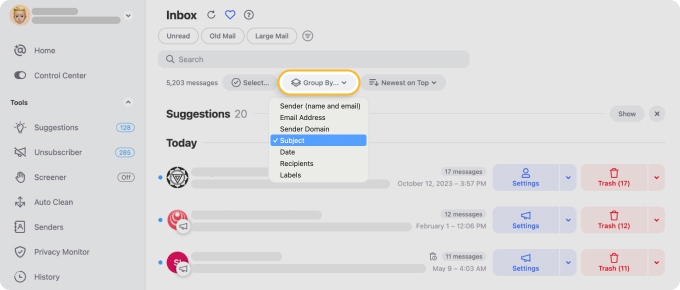
All Clean Email features are available on desktop and mobile with seamless syncing, apply to both new and existing emails, and work alongside Gmail’s native tools without replacing them.
Which Sorting Method Should You Use?
Considering the four methods available for sorting in Gmail, you might be wondering which is the best. There is no right answer – it comes down to which method works best for you and how you use Gmail.
Here are suggestions for each method:
➡️ Gmail Tabs: For those who take advantage of Gmail’s categories to easily separate and handle Promotions, Updates, and Social messages.
➡️ Priority Inbox: For those who want customizable sections for simpler inbox viewing and management of selected email statuses or labels.
➡️ Filters / Rules: For those who frequently act on emails the same way and prefer Gmail automation rather than performing manual email tasks.
➡️ Smart Folders / Sorting options (Clean Email): For those who want to use advanced filtering, sorting, and grouping options, and automatically sort emails in Gmail using their mobile device.
Conclusion
Learning how to automatically organize emails in Gmail with sorting options can be a true time-saver, but not all methods are effective. When you start to struggle with your method of choice, try the fixes we’ve explained or turn to an alternative such as Clean Email.