Key Takeaways
- Mark not spam in Gmail on desktop: Menu → Spam → email → Report not spam.
- Mark not spam in Gmail on mobile: Menu → Spam → email → More → Report not spam.
- Emails in Gmail’s Spam folder are automatically and permanently deleted after 30 days.
- For recurring misclassifications (spam loops), add the sender to your Contacts and create an automated filter to “Never send it to spam”.

How to Mark an Email as Not Spam in Gmail
When you receive a legitimate email that gets sent to the Spam folder in Gmail, you can manually mark it as not spam and have it moved to your Inbox.
- Visit Gmail on the web and sign in.
- Go to the Spam folder in the left-hand menu.
- Select an email.
- Do one of the following:
- Choose the Gmail Not spam button in the top toolbar.
- Click Report not spam at the top of the message.
- Open More (three dots) and pick Not spam.
- Right-click the email in the message list and select Not spam.
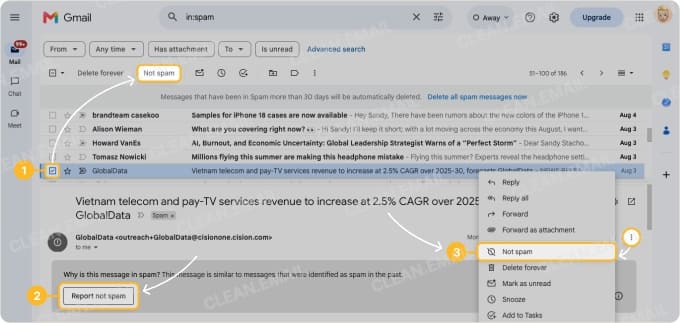
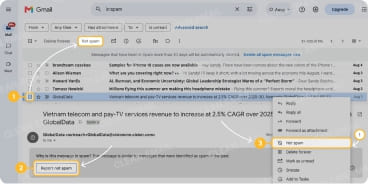
You should see a pop-up message at the bottom letting you know that the message was unmarked as spam, moved to the Inbox, and future emails from the sender will go to your Inbox.
How to Mark Emails as Not Spam on iPhone and Android
If you manage your emails on mobile, you can mark as not spam in Gmail on Android and iPhone the same way.
- Open the Gmail app.
- Go to the Spam folder in the left-hand menu.
- Do one of the following:
- Select an email in the message list, and pick More (three dots) → Report not spam.
- Open an email and select Report not spam at the top of the message or go to More → Report not spam.
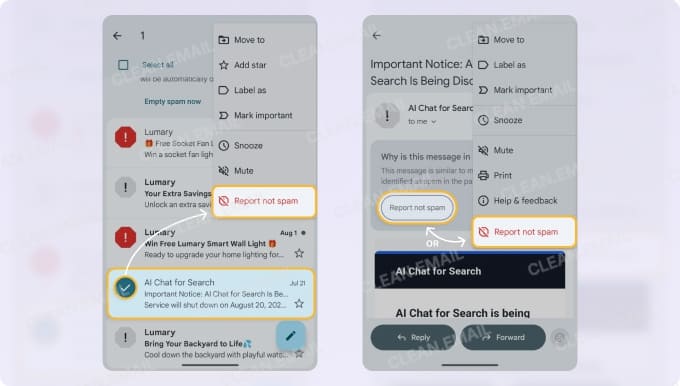
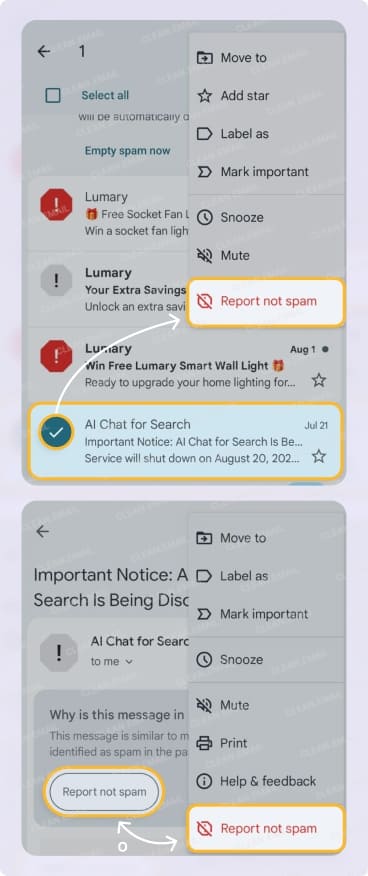
Like in the web app, you’ll see a confirmation that the email was unmarked, sent to your Inbox, and future messages from the sender will go to the Inbox.
How to Stop Mail From Going to Spam in Gmail
When you notice legitimate emails being caught by Gmail’s spam filter, it can be due to missing authentication records, no domain history, or even suspicious links. But, it’s best to teach Gmail that these messages are not spam, and you have a few ways to do this.
Keep in mind that emails in the Spam folder are automatically deleted after 30 days, so you should take action when you first realize it.
Mark as not spam: When you manually mark an email in Gmail not spam, this action should send future messages from the sender to the Inbox rather than the Spam folder. Use the desktop or mobile steps in Gmail to mark as not spam.
- Desktop: Menu → Spam → email → Report not spam.
- Mobile: Menu → Spam → email → More → Report not spam.
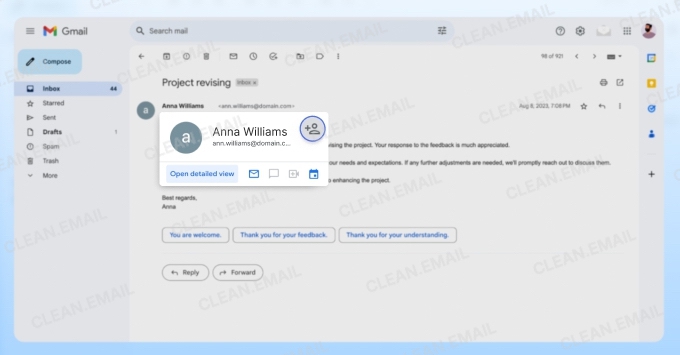
Add the sender to Contacts: If you receive an email from a person in your Contacts list, Gmail should recognize the message as safe and legitimate. This means that adding that someone to your Contacts should direct the emails to your Inbox instead of Spam.
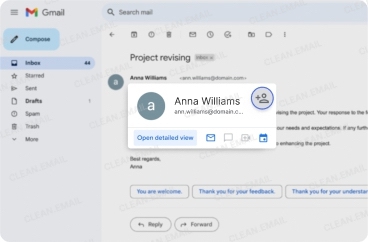
- For how to mark a sender as not spam in Gmail, click their name or email address in the message header and choose Add to contacts (contact with plus sign) in the pop-up card.
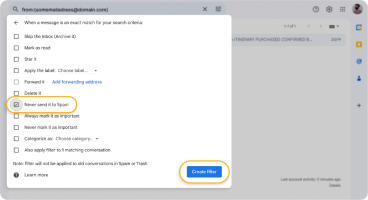
Filter with Never Send It to Spam: Another option is to create an automated filter for the sender that never sends their emails to spam. Note that you can only set up filters in the Gmail web app; however, those filters do apply on mobile as well.
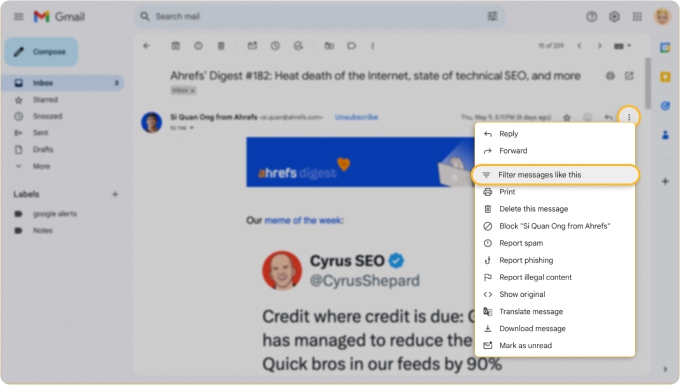
- Open the email and select More → Filter messages like this.
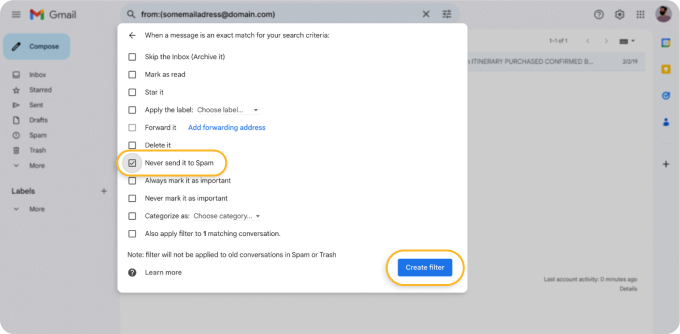
- When the search filter box appears with the sender in the From field, choose Create filter.
- Pick Never send it to spam as the action.
- Click Create filter.
💡 Tip: You can also set up a filter to automatically delete spam in Gmail.
What to Do When Emails Keep Going Back to Spam
If you notice that some emails consistently go to the Spam folder, even if you’ve used one of the Gmail mark as not spam methods, this is considered a spam loop.
You might think that Gmail’s spam filter isn’t working, but this can occur for a few different reasons such as conflicting filters, third-party app access, or a missing Gmail contact.
➡️ The best remedy is to add the sender to your Gmail Contacts and set up the Never Send it to Spam filter. (Both described above.)
You should also review your automated filters for correctness and remove apps that you’ve granted access to but no longer use – as extra measures.
You’ll then likely want to move the existing emails out of Spam and to your Inbox. And if you have many, it can be time-consuming to handle one by one.
Instead, you can use a bulk selection process:
- For multiple emails, check the boxes on the left, use the arrow at the top to go to the next page, select the additional messages, and pick Not spam.
- For all emails, check the Select box on the top left, click the Select all X conversations link, and pick Not spam.
Manage Misfiled Emails with Clean Email
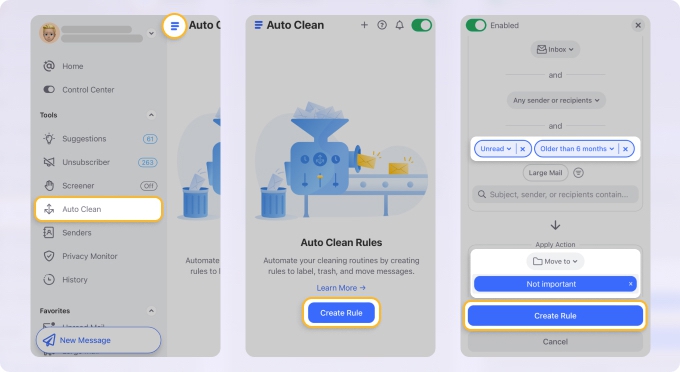
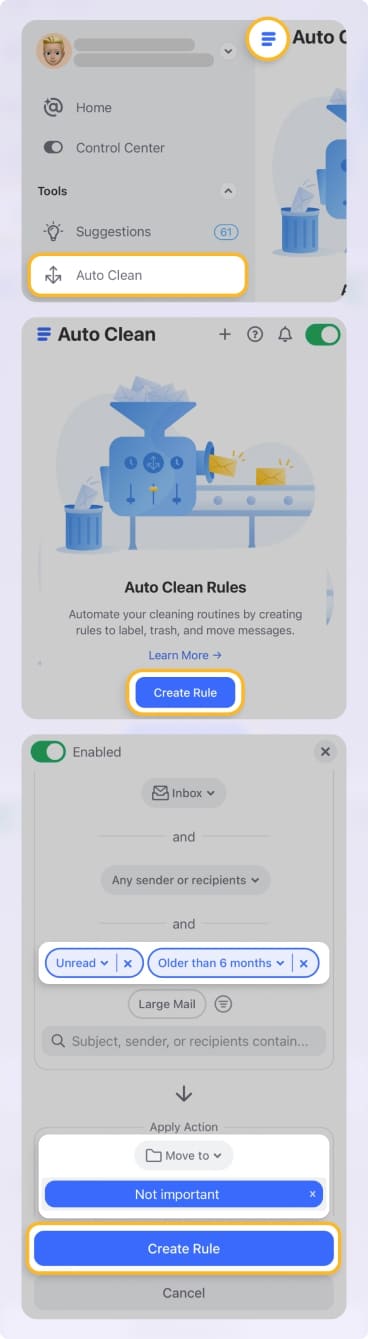
One more tool you can use to stop emails going to junk in Gmail is Clean Email. With the Auto Clean feature, you can rest assured that your messages will go to the right spot.
Auto Clean lets you manage specific senders automatically. By creating a mailbox rule, you can change labels, move, or star emails from your legitimate senders so that they won’t be misclassified.
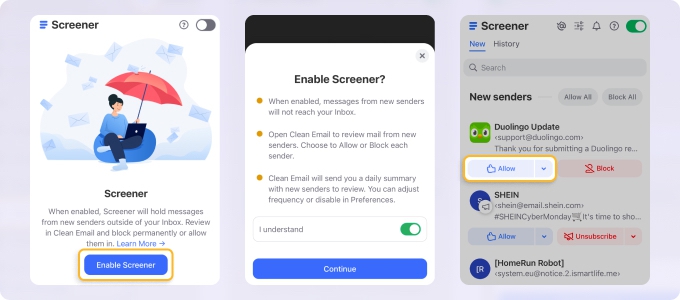
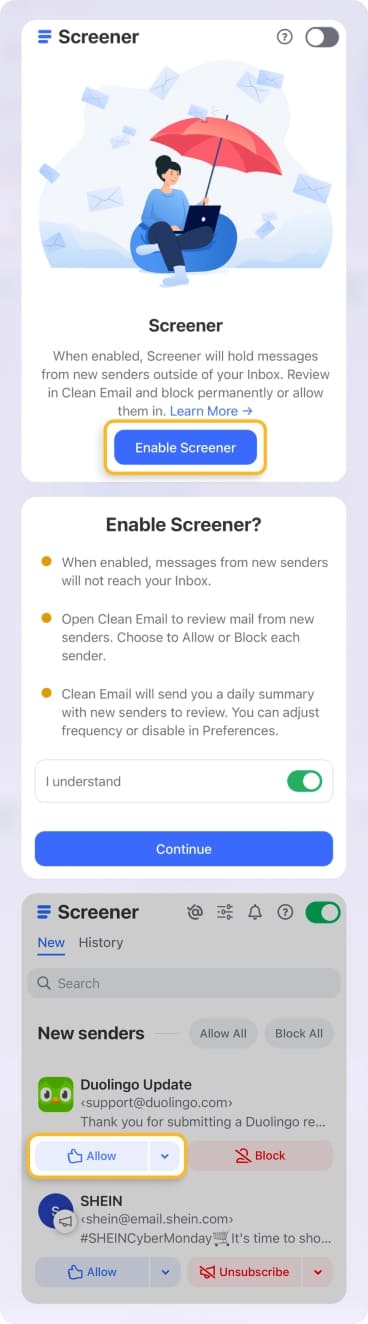
Clean Email also provides the Screener feature for opposite scenarios – preventing unwanted emails and senders from reaching your inbox, and making sure that legitimate senders land in your inbox. ➡️ Try it for free!
Clean Email works with all IMAP services on the web, Mac desktop, and mobile devices!
FAQs
Why do emails go back to spam after I mark them as not spam?
This can be caused by automated filters or rules that conflict with each other, third-party app access to your email account, or senders not in your Contacts list.
How do I mark more than 50 emails as not spam at once?
In Gmail, you can mark all emails in your Spam folder as not spam by marking the Select checkbox on the top left, clicking the Select all X conversations link, and choosing Not spam in the toolbar.
Does adding a sender to my contacts stop Gmail from spamming them?
Yes, adding a sender to your Contacts should signal Gmail that they are a legitimate and safe sender and thus, not mark them as spam.
Why are my emails going to recipients' spam folders?
If emails you send end up in your recipient’s spam or junk folders it can be due to missing authentication records, your IP address appearing on a blocklist, a mismatch in your header, your previous messages being marked as spam, suspicious links, or spam trigger language.
How does Google Workspace whitelisting work?
With a Google Workspace account, the Admin can add trusted domains, IP addresses, and email addresses to an Allow List. For personal Gmail accounts, learn how to whitelist an email.