Email Client vs Email Software: What's the Difference?
The two terms get used as if they mean the same thing. They do not.
An email client is software for reading, sending, receiving, and organizing email from accounts like Gmail, Outlook, Yahoo, iCloud, Exchange, or IMAP. Microsoft Outlook, Spark, Mimestream, eM Client, Mailbird, and Canary Mail are all email clients.
Email software is broader. It includes email clients, but also inbox cleanup and management tools, shared inbox software for teams, email marketing platforms, and other specialized email tools.
The reviews below start with email clients, then cover email management and cleanup, shared inbox software for teams, and email marketing software, so this guide reflects everything “email software” can mean.

Top Email Software: Quick Comparison
Here is the fast version. Every product is reviewed in more detail below, with platforms confirmed from official sources.
| Software |
|---|
| Microsoft Outlook |
| Superhuman |
| Spark Mail |
| eM Client |
| Mimestream |
| Mailbird |
| Canary Mail |
| Clean Email |
| Missive |
| Mailchimp |
| Type | Best for | Platforms | Premium feature worth paying for | Trial / free option |
|---|---|---|---|---|
| Email client and productivity hub | Microsoft 365 users | Windows, Mac, web, iOS, Android | Microsoft 365 and Copilot tie-ins | Free with personal accounts; paid via Microsoft 365 |
| Premium email client | High-volume professionals | Mac, iOS, Android, Windows (browser) | AI triage and keyboard-first speed | No free tier; 30-day trial |
| Smart cross-platform client | Smarter inbox with light teamwork | Mac, Windows, iOS, Android | Gatekeeper, AI, and team tools | Free plan; 7-day Premium trial |
| All-in-one client and PIM | Traditional desktop users | Windows, Mac; iOS and Android apps | One-time Pro license, full PIM | Free (2 accounts); 30-day trial |
| Native Gmail client | Gmail power users on a Mac | macOS (iOS in beta) | Native Gmail behavior via the Gmail API | 14-day trial, no card |
| Windows-first client and hub | Windows users who want integrations | Windows, Mac | Integrations dock and unified inbox | Free (1 account); yearly or one-time |
| Privacy client with AI | Privacy and AI together | Mac, Windows, iOS, Android | PGP and SecureSend encryption | Free plan; 7-day trial |
| Inbox cleanup and management | Decluttering an existing inbox | Web, Mac, iOS, Android | Auto Clean and Unsubscriber | Free trial; paid subscription by mailbox count |
| Shared inbox and team email | Teams on shared addresses | Mac, Windows, Linux, web, iOS, Android | Shared inbox with in-thread chat | Free plan; 30-day trial |
| Email marketing platform | Sending campaigns | Web, iOS, Android | Automation and segmentation | Free tier; 14-day paid trials |
Full Reviews
Prices move often, so we focus on what each tool does and who it fits. Where numbers matter, check the official plans page before you buy.
Email clients
1. Microsoft Outlook
Best for: people who already live in Microsoft 365.
Outlook is a free email client and a productivity hub. It connects personal accounts such as Outlook.com, Gmail, iCloud, and Yahoo for free, with ads, and runs on Windows, macOS, the web, iOS, and Android.
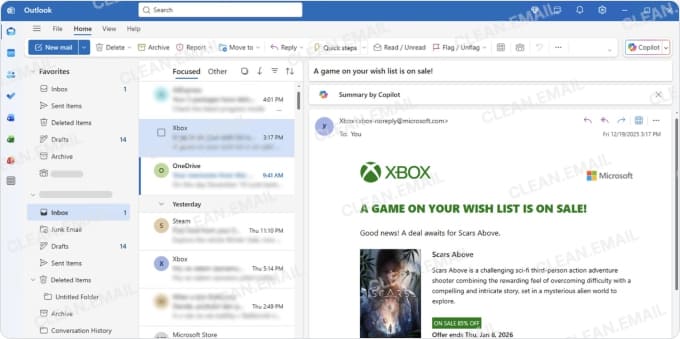
The paid value is not the inbox on its own. It is the Microsoft 365 subscription around it: Exchange, calendar, OneDrive storage, Teams, the Office apps, and Copilot. Microsoft folded Copilot into its consumer Microsoft 365 plans for the subscription owner, so the standalone Copilot Pro add-on has been retired in favor of Microsoft 365 Premium. If your work already runs on Microsoft, Outlook ties email to files, meetings, and documents in one place.
For someone who only wants a simple inbox, all of that can feel like more than they need. Pricing may change, so check the official Microsoft 365 plans page.
Value verdict: Pay for Outlook and Microsoft 365 if your email, calendar, files, and documents already live in Microsoft's ecosystem.
2. Superhuman
Best for: high-volume professionals who live in their inbox.
Superhuman is a premium email client built around speed, a keyboard-first workflow, and AI. It works with Gmail and Outlook accounts only, not generic IMAP, and runs on macOS, iOS, and Android, plus Windows through the browser. It is premium-first, with no free tier.
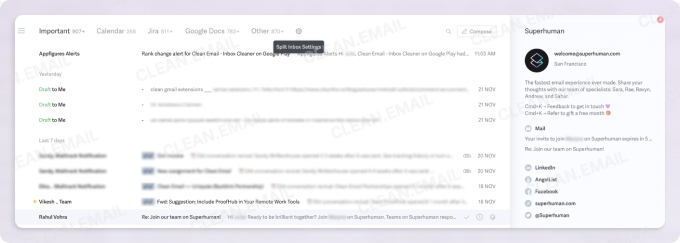
Since Grammarly acquired Superhuman in 2025, Superhuman Mail ships inside a wider suite alongside Grammarly, Coda, and the Superhuman Go agent, though you can still subscribe to Mail on its own. The paid value is the workflow: AI triage, Split Inbox, Auto Drafts, Auto Labels, and follow-up reminders that cut time off heavy email days. Higher tiers add CRM integrations for sales teams.
It is easy to overpay if your email is light. The value depends on whether faster replies and triage save you real work time. There is no free plan, but a 30-day trial lets you test it first.
Value verdict: Worth paying for if email speed, AI triage, and fast follow-up directly affect your work.
3. Spark Mail
Best for: a smarter cross-platform inbox with light collaboration.
Spark, from Readdle, is a modern client with a Smart Inbox that sorts personal mail, newsletters, and notifications on its own. It runs on macOS, Windows, iOS, and Android. The free plan covers one account and a limited AI quota.
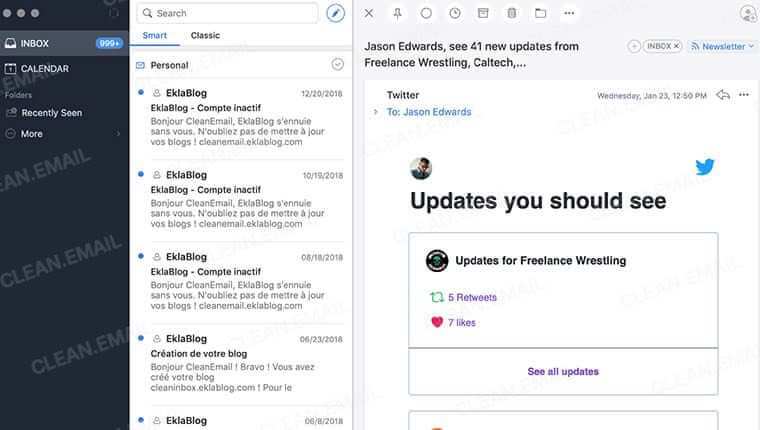
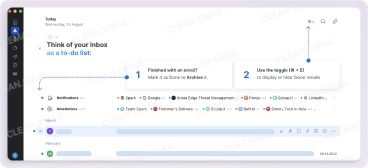
Premium is where the paid features sit: Gatekeeper, which lets you approve or block new senders before they reach the inbox, unlimited AI writing and summaries, unlimited accounts, and light team tools such as shared drafts, comments, and assignments. Reviewers tend to rate the client and collaboration higher than the AI, which is closer to basic writing help than true triage.
One tradeoff to weigh: Spark syncs and processes mail on its own servers, so review its privacy model if that matters to you. A 7-day Premium trial is available.
Value verdict: Worth paying for if you want a smarter cross-platform inbox with AI and light collaboration.
4. eM Client
Best for: a traditional all-in-one desktop app.
eM Client is a full email client and personal information manager that bundles email, calendar, contacts, tasks, notes, and chat. It runs on Windows and macOS as a desktop app, with free iOS and Android apps. That mix makes it a common Outlook alternative for people who prefer a classic desktop layout.
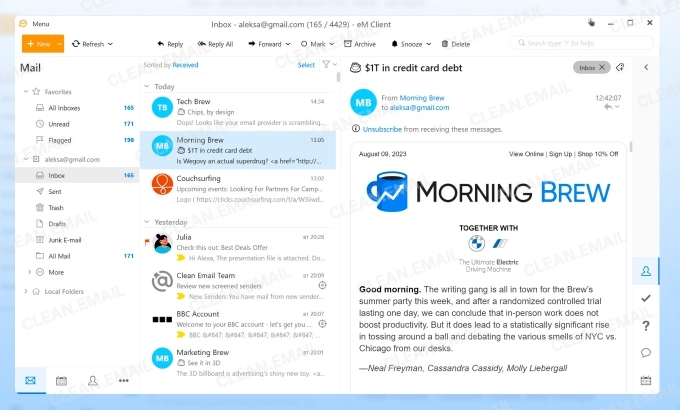
The free license covers personal use with up to two accounts. The Pro license is a one-time purchase for unlimited accounts and commercial use, with an optional paid add-on that covers future major-version upgrades. That appeals to people who are tired of subscriptions, though verify the current terms before buying. There is also a built-in AI assistant.
If you only need one account and basic email, the paid version is more than you need. A 30-day trial covers the full feature set.
Value verdict: Worth paying for if you want one classic app for email, calendar, contacts, tasks, and notes.
5. Mimestream
Best for: Gmail power users on a Mac.
Mimestream is a Gmail client for macOS. It uses the Gmail API instead of IMAP, so labels, categories, server-side filters, and Gmail search behave the way they do in Gmail, inside a fast native Mac app. An iOS version is now in TestFlight beta for long-time subscribers, but there is no public iPhone release yet.
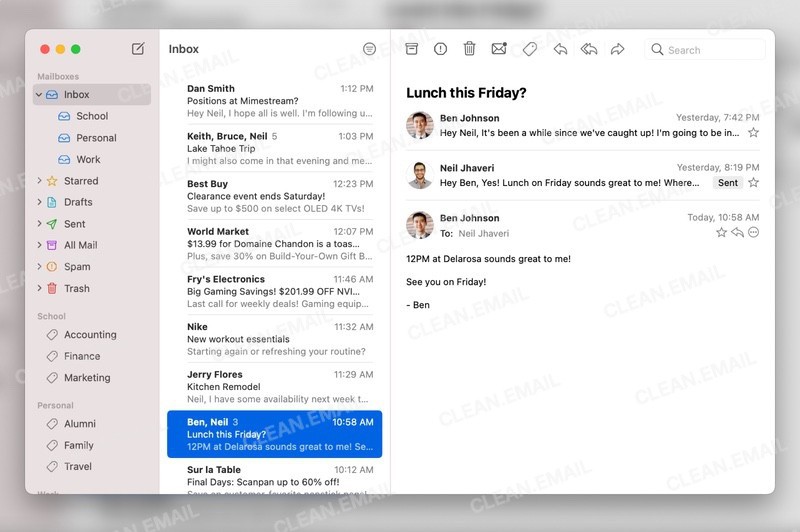
It supports Gmail and Google Workspace only, not Outlook, iCloud, Yahoo, or mixed providers, and there is no Windows or Android build. That focus is the point: for a Mac user whose main account is Gmail, it is the closest thing to Gmail's own logic in a polished desktop app, with on-device storage and tracker blocking.
The paid value is that native Gmail experience. A 14-day trial with no card lets you test it before the subscription starts. If you need Windows, Android, or non-Gmail accounts, look elsewhere.
Value verdict: Worth paying for if you want Gmail's logic inside a polished native Mac app.
6. Mailbird
Best for: a polished Windows inbox with integrations.
Mailbird is a Windows-focused client that added a macOS version in 2025, so a single license now covers both desktops. There are no mobile apps yet. Its angle is a unified inbox plus an integrations dock for tools like Slack, WhatsApp, Google Calendar, and task apps, along with email tracking, Mailbird filters, and built-in AI assistants.
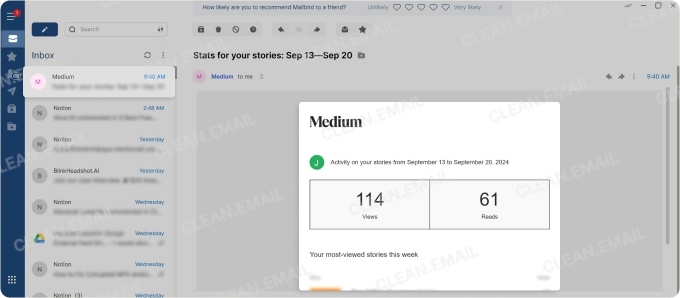
It is not the pick for deep automation, and it is not a privacy or security-first client. One caution worth knowing before you buy a one-time plan: some long-time users report that lifetime licenses have not carried across major versions, so read the current license terms carefully.
The free plan is limited to one account. Paid options are a yearly plan or a one-time Pay Once license, both with a 14-day money-back window.
Value verdict: Worth paying for if you want a polished Windows inbox with integrations, not a power-user automation tool.
💡 Tip: For more Windows-specific options, see our free email programs for Windows guide.
7. Canary Mail
Best for: privacy, encryption, and AI in one inbox.
Canary Mail is a privacy-focused client that runs on macOS, Windows, iOS, and Android and connects to Gmail, Outlook, iCloud, and IMAP accounts. It pairs an AI Copilot for drafts, summaries, and natural-language search with security features most clients skip.
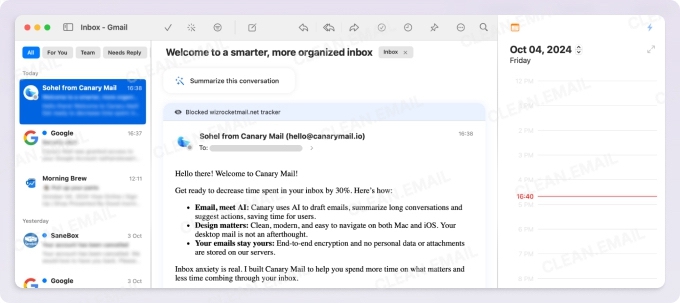
Encryption is the differentiator. PGP and SecureSend, which sends password-protected messages even to people who do not use Canary, sit on the Pro+ tier alongside phishing and impersonation protection. The AI Copilot and productivity extras sit on the Growth tier. Some Copilot features use third-party cloud models, so review the privacy details if that matters.
That makes it a better fit for privacy-conscious professionals in fields like healthcare, legal, or finance than for casual users.
There is a free plan, plus a 7-day trial of the paid features. Growth and Pro+ are billed yearly or as a one-time purchase, with no monthly option.
Value verdict: Worth paying for if encryption, privacy, and AI belong in the same inbox for your workflow.
Email management and cleanup software
8. Clean Email
Best for: cleaning and automating the inbox you already have.
Clean Email is a powerful inbox management and cleanup tool. It is not meant to be a replacement for your Gmail, Outlook, Apple Mail, Spark, or Mimestream. It connects to the account you already use, through OAuth for Gmail and Outlook or IMAP for Yahoo, iCloud, and others, and works alongside your current client on web, macOS, iOS, and Android.
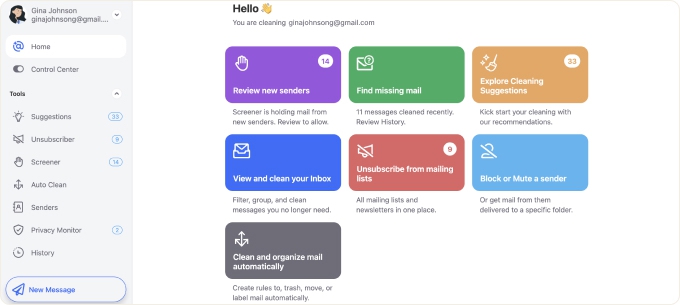
The point is control over volume, not a new place to read email. Smart Folders group mail into ready-made views such as newsletters, social, and shopping, so you can act on thousands of messages at once. Unsubscriber handles bulk unsubscribe, pausing, and subscription management. Screener controls new senders before they reach the inbox. Auto Clean applies rules to future mail automatically, so it can archive, delete, move, or label messages without manual work.
You can send and reply inside the app, but that is not why people use it. It is the right choice when the problem is clutter, newsletters, old messages, subscriptions, or repetitive cleanup, not when you simply want a new interface for reading and composing.
A free trial lets you test it, and paid plans differ by the number of mailboxes you connect. Pricing may change, so check the official plans page.
Value verdict: Pay for Clean Email when your current email client is fine, but your inbox is not.
💡 Tip: For related tools, see our roundup of the best email management tools.
Shared inbox software for teams
9. Missive
Best for: teams working from shared addresses.
Missive is shared inbox and team email software, built for groups that answer addresses like support@, sales@, or info@. It runs on macOS, Windows, Linux, the web, iOS, and Android.
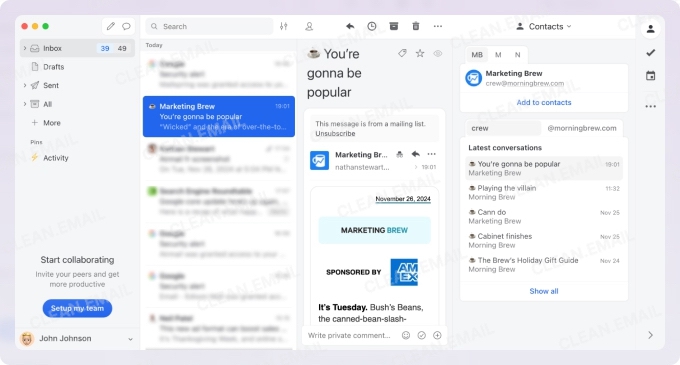
Its signature is the internal chat thread layered inside each email, so a team can discuss, assign, and draft a reply together without forwarding or CC chains. Every message gets a clear owner, and the whole team keeps visibility. It also pulls SMS, WhatsApp, Instagram, and live chat into the same place, and includes a built-in AI assistant that is billed separately.
For a solo user who only needs personal email, most of this goes unused. The value appears when a team needs ownership and coordination around shared email.
There is a free plan for small teams, plus per-seat paid tiers (Starter, Productive, and Business) with a 30-day trial.
Value verdict: Worth paying for when email ownership across a team matters more than individual inbox aesthetics.
Email marketing software
10. Mailchimp
Best for: sending marketing campaigns, not managing an inbox.
Mailchimp is email marketing software, not an email client. It is on this list to show that “email software” also covers marketing platforms. It is web-based, with iOS and Android apps.
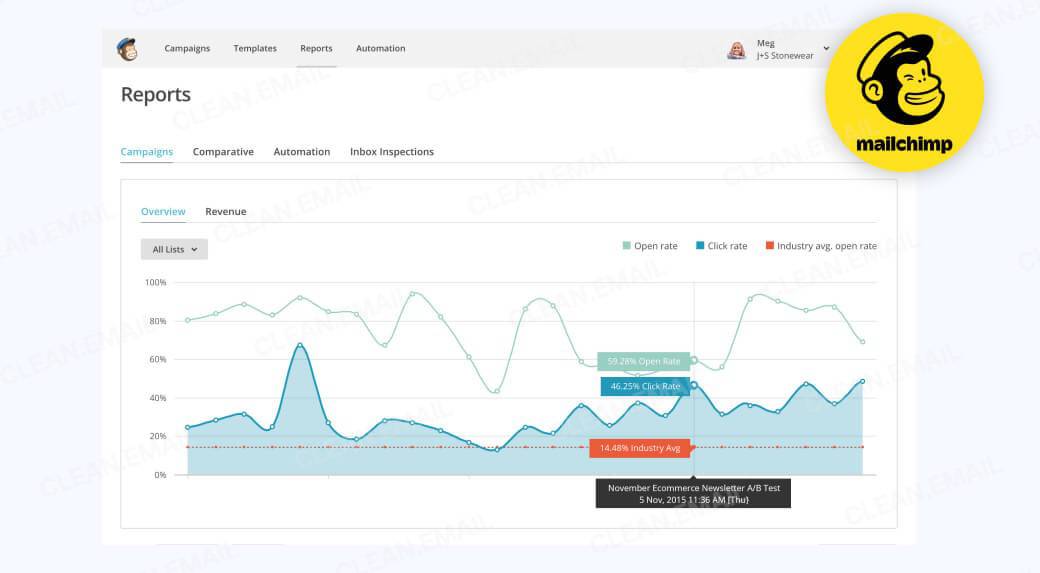
Mailchimp handles campaign building, marketing automation and customer journeys, audience segmentation, analytics, templates, and hundreds of integrations with tools like Shopify and WooCommerce. It does not manage a personal inbox, so it does not replace Outlook, Spark, or Clean Email.
The paid value depends on list size and automation needs. Note that multi-step automation now sits on the paid tiers and the free plan has tightened over time.
There is a free tier and 14-day trials on the paid marketing plans. Pricing changes often, so check the current pricing page.
Value verdict: Worth paying for if you send marketing campaigns, not if you only want a better inbox.
What about other email marketing software?
Some people who search for “email software” actually mean a marketing platform. If that is the intent, these tools belong in the conversation. They send campaigns to an audience, so they are not replacements for Outlook, Spark, or an inbox cleanup tool.
| Tool | Best known for |
|---|---|
| Klaviyo | Ecommerce email and SMS marketing |
| HubSpot | CRM-based marketing and sales email |
| Brevo | Budget-conscious email and SMS marketing |
| ActiveCampaign | Advanced automation |
These are worth a look if campaigns are your goal, but this guide stays focused on software for managing an inbox and a workflow.
How to Choose Email Software That Is Worth Paying For
- Start with the problem. Inbox clutter, slow replies, a Microsoft 365 workflow, Gmail on a Mac, a team shared inbox, or email marketing each point to a different tool.
- Check platforms first. Confirm the app runs on the operating systems and phones you actually use, including iPhone and Android if mobile matters.
- Check provider support. Make sure it works with your account: Gmail, Outlook, Exchange, iCloud, Yahoo, or IMAP.
- Check the privacy model. Local storage, cloud sync, AI processing, and ad-funded data use are not the same thing. Decide what you are comfortable with.
- Check the paid features that matter to you. AI, automation, shared inboxes, rules, integrations, and advanced security are what you are really paying for.
- Check trial limits. A trial that only runs a few days may not show whether background automation earns its keep.
- Avoid paying for features you will not use. Team tools, marketing automation, and encryption add cost only if they solve a problem you have.
Final Recommendation: Which Email Software Should You Choose?
Match the tool to the job:
- Choose Outlook if you live in Microsoft 365.
- Choose Superhuman if email speed and AI productivity directly affect your work.
- Choose Spark if you want a smarter cross-platform inbox with AI and light collaboration.
- Choose eM Client if you want a traditional all-in-one email, calendar, contacts, and tasks app.
- Choose Mimestream if you are a Gmail-heavy Mac user.
- Choose Mailbird if you want a polished Windows email client with integrations.
- Choose Canary Mail if privacy, encryption, and AI matter together.
- Choose Clean Email if your inbox is cluttered and your current client is otherwise fine.
- Choose Missive if your team works from shared inboxes.
- Choose Mailchimp if you need email marketing software, not just inbox software.