What Is a Fake Email Address Generator?
A fake email address generator (often called temporary email, disposable email, or burner email) creates an email address you can use without registration and without exposing your real inbox.
Typical use cases include:
- Signing up for websites, trials, or downloads
- Receiving one‑time verification or OTP emails
- Avoiding marketing lists and data brokers
- Testing signup flows (QA, dev, growth teams)
- Creating short‑term online identities
Most fake email services work in a similar way. They open instantly in your browser, don’t require a password, and delete messages automatically after a short period. One important detail, though, is that most of these inboxes are public. If someone guesses the address, they can read the messages inside.

Important Limitations to Know (Before You Choose)
1. Disposable email detection is widespread
Many websites actively block known temporary email domains. Popular services may fail on banking, fintech, enterprise SaaS, or government sites.
2. Most fake inboxes are not private
If someone guesses the address, they can read the inbox. Never use temp email for sensitive data.
3. Temp email ≠ inbox management
Fake email addresses are useful when you want to avoid spam before it starts. They help at signup, but that’s where their role ends.
They won’t fix issues you already have, like existing subscriptions, old newsletters that keep coming back, or mailing lists tied to your real email address that you signed up for years ago.
Best Fake Email Address Generators Reviewed in 2026
Below are the 12 best tools, grouped by category and reviewed individually.
Comparison Snapshot
| Tool | Lifespan | Privacy | Deliverability | Best Use Case |
|---|---|---|---|---|
| Temp Mail | Minutes–hours | Medium | Medium–Low | Everyday disposable email |
| Guerrilla Mail | 60 minutes | Medium | Low | Custom temp inbox |
| Internxt | 3 hours | High | Medium | Privacy‑focused use |
| 10 Minute Mail | 10 minutes | Medium | Low | Instant verification |
| EmailOnDeck | Hours+ | High | Medium–High | Block‑resistant signups |
| FakeMail.net | Up to 2 weeks | Medium | Medium | Flexible retention |
| Tempemail.co | 10 minutes | Medium | Low | Backup temp mail |
| YOPmail | 8 days | Low | Low | Persistent fake inbox |
| Maildrop | 24 hours | High | Medium | Dev/testing |
| Generator.email | Domain‑based | Low | Medium | Realistic fake identities |
| Emailnator | 24 hours | Medium | High | Temp Gmail / OTP |
| Temporary Mail | 7 days | Medium–High | Medium | Balanced temp inbox |
1. Temp Mail — Best Overall Disposable Email Ecosystem
Type: Short‑lived disposable inbox
Inbox lifespan: Minutes to hours (varies by domain)
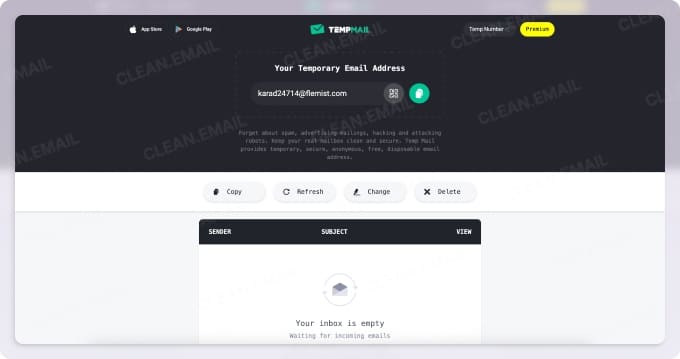
Why it stands out: Temp Mail is one of the most recognizable names in disposable email, and that’s not by accident. For a tool that’s meant to be temporary, it’s put together surprisingly well. You can use it in a browser, install it on your phone, add a browser extension, or even plug it into automated workflows through an API.
Because of that, it doesn’t feel like a quick workaround you use once and forget. It feels more like a proper product that you can come back to whenever you need it.
Key features:
- Instant inbox creation with no signup
- Android and iOS apps
- Chrome, Firefox, and Edge extensions
- Premium options like custom domains, multiple inboxes, and API access
- Extremely easy to use
- Excellent cross-platform support
- Works well for both casual users and testers
- Very popular, which means it’s frequently blocked by websites
- Free version shows ads
📌 Best for: Anyone who wants the smoothest, most user-friendly disposable email experience and doesn’t mind that it’s a well-known service.
2. Guerrilla Mail — Classic 60‑Minute Disposable Email
Type: Temporary inbox (receive‑only)
Inbox lifespan: About 60 minutes
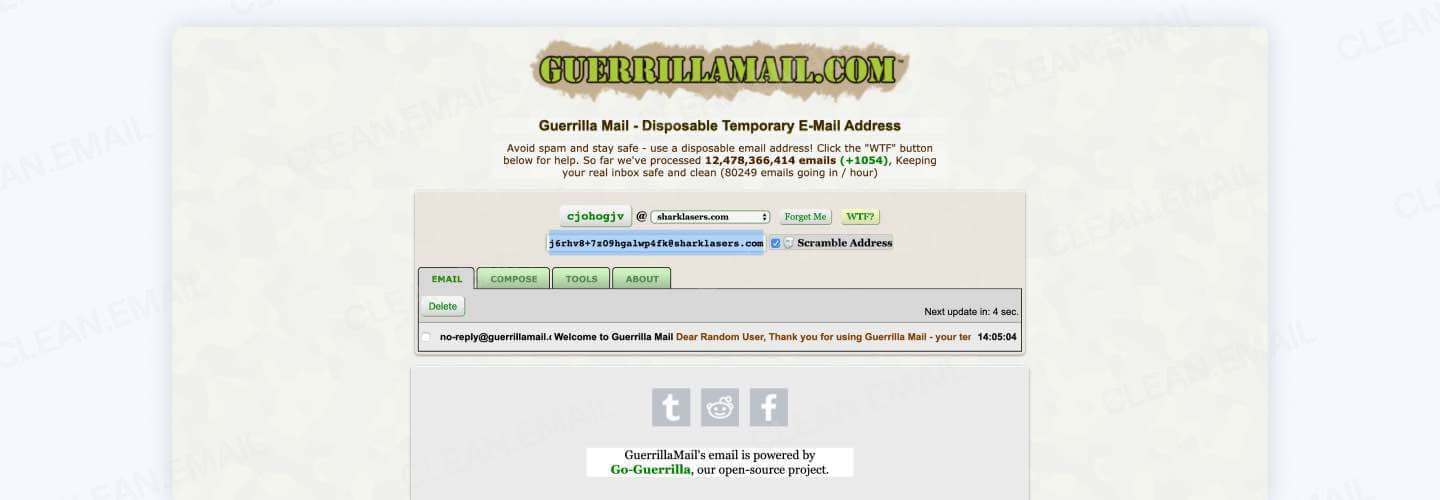
Why makes it stand out: Guerrilla Mail has been around for a long time, and you can tell in both good and bad ways. It's very easy to use, lets you choose your address name, and doesn’t try to be anything more than a temporary inbox. There’s no account, no setup, and no extra features to learn. You open the site, get an inbox, and start using it. That simplicity is really the point.
- Long-running and widely trusted service
- Customizable addresses
- Can receive attachments
- Sending emails is currently disabled
- Interface feels dated
- Domains are often blocked
📌 Best for: Users who just want a simple, customizable temp inbox and don’t care about apps, complex design, or any other extras.
3. Internxt Temporary Email — Privacy‑First Choice
Type: Short‑term anonymous inbox
Inbox lifespan: 3 hours of inactivity
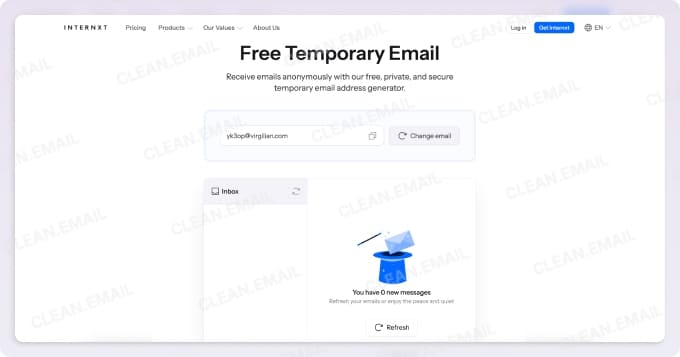
Why it stands out: Internxt approaches temporary email from a privacy-first angle. It doesn’t feel like a quick workaround or a throwaway tool. Instead, it fits naturally into a broader privacy-focused ecosystem that includes things like VPN services and encrypted mail cloud storage. If you already care about digital privacy and use similar tools, Internxt’s temp email option makes sense as part of that bigger picture.
- Strong privacy messaging
- No registration or tracking
- Clean, distraction-free interface
- No mobile apps or API
- Fewer advanced features
📌 Best for: Privacy‑focused users who want a disposable inbox without ads, noise, or unnecessary features.
4. 10 Minute Mail — Best for Ultra‑Quick Signups
Type: 10‑minute disposable inbox
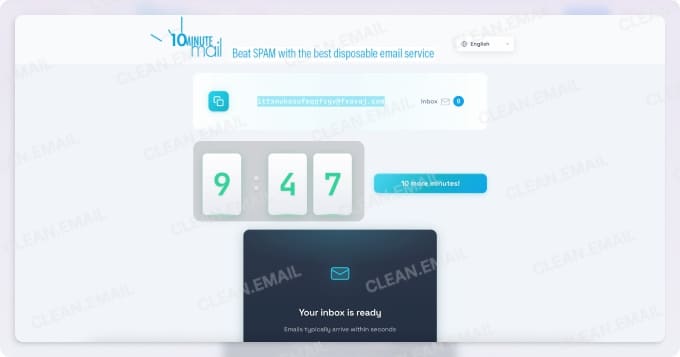
Why it stands out: This service is very straightforward and does exactly what it says it will do, and nothing else. You open it, get an inbox, and see exactly how much time you have before it expires. There’s no setup and nothing extra to figure out. It works best when you just need a quick confirmation email and want to move on.
- Extremely fast and simple
- Clear countdown timer with easy extensions
- No distractions
- Very short lifespan
- Not suitable for slow verifications
📌 Best for: Quick signups, instant downloads, and one-time confirmations.
5. EmailOnDeck — Deliverability‑Focused Temp Email
Type: Longer-lived disposable inbox
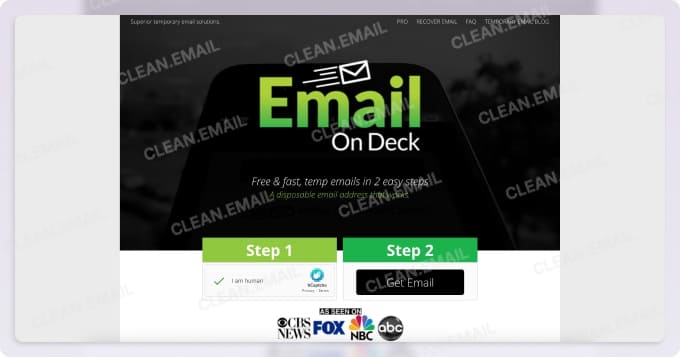
What makes it special: EmailOnDeck stands out because it doesn't focus on flashy features; instead, it focuses on whether emails actually get delivered. That makes it especially useful on sites that tend to block disposable addresses without warning.
Key highlights:
- Inbox often lasts hours or most of the day
- Emphasis on privacy and deliverability
- Pro version supports anonymous email sending
- Better success on sites that block common temp mail
- Clear privacy policies
- CAPTCHA required
- Sending requires a paid plan
📌 Best for: Users who need higher deliverability than typical 10‑minute mail services and situations where other temp mail services fail due to deliverability issues.
6. FakeMail.net — Adjustable Retention Inbox
Type: Receive‑only disposable inbox
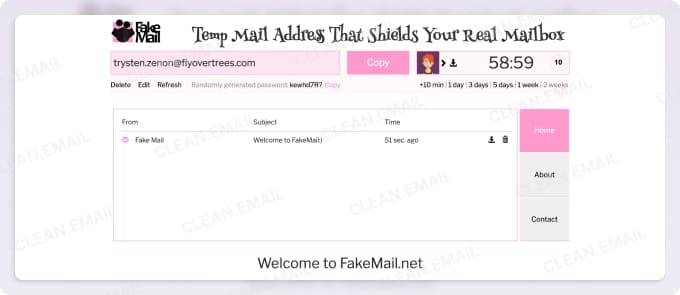
Why it stands out: FakeMail.net lets you control your email, which many temporary services don't. It doesn't make you stick to a 10-minute window; instead, you can choose how long your inbox should stay open, from a few minutes to two full weeks. That flexibility makes it surprisingly useful when you're dealing with things that don't happen right away.
- Flexible retention controls
- Clear auto‑delete behavior
- Unique feature – you can extend inbox lifespan up to two weeks
- Web‑only
- Public inbox model
📌 Best for: Users who need a temporary inbox that lasts longer than a quick verification but don’t want to commit to a real email account.
7. Tempemail.co — Alternative 10‑Minute Mail
Type: 10‑minute disposable email
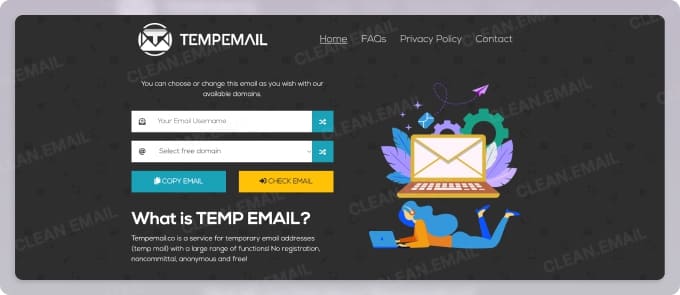
What makes it stand out: Tempemail.co doesn't try to be clever or different, and that's the point. It’s a lightweight service that does one thing well, which is giving you a temporary email address right away. It’s especially handy as a backup when your usual short-term email tool is down or acting up.
- Multiple domain options
- Simple and lightweight
- Very short lifespan
- Heavily flagged as disposable
📌 Best for: Backup option when other 10‑minute services aren’t working or are temporarily blocked.
8. YOPmail — Semi‑Persistent Fake Inbox
Type: Long‑lived fake inbox
Retention: Messages kept ~8 days
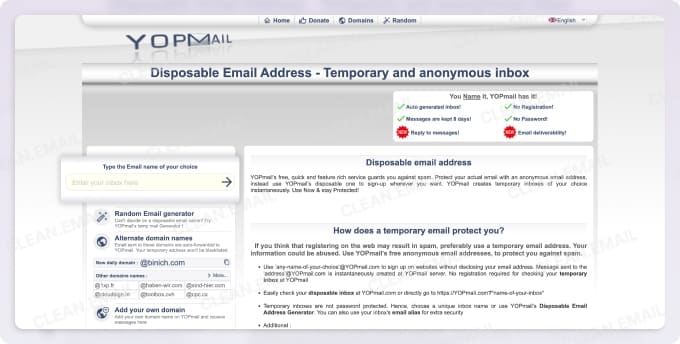
Why it stands out: YOPmail is different from other disposable email services because inboxes don't really expire. You can come back to the same address days later and still find your messages waiting. That makes it useful for demos, repeated logins, or longer testing cycles, though the lack of expiration also brings a few trade-offs.
- Inbox never expires
- Pick any address name
- Useful for repeat logins
- No inbox privacy (anyone can read it)
- Frequently blocked by websites
📌 Best for: Testing, demos, fake identities, or non-sensitive scenarios where persistence matters more than email security.
9. Maildrop — Minimalist & Developer‑Friendly
Type: Disposable inbox
Retention: 24 hours (max 10 messages)
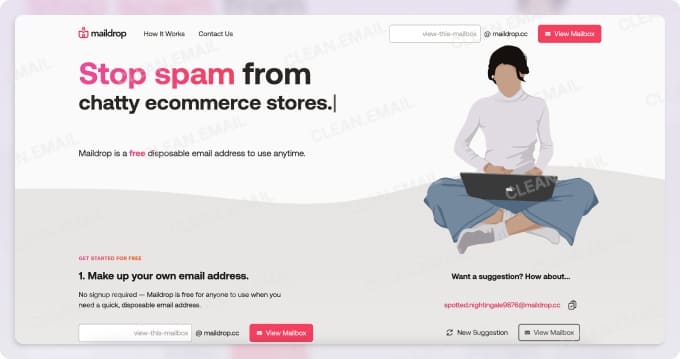
Why it stands out: Maildrop feels like it's been stripped down on purpose. There isn't much noise, clutter, or flashy UI. It's clear that developers and testers are the main audience for this product, not casual users. This is clear from its clean interface and focus on functionality over features.
- Clean, ad‑light interface
- Strong spam filtering
- API access for testing
- Attachments removed
- Strict message and retention limits
📌 Best for: Developers and QA teams who need a predictable, no-nonsense inbox for testing email flows.
10. Generator.email — Multi‑Domain Fake Email Generator
Type: Domain‑based disposable inbox
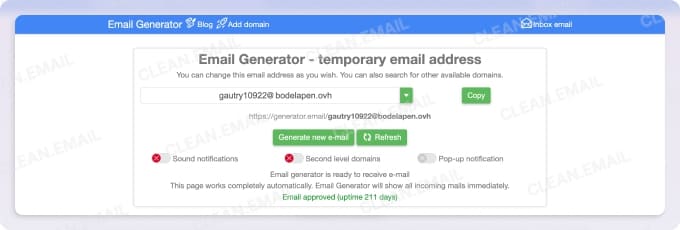
Why it stands out: What Generator.email really excels at is variety. With a massive list of domains to choose from, it lets you create addresses that look far more realistic than typical temp mail. That alone can make a difference on sites that are picky about email formats.
- Huge selection of domains
- Custom email addresses
- Inbox persists while domain is active
- Public inbox URLs
- No apps
📌 Best for: Users who want disposable email addresses that look more “real” and less obviously temporary.
11. Emailnator — Temporary Gmail Addresses
Type: Temp Gmail service
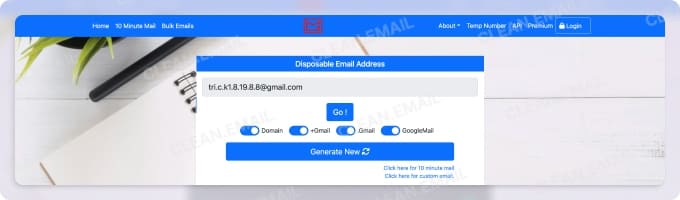
Why it’s different: Emailnator takes an interesting approach by using real Gmail-based addresses. Because of that, it often gets through on sites that block most disposable email services. This can be especially useful when other temp email tools simply don’t work.
- Higher deliverability
- Ideal for OTPs and multi‑step signups
- App‑centric experience
- Not meant for long‑term use
📌 Best for: Signups on sites that reject most disposable email services outright.
12. Temporary Mail — Balanced, Session‑Locked Temp Email
Type: Temporary inbox
Retention: Up to 7 days
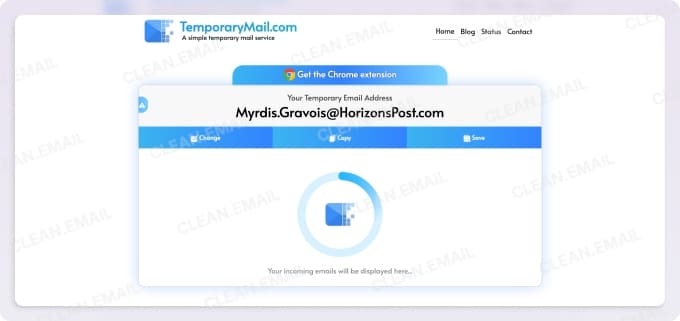
What makes it stand out: Temporary Mail sits somewhere between short-lived inboxes that expire in minutes and longer-term options like YOPmail. Its inboxes are tied to a session, which makes them a bit more private than fully public ones. At the same time, they’re still temporary, so you don’t end up managing another long-term address.
- Longer retention than most temp mail services
- Session-locked inboxes feel more private
- Browser extensions
- No mobile app
- Still recognizable as disposable and may get blacklisted
📌 Best for: Users who want a middle ground between short‑term and persistent fake email.
Fake Email vs Inbox Cleaning: When You Need Both
The only thing that fake email generators are really good at is stopping spam at the sign-up stage. They work well if you need to get to something quickly or if you don't fully trust the site you're signing up for.
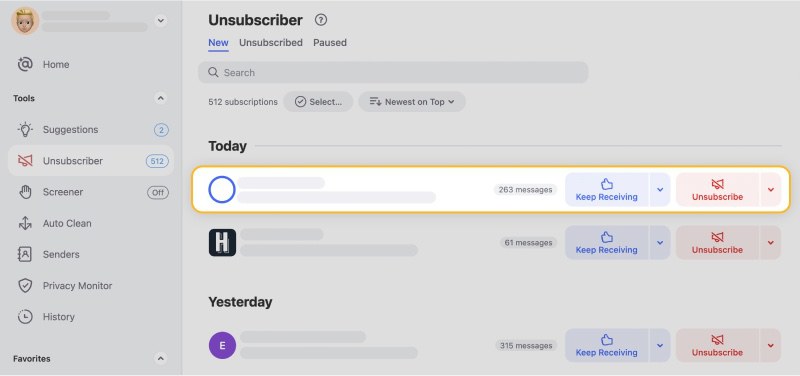
Clean Email helps you deal with what's already in your inbox instead of making new addresses. Its Unsubscriber feature makes it easier to leave more than one mailing list at once without having to look for links in every email.
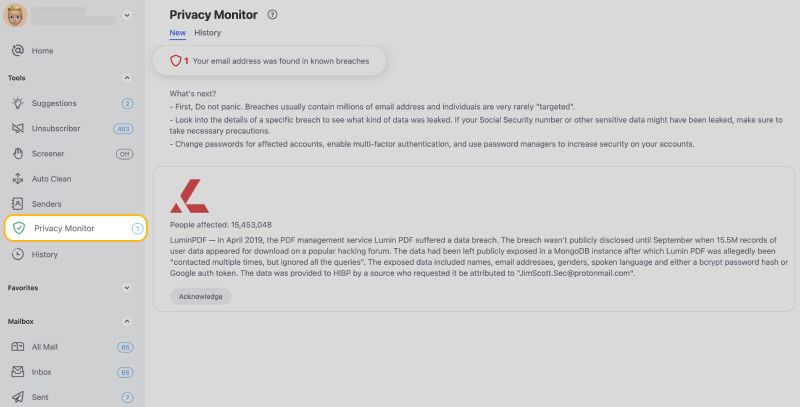
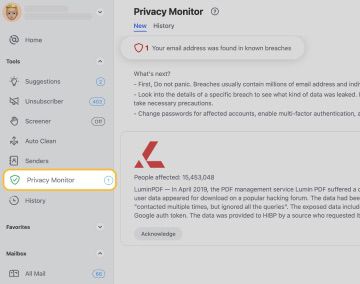
With Privacy Monitor, you can keep an eye on whether your email address shows up in known data breaches, which is often how inbox overload starts in the first place.
So the best practice is:
- Use fake email addresses for risky or one‑time signups;
- Use Clean Email to keep your real inbox organized and under control;
- Used together, they make managing email a lot less frustrating.
Why Fake Email Generators Matter in 2026
Temporary and disposable email services help stop spam before it ever reaches your real inbox. Instead of giving websites your primary address, you use a short-lived or fake email that can be discarded once it’s served its purpose.
That being said, fake email tools are only part of the answer. Some services don't let you use disposable addresses, and over time, a lot of emails still end up in your real inbox. In those situations, inbox-management tools can help you unsubscribe, sort, and automate the cleanup of messages you can't avoid.
Final Verdict: Best Fake Email Generator in 2026
- Best overall: Temp Mail
- Best privacy‑focused: Internxt Temporary Email
- Best for speed: 10 Minute Mail
- Best for deliverability: EmailOnDeck, Emailnator
- Best long‑term fake inbox: YOPmail
- Best for developers: Maildrop
Fake email tools are a great first line of defense, but that's not all there is to inbox hygiene. The best way to stay spam-free in 2026 and beyond is to use an automated inbox cleaner and sign up for things in a smart way.
💡 Read more: Check out our articles about whitelisting emais in Gmail, Outlook, and Yahoo and how to prevent spammers from getting your email address.