How We Tested and Selected These Providers
We looked at more than a dozen common email providers and only considered those services that were genuinely free, didn't require a credit card, and didn't have a trial period that would end. That cut the list right away: those that offer just a free trial didn't make it in, and everything on this list can be used without paying.
In this article, we compare email providers based on how well each one handles attachments, IMAP support, privacy, inbox organization features, and the quality of their mobile apps.
We rated Proton Mail and Tuta on their own terms because they are privacy-first services that work differently than Gmail or Yahoo. And we didn't punish them for making trade-offs on purpose.

Email Service Providers Comparison at a Glance
| Provider |
|---|
| Gmail |
| Proton Mail |
| Outlook.com |
| Zoho Mail |
| Tuta |
| iCloud Mail |
| Mailfence |
| Yahoo Mail |
| GMX Mail |
| AOL Mail |
| Mail.com |
| Storage | Max. attachment | IMAP | Ads | Encryption | Our Rating |
|---|---|---|---|---|---|
| 15 GB | 25 MB | ✅ Yes | ✅ Yes | TLS | 9.0 / 10 |
| 1 GB | 25 MB | ❌ No | ❌ No | E2E | 8.8 / 10 |
| 15 GB | 25 MB | ✅ Yes | ✅ Yes | TLS | 8.5 / 10 |
| 5 GB | 25 MB | ✅ Yes | ❌ No | TLS | 8.2 / 10 |
| 1 GB | 25 MB | ❌ No | ❌ No | E2E | 8.1 / 10 |
| 5 GB | 20 MB | ✅ Yes | ❌ No | TLS | 7.6 / 10 |
| 500 MB | 25 MB | ✅ Yes | ❌ No | E2E opt | 7.5 / 10 |
| 20 GB | 25 MB | ✅ Yes | ✅ Yes | TLS | 7.2 / 10 |
| 65 GB | 50 MB | ✅ Yes | ✅ Yes | TLS | 7.0 / 10 |
| 1 TB | 25 MB | ✅ Yes | ✅ Yes | TLS | 6.5 / 10 |
| 65 GB | 30 MB | ✅ Yes | ✅ Yes | TLS | 6.2 / 10 |
📌 Note: TLS = in-transit encryption, server-readable at rest. E2E = end-to-end, provider cannot read content. E2E opt = optional via PGP keys.
1. Gmail
| Storage | 15 GB (shared with Drive and Photos) |
| Max attachment | 25 MB send / up to 10 GB via Drive link |
| IMAP / POP | Yes (both) |
| Ads | Sidebar ads only, no inbox injection |
| Mobile apps | iOS and Android |
| Encryption | TLS in transit and at rest (Google holds keys) |
| Paid upgrade | Google One storage from $2.99/mo |
Privacy
In 2017, Google stopped scanning the body of emails for ad targeting, but it still processes metadata to improve its services. Emails are encrypted in transit and at rest, but Google has the decryption keys. This means Google retains the ability to access the data.
If privacy is a primary concern, Proton Mail or Tuta are the better options. For general use, Gmail's privacy posture is reasonable.
Core Features
- Conversation threading with collapsible view
- Labels and nested labels (not folders)
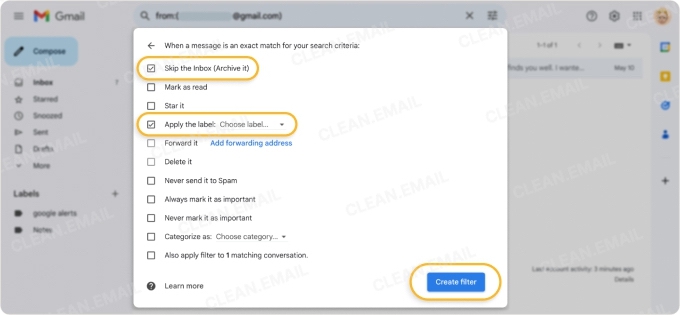
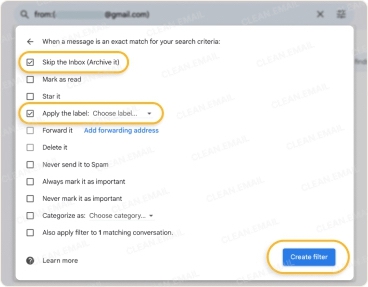
- Filters and rules for automated sorting
- Multiple signatures, scheduled send, snooze
- Confidential mode with message expiry and passcode lock
- Keyboard shortcuts covering nearly every action
Advanced Features
Gmail really shines when it comes to search operators. Operators like has:attachment, larger:10M, and older_than:1y work perfectly with inboxes of any size.
With Google integration, calendar invites, package tracking, and flight confirmations automatically show up in the inbox. Also, Gmail allows for interactive actions (such as RSVP and forms) directly inside messages.
Gmail has also added AI directly into the interface through Gemini. It can summarize long threads, draft full emails from short prompts, and suggest replies based on context. It also pulls out key details like dates or next steps and helps prioritize important messages.
Basic Plan Limitations
- 15 GB fills faster than expected since Drive and Photos share the same quota.
- No end-to-end encryption; Google retains access to encrypted data.
- Spam filter occasionally misfires on newsletters and cold emails.
- Fewer native rules and automation options compared to tools like Outlook or dedicated inbox managers.
What’s Available in the Paid Version
Google One and Google Workspace plans expand Gmail’s capabilities beyond the basic experience:
- More storage: starting from 100 GB.
- Advanced AI features: broader access to Gemini tools across Gmail and Docs.
- Custom email domains (Workspace): use Gmail with a professional domain.
- Enhanced security and admin controls (Workspace): useful for teams and businesses.
For individual users, the upgrade is mainly about storage and AI convenience. For professional use, Workspace adds meaningful value through domain control and collaboration tools.
Best For
Most users. The search depth, ecosystem integrations, and third-party app compatibility make it the default recommendation unless there is a specific reason to look elsewhere.
| Our rating: 9.0 / 10 | |
|---|---|
| Privacy & Security | 7 / 10 |
| Features | 10 / 10 |
| Inbox organization | 9 / 10 |
| Ease of use | 10 / 10 |
| Free tier value | 9 / 10 |
2. Proton Mail
| Storage | 1 GB (shared with Proton Drive) |
| Max attachment | 25 MB |
| IMAP / POP | No — IMAP Bridge available on paid plans only |
| Ads | None |
| Mobile apps | iOS and Android |
| Encryption | End-to-end (client-side, zero-knowledge) |
| Paid upgrade | Proton Mail Plus from $3.99/mo |
Privacy
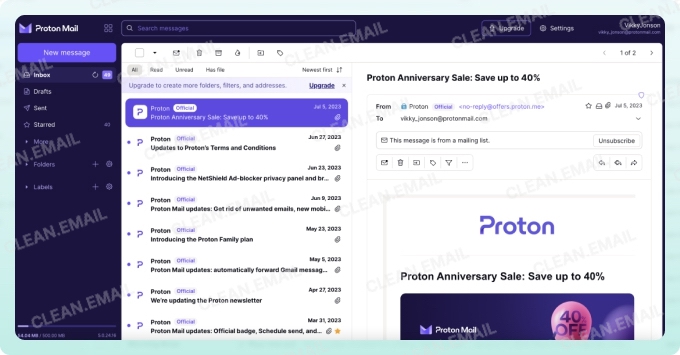
Proton Mail is arguably the best email service for personal use for those who value privacy. It encrypts messages before they leave your device. Proton doesn't have any decryption keys, so it can't read your mail even under legal compulsion. It is based in Switzerland and follows Swiss privacy law.
Tracking pixels are blocked by default. IP addresses are taken out of outgoing headers. These are architectural features, not opt-in settings.
Core Features
- End-to-end encryption for all Proton-to-Proton messages
- Password-protected emails to non-Proton recipients
- Message expiry timers
- Filters, folders, and labels
- No ads or tracking on any plan
Advanced Features
Search is completely encrypted on the client side and indexes data locally instead of on the server side. It works slower on large inboxes but still ensures that only the user can access the data.
💡 Tip: Check out our detailed comparison of Gmail vs. Proton Mail.
Basic Plan Limitations
- 1 GB storage fills quickly with attachments.
- No IMAP, so you are limited to Proton's web and mobile apps.
- 150 outgoing messages per day.
What’s Available in the Paid Version
Proton Mail Plus and higher-tier plans expand Proton’s capabilities beyond the default tier:
- More storage: higher mailbox limits for long-term use and attachments.
- IMAP/SMTP access (Bridge): connect Proton Mail to desktop clients like Outlook or Apple Mail.
- Custom email domains: use Proton Mail with your own domain.
- Multiple addresses and identities: create and manage several email aliases under one account.
For individual users, the upgrade is mainly about flexibility and access across devices. For professional use, it enables proper domain-based communication while keeping end-to-end encryption intact.
Best For
Anyone for whom privacy is a genuine requirement. Journalists, people in regulated industries, or users who do not want their email readable by a server operator.
| Our rating: 8.8 / 10 | |
|---|---|
| Privacy & Security | 10 / 10 |
| Features | 7 / 10 |
| Inbox organization | 8 / 10 |
| Ease of use | 8 / 10 |
| Free tier value | 9 / 10 |
3. Outlook.com
| Storage | 15 GB (separate from OneDrive) |
| Max attachment | 20 MB send / up to 10 GB via OneDrive link |
| IMAP / POP | Yes |
| Ads | Yes — displayed within the interface |
| Mobile apps | iOS and Android |
| Encryption | TLS in transit and at rest (Microsoft holds keys) |
| Paid upgrade | Microsoft 365 Personal from $6.99/mo |
Privacy
Microsoft collects metadata and may use it for personalization in the free consumer tier. The privacy posture is comparable to Gmail, it is secure, but not end-to-end encrypted.
Accounts connected to Microsoft 365 subscriptions receive additional data protections, but those are not part of the free plan.
💡 Tip: Read our Outlook vs Gmail comparison to keep your inbox clean.
Core Features
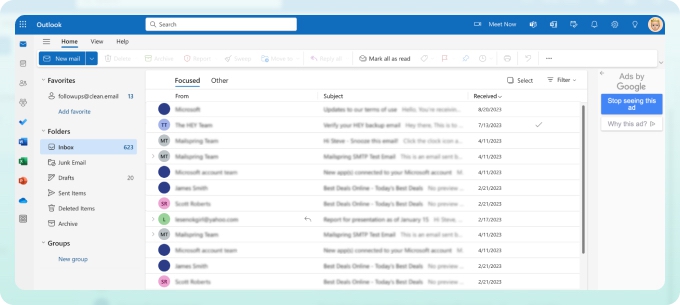
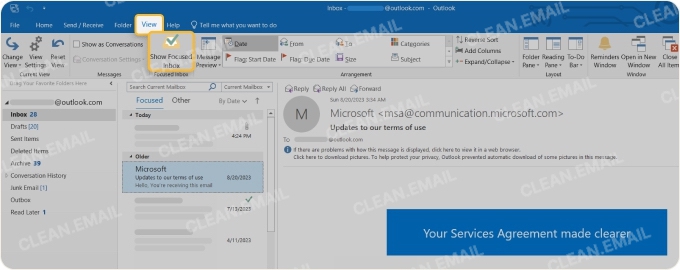
- Focused Inbox — ML-based sorting that learns from behavior over time
- Categories, folders, and flags
- Up to 10 email aliases per account
- Scheduled send and delayed delivery
- Calendar with Teams meeting link generation
Advanced Features
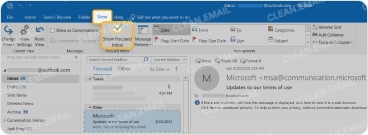
The Focused Inbox is the most useful native sorting feature among all free email service providers tested. For users evaluating the best email service provider, this level of adaptive filtering stands out. Unlike Gmail's static tabs, it combines machine learning with your behavior and improves over time as you train it.
Sweep rules are the other standout: delete all from a sender, keep only the latest, or auto-delete future messages. It is a faster path to inbox zero than building manual filter rules.
Basic Plan Limitations
- Ads appear inside the interface, not just in sidebars.
- Spam filter routes legitimate mail to junk more often than Gmail.
- Lacks some advanced organizational features.
What’s Available in the Paid Version
- No-ads experience: removes ads from the inbox interface.
- More storage: expanded mailbox capacity (up to 100 GB).
- Advanced security features: improved protection against phishing and malware.
- Microsoft 365 integration: access to Office apps and AI-powered Copilot features.
For individual users, the upgrade improves usability and storage. For professional use, it adds value through deeper integration with Microsoft’s productivity ecosystem.
Best For
Users already in the Microsoft ecosystem, who use Office apps, Teams, and Windows, and don’t want to switch between different email providers. Also a strong choice for anyone who wants ML-based inbox sorting without configuring anything manually.
| Our rating: 8.5 / 10 | |
|---|---|
| Privacy & Security | 7 / 10 |
| Features | 9 / 10 |
| Inbox organization | 9 / 10 |
| Ease of use | 9 / 10 |
| Free tier value | 8 / 10 |
4. iCloud Mail
| Storage | 5 GB (shared with iCloud Drive, backups, Photos) |
| Max attachment | 20 MB send / up to 5 GB via Mail Drop |
| IMAP / POP | IMAP only |
| Ads | None |
| Mobile apps | iOS and macOS native apps, web access |
| Encryption | TLS in transit, Apple holds keys at rest |
| Paid upgrade | iCloud+ from $0.99/mo |
Privacy
Apple does not use email data for advertising and does not scan message content for personalization. That said, Apple holds encryption keys at rest — it is not end-to-end encrypted by default.
Mail Privacy Protection blocks tracking pixels and hides your IP from senders. Available at no cost in Apple Mail on all Apple devices — no iCloud+ subscription required.
Core Features
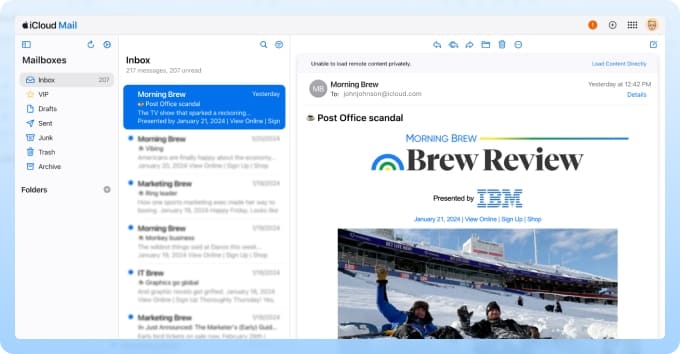
- Native sync across all Apple devices with no configuration
- One-click unsubscribe from marketing emails
- Mail Privacy Protection blocks tracking pixels
- VIP sender filtering
Advanced Features
iCloud Mail’s advanced capabilities are built around its deep integration with the Apple ecosystem. It works seamlessly with apps like Calendar, Contacts, Files, and Safari, allowing users to share content or act on emails without switching between apps.
It also supports system-level workflows such as setting Mail as the default sharing option across Apple devices, along with Continuity features that let users start an email on one device and finish it on another.
For attachments, Mail Drop automatically converts large files into iCloud download links, avoiding size limits and eliminating the need for external file-sharing tools
Limitations
- 5 GB of shared storage is used across Mail, Photos, backups, and iCloud Drive, which can limit available email space.
- No end-to-end encryption by default, as Apple holds encryption keys for data at rest.
- Limited compatibility outside the Apple ecosystem, with fewer features available when not using Apple devices or apps.
- Fewer advanced inbox management tools, with less flexibility compared to other free email account providers like Gmail or Outlook.
What’s Available in the Paid Version
iCloud+ plans enhance iCloud Mail beyond the basic Apple ID offering:
- More storage: shared across Mail, Photos, backups, and iCloud Drive.
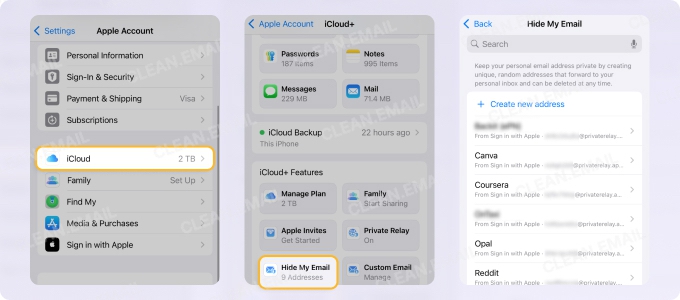
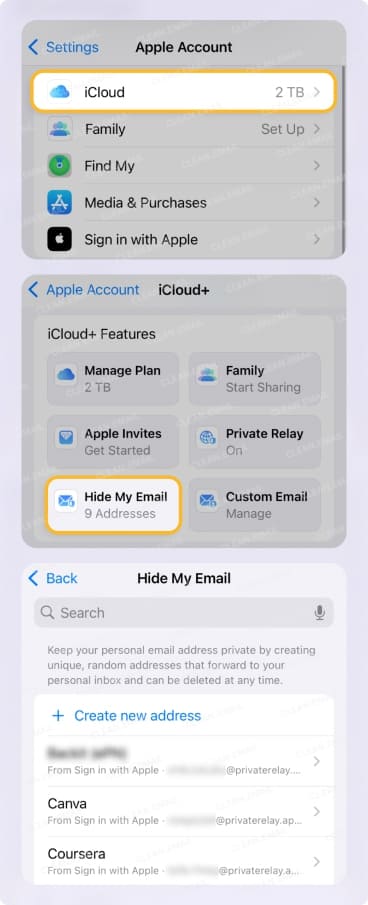
- Hide My Email: generates disposable email aliases for signups and subscriptions.
- Custom email domains: use iCloud Mail with a personal domain.
- Private Relay: adds an extra layer of network-level privacy when browsing.
For individual users, the upgrade is primarily about privacy and storage. For Apple users, it also strengthens ecosystem integration across devices.
Best For
iCloud Mail is definitely the best free email service for personal use for any iPhone and Mac owner. In that case, the native integration works perfectly. iCloud Mail makes things harder for people who use more than one platform or Android.
| Our rating: 7.6 / 10 | |
|---|---|
| Privacy & Security | 8 / 10 |
| Features | 7 / 10 |
| Inbox organization | 7 / 10 |
| Ease of use | 9 / 10 |
| Free tier value | 7 / 10 |
5. Yahoo Mail
| Storage | 20 GB |
| Max attachment | 25 MB |
| IMAP / POP | Yes |
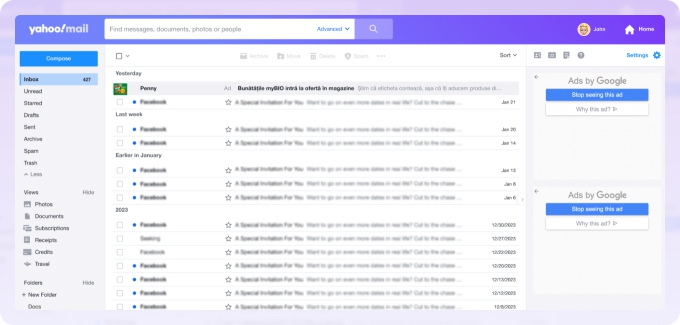
| Ads | Yes — inside the inbox |
| Mobile apps | iOS and Android |
| Encryption | TLS in transit and at rest (Yahoo holds keys) |
| Paid upgrade | Yahoo Mail Pro from $3.49/mo |
Privacy
Yahoo's security record isn't great; a breach in 2013 affected all 3 billion accounts, and in 2016 it was revealed that the government was scanning emails. The current infrastructure is more secure, but it's important to know about the past.
Yahoo's service is supported by ads, and email data is used to send targeted ads. The free tier doesn't have any real privacy features.
Core Features
- 20 GB storage
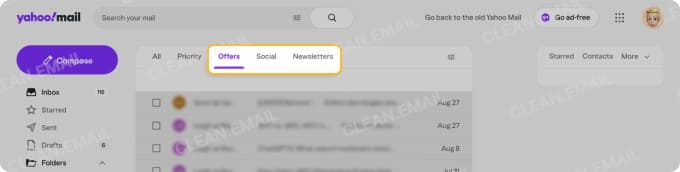
- Inbox category tabs: Primary, Offers, Social, Newsletters
- Attachment view for quickly finding emails with files
- Customizable inbox themes and layout
- Keyboard shortcut support
Advanced Features
The most notable feature is AI-generated email summaries, which help users quickly extract key information from longer or complex emails. However, they appear selectively—not on every message and still not available for all users.
Alongside this, Yahoo offers basic AI-assisted prioritization and quick actions (e.g., extracting events or tracking details).
Basic Plan Limitations
- Ads appear inside the inbox, not just in sidebars.
- Spam filter is weaker than Gmail's, so more manual management is needed.
- Security history is a concern for accounts holding sensitive information.
What’s Available in the Paid Version
Yahoo Mail Pro provides an optimized experience:
- Ad-free inbox: removes ads from the interface.
- More storage: increased mailbox capacity.
- Disposable email addresses: create temporary addresses for secure signups.
- Email forwarding and account protection: maintain account activity and control message routing.
For individual users, the upgrade focuses on reducing distractions and increasing control. It is primarily a usability improvement rather than a feature expansion.
Best For
Users who receive large volumes of email and want long-term storage. Not recommended for accounts that have private, financial, or work-related information.
| Our rating: 7.2 / 10 | |
|---|---|
| Privacy & Security | 5 / 10 |
| Features | 7 / 10 |
| Inbox organization | 7 / 10 |
| Ease of use | 8 / 10 |
| Free tier value | 8 / 10 |
6. Zoho Mail
| Storage | 5 GB per user |
| Max attachment | 25 MB |
| IMAP / POP | POP on free, IMAP on paid plans |
| Ads | None |
| Mobile apps | iOS and Android |
| Encryption | TLS in transit and at rest |
| Paid upgrade | Free for up to 5 users / Mail Lite from $1/user/mo |
Privacy
Zoho generates revenue from its paid SaaS suite rather than advertising. No ads, and email data is not used for behavioral targeting. This is a structurally different model from Gmail or Yahoo.
💡 Tip: Check out our comparison of Zoho Mail vs. Gmail to see which is better to use.
Core Features
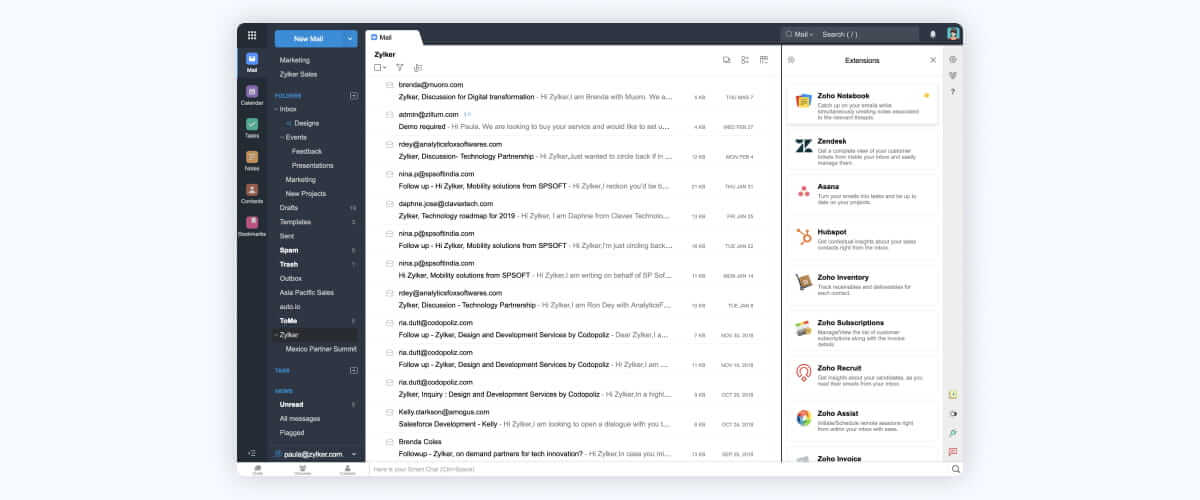
- Streams — threaded internal discussions inside the mail client
- Tasks, notes, contacts, and calendar in one interface
- Two-factor authentication and antivirus scanning included
- eWidget panel for CRM and third-party app integrations
Advanced Features
Custom domain support is the reason Zoho ranks this high. Most competitors either do not offer it or require a paid plan. For a freelancer or small team that needs a professional email address, this changes the value calculation entirely.
Native integration with Zoho CRM, Zoho Projects, and Zoho Cliq requires no third-party connectors, since everything communicates directly within the Zoho ecosystem.
Basic Plan Limitations
- IMAP access requires upgrading to a paid plan.
- 5 GB fills quickly if you receive media-heavy messages.
- Interface has more complexity than Gmail or Outlook for new users.
What’s Available in the Paid Version
Zoho Mail Lite and Premium plans unlock full email hosting capabilities:
- IMAP/POP/ActiveSync access: use Zoho Mail with external email clients and mobile sync.
- More storage and larger attachments: supports heavier email workflows.
- Email retention and eDiscovery: enables compliance and long-term archiving.
- Advanced admin controls: SSO, security policies, and organization-level management.
For individual users, the upgrade adds flexibility in how email is accessed. For businesses, it introduces the infrastructure needed for secure and compliant email hosting.
Best For
Independent entrepreneurs and small teams that need a professional custom-domain email without paying for Google Workspace or Microsoft 365. Also strong for anyone who wants a clean, no-ads free-tier experience.
| Our rating: 8.2 / 10 | |
|---|---|
| Privacy & Security | 8 / 10 |
| Features | 8 / 10 |
| Inbox organization | 8 / 10 |
| Ease of use | 7 / 10 |
| Free tier value | 9 / 10 |
7. AOL Mail
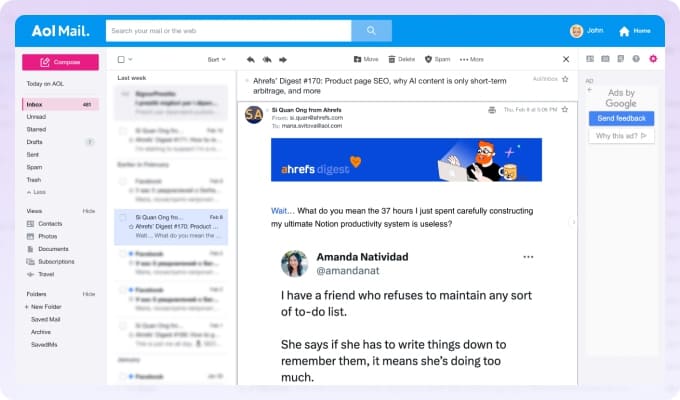
| Storage | 1 TB |
| Max attachment | 25 MB |
| IMAP / POP | Yes |
| Ads | Yes — prominent |
| Mobile apps | iOS and Android |
| Encryption | TLS in transit and at rest |
| Paid upgrade | From $4.99/mo |
Privacy
AOL is owned by Yahoo Inc. and shares the same advertising-driven model and some of the same historical privacy concerns. No meaningful privacy features are included. Email accounts are used for ad delivery.
Core Features
- Basic spam filtering and security features
- Automated rules and filters
- Calendar and contacts included
Advanced Features
1 TB is AOL Mail's genuinely differentiated feature. Beyond storage, AOL Mail does not offer modern advanced capabilities such as AI-assisted sorting, smart automation, or deep integrations. Its feature set remains focused on basic functionality rather than innovation.
If you are consolidating old email accounts, archiving a decade of correspondence, or managing a mailbox with very large attachment volume over many years, 1 TB changes the math significantly.
💡 Tip: Check out our detailed comparison of AOL Mail vs Gmail.
Basic Plan Limitations
- No advanced features such as AI tools, smart sorting, or privacy protection
- Interface has not meaningfully updated in years
- Heavy and unavoidable ad presence
What’s Available in the Paid Version
AOL Mail paid options focus on improving the experience rather than adding new functionality:
- Ad-free email: removes ads from the web and mobile interface.
- Identity protection (LifeLock).
- Antivirus and security tools (McAfee).
- Technical support and device protection.
For most users, the upgrade is purely about removing ads and maintaining long-term access, not expanding feature depth.
Best For
Long-term email archiving and users who need to store a very large volume of mail without paying. Not suitable as an active daily inbox due to weak organizational tools.
| Our rating: 6.5 / 10 | |
|---|---|
| Privacy & Security | 5 / 10 |
| Features | 5 / 10 |
| Inbox organization | 6 / 10 |
| Ease of use | 7 / 10 |
| Free tier value | 9 / 10 |
8. Tuta
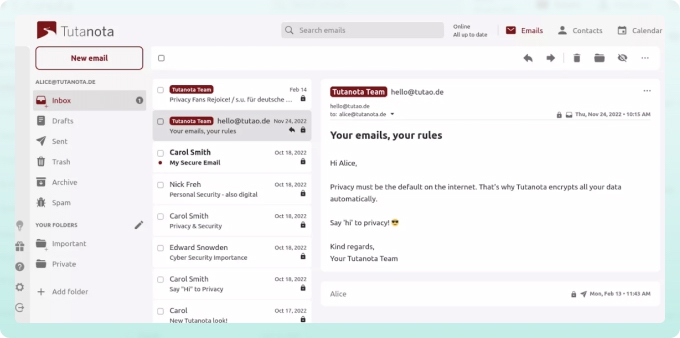
| Storage | 1 GB |
| Max attachment | 25 MB |
| IMAP / POP | No — proprietary protocol only |
| Ads | None |
| Mobile apps | iOS and Android |
| Encryption | End-to-end on inbox, calendar, and contacts |
| Paid upgrade | Personal and Business plans from €3/mo |
Privacy
Tuta is another best email service provider for privacy-focused users. It encrypts your email, calendar entries, and contacts end-to-end. Access to data is restricted to the user, just like with Proton. The company is based in Germany and follows GDPR rules, which means there is no advertising and no tracking of behavior.
Tuta has publicly declined to add AI features because it could mean decrypting user data on the server side. This is a feature for people who care about their privacy.
Core Features
- E2E encryption across email, calendar, and contacts
- Encrypted search (local index, client-side only)
- One custom domain alias
- Inbox rules and folders
- No ads, no third-party trackers
Advanced Features
The scope of encryption distinguishes Tuta from most providers. Not just email, but calendar events and contact data are encrypted too. This is useful for users who rely on the calendar for sensitive scheduling.
Encrypted search works but is slower on large inboxes. The local index means searches are device-dependent until synced.
Basic Plan Limitations
- No IMAP — you cannot use Tuta with a third-party email client.
- 1 GB storage fills quickly.
- Search speed is noticeably slower than Gmail on large inboxes.
What’s Available in the Paid Version
Tuta paid plans extend the privacy-focused offering with more capacity and control:
- More storage: increased mailbox space for encrypted data.
- Custom domains: use Tuta with a personal or business domain.
- Additional email addresses: manage multiple identities securely.
- Advanced features: tools like auto-responder and expanded inbox rules.
For individual users, the upgrade is mainly about storage and flexibility. For professional use, it enables secure communication under a custom domain.
Best For
Users who want end-to-end encryption across their communications without the Swiss legal framework Proton provides. A practical and slightly more affordable alternative to Proton Mail for European users.
| Our rating: 8.1 / 10 | |
|---|---|
| Privacy & Security | 10 / 10 |
| Features | 7 / 10 |
| Inbox organization | 7 / 10 |
| Ease of use | 8 / 10 |
| Free tier value | 8 / 10 |
9. Mailfence
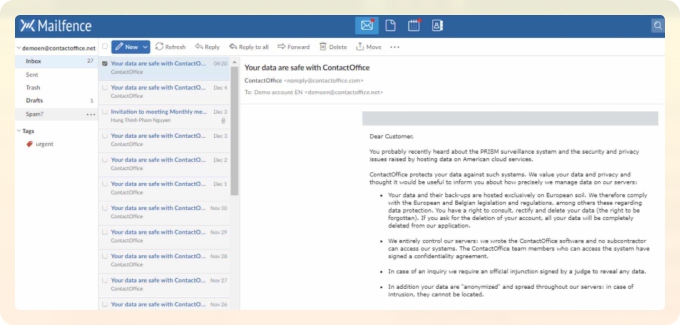
| Storage | 500 MB mail / 500 MB documents (1 GB total) |
| Max attachment | 25 MB |
| IMAP / POP | Yes (both) |
| Ads | None |
| Mobile apps | Web-based, mobile-responsive. No native app. |
| Encryption | Optional E2E via OpenPGP / digital signatures |
| Paid upgrade | Entry plan from €2.50/mo |
Privacy
Mailfence is based in Belgium under EU law. It offers optional end-to-end encryption via OpenPGP — you can encrypt specific messages rather than having E2E enforced across everything.
Digital signatures allow recipients to cryptographically verify that a message came from you, not an impersonator. No other email provider on this list offers this.
Core Features
- OpenPGP-based E2E encryption — optional per message
- Digital signatures for sender identity verification
- Calendar, document storage, and contacts included
- No ads on any plan
- Both IMAP and POP supported
Advanced Features
Mailfence’s advanced functionality is centered on OpenPGP-based encryption and identity verification. Users can encrypt messages on a per-email basis rather than applying encryption globally, which provides flexibility depending on the sensitivity of the communication.
It also supports digital signatures, allowing recipients to verify the authenticity and integrity of a message. This is particularly relevant in professional contexts where proving sender identity matters.
In addition, Mailfence includes built-in key management, enabling users to generate, import, and manage encryption keys directly within the interface without relying on external tools.
Basic Plan Limitations
- 500 MB mail storage is the smallest on this list — will fill quickly
- No native mobile app; the web interface is mobile-adapted but not native
- OpenPGP E2E only works when both parties have keys configured
What’s Available in the Paid Version
Mailfence paid plans expand the secure email environment:
- More storage: increased capacity for emails and documents.
- Custom domains and aliases: support for professional identity management.
- ActiveSync support: improved synchronization across devices.
- Priority support: faster assistance for paid users.
For individual users, the upgrade removes storage constraints. For professional use, it adds the structure needed for secure, domain-based communication.
Best For
Professionals in fields where sender verification matters — legal, finance, research, compliance. Not suitable as a daily personal inbox for high-volume email due to storage limits.
| Our rating: 7.5 / 10 | |
|---|---|
| Privacy & Security | 9 / 10 |
| Features | 7 / 10 |
| Inbox organization | 6 / 10 |
| Ease of use | 6 / 10 |
| Free tier value | 7 / 10 |
10. GMX Mail
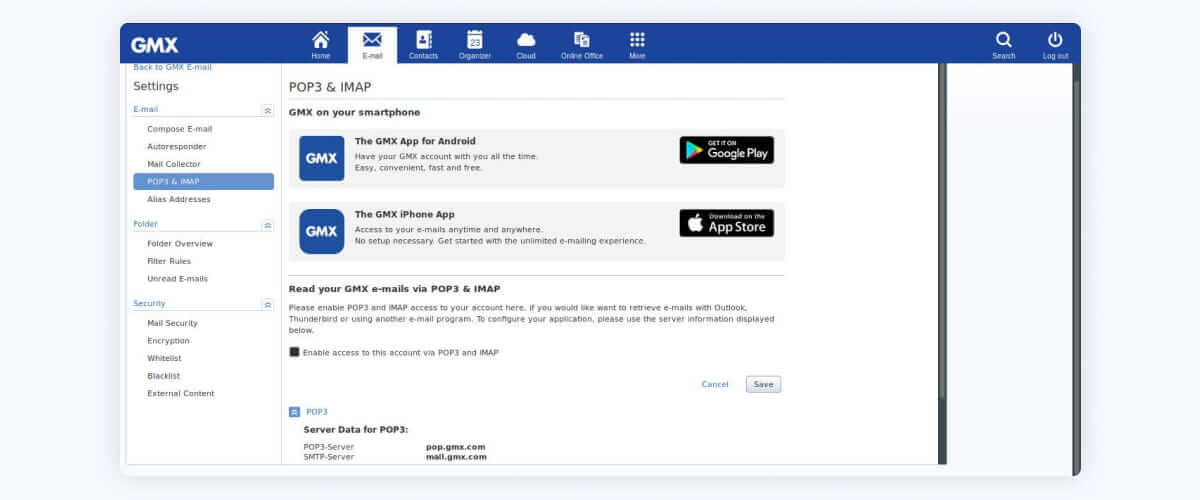
| Storage | 65 GB |
| Max attachment | 50 MB (largest on this list) |
| IMAP / POP | Yes (both) |
| Ads | Yes |
| Mobile apps | iOS and Android |
| Encryption | TLS in transit, S/MIME supported |
| Paid upgrade | Free only |
Privacy
GMX is operated by United Internet, a German company, and subject to German data protection law. Free accounts are supported by advertising. S/MIME encryption is supported for organizations using certificate-based email security.
Core Features
- 65 GB storage
- 50 MB attachment limit — the highest among all providers tested
- Up to 10 email aliases under one account
- 2 GB cloud drive, calendar, and basic document editing
- IMAP and POP both supported
Advanced Features
The 50 MB attachment limit is GMX's defining feature. Most email service providers cap at 20–25 MB, which has become genuinely limiting as PDF decks, compressed archives, and design files routinely exceed that threshold.
The alias system allows up to 10 addresses routing to one inbox, which is more generous than most competitors and useful for separating personal, work, and signup email without managing multiple accounts.
Basic Plan Limitations
- The interface feels old compared to Gmail or Outlook.
- Spam filtering isn't as good as it is with the best mail service providers.
- Does not have end-to-end encryption.
What’s Available in the Paid Version
GMX premium tiers (where available) enhance the service:
- Higher attachment limits: send larger files than the free cap.
- Reduced or no ads: cleaner interface experience.
- Expanded cloud storage: additional space for files and emails.
- Customer support: access to direct support channels.
For most users, the upgrade is focused on convenience and file handling rather than introducing new core functionality.
Best For
Users who send big files a lot and need a free account that works with IMAP. Also useful as a backup account for people who want extra aliases.
| Our rating: 7.0 / 10 | |
|---|---|
| Privacy & Security | 7 / 10 |
| Features | 7 / 10 |
| Inbox organization | 6 / 10 |
| Ease of use | 7 / 10 |
| Free tier value | 8 / 10 |
11. Mail.com
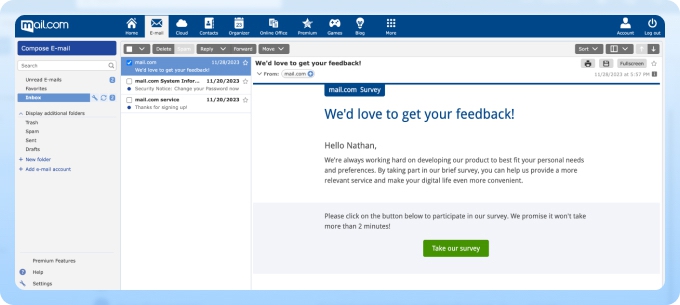
| Storage | 65 GB |
| Max attachment | 30 MB |
| IMAP / POP | Yes |
| Ads | Yes — heavy ad load |
| Mobile apps | iOS and Android |
| Encryption | TLS in transit and at rest |
| Paid upgrade | Premium from $2.99/mo |
Privacy
Mail.com is operated by United Internet — the same parent company as GMX. Subject to German data protection law. Accounts are advertising-supported. No notable privacy features.
Core Features
- 65 GB storage
- 30 MB attachment limit
- 200+ themed custom domain options (e.g. @consultant.com, @techie.com)
- Integrated calendar and cloud storage
- Basic filters and sorting
Advanced Features
Mail.com’s most distinctive feature is its wide selection of domain options, with over 200 address variations available. Instead of a generic @mail.com address, users can choose a domain that fits a specific use case or identity, which is useful for creating secondary or purpose-specific email accounts.
It also includes Mail Collector, allowing users to manage emails from multiple external accounts within a single inbox, along with basic rule-based automation for organizing incoming messages.
Basic Plan Limitations
- Ad load is among the heaviest on this list
- Spam filtering is below average
- No organizational advantage
What’s Available in the Paid Version
Mail.com Premium upgrades the user experience with more control and flexibility:
- No-ads inbox: removes advertisements from the interface.
- IMAP/POP access: connect to third-party email clients.
- Higher attachment limits: send larger files.
- Advanced email tools: features like scheduled send, read receipts, and message recall.
For individual users, the upgrade mainly improves usability and access. It is best suited for users who want to integrate Mail.com into a broader email workflow.
Best For
A novelty secondary email address with a specific domain style. Not recommended as a primary inbox.
| Our rating: 6.2 / 10 | |
|---|---|
| Privacy & Security | 6 / 10 |
| Features | 6 / 10 |
| Inbox organization | 5 / 10 |
| Ease of use | 7 / 10 |
| Free tier value | 7 / 10 |
Extend Your Email Service Provider with Clean Email
All of the email service providers on this list can send, receive, and store email. But none of them takes care of the layer below that: cleaning up old junk, managing subscriptions in bulk, and keeping the inbox clean on a regular basis.
Clean Email works with any IMAP-compatible email service, like Gmail, Outlook, Yahoo, iCloud, AOL, or GMX. It also adds features that even the best free email providers have never built into their services:
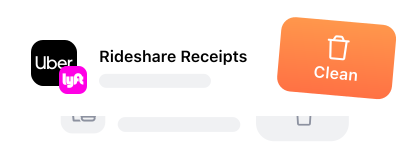
- Bulk cleaning: Emails are grouped by sender by default, and you can further sort them by domain or type. This allows you to clean entire categories at once without manual selection or repetitive actions, making the process more efficient.
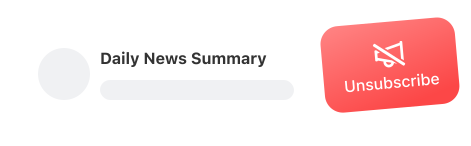
- Mass unsubscribe at scale: Identifies subscription emails across your inbox and lets you opt out from them in bulk, even when unsubscribe links are missing.
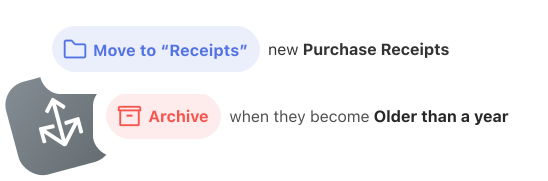
- Auto Clean: Advanced cleanup rules that run continuously after setup and can be applied to both new and existing emails, not just incoming messages.
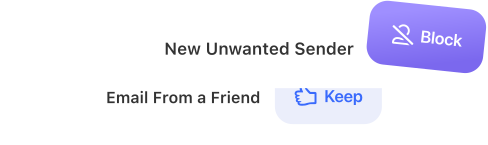
- Screener (first-contact control): Holds emails from unknown senders for review before they reach your main inbox.
- Pre-built Smart Folders: Automatically sorts your emails into over 30 categories, such as Online Shopping, Finance and Insurance, Social Notifications, and more, without any manual setup.
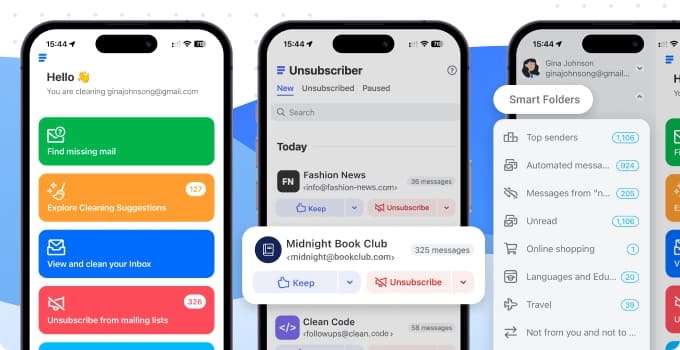
It works alongside your existing email app. You do not change your address or your workflow: you add a cleanup layer on top of whichever provider you already use. And what’s best? Clean Email is available on any platform, whether you use a Mac, a mobile device, or a web browser.
Verdict
For general use, Gmail tops our list of free email providers as the best option. At this point, no other app can match the search depth, integrations, and compatibility with third-party apps or even marketing tools like HubSpot or Mailchimp. Start here unless you have a good reason to look somewhere else.
When privacy is a must, not just a preference, Proton Mail and Tuta are the best private email provider options. In terms of architecture, both are different from all the other email service providers on this list. Proton has a slight edge because of its Swiss legal jurisdiction and larger ecosystem. If you only need an encrypted calendar in addition to email, Tuta is the better choice.
If you're already using Microsoft products or want to sort your inbox without having to set anything up, Outlook.com is a good choice. The trade-offs are the ads and the spam filter that sometimes misses.
Zoho Mail is the only service on this list that lets you use your own domain name. That one feature makes it easy for freelancers and small teams to choose a professional email address.
If your main devices aren't Apple, iCloud Mail won't work well. Integration with iPhone and Mac is smooth. It's not worth the trouble for anyone else.
GMX and AOL are both storage options: GMX is for big attachments, and AOL is for long-term archiving. Both are better as secondary accounts than as main inboxes.
Yahoo, Mail.com, and Mailfence all serve specific niches. Yahoo is a good choice for users who want a general-purpose reliable email service and don't need advanced privacy or organization tools. Mail.com is a good backup if you want a simple free inbox without many requirements. Finally, Mailfence is for professionals who need digital signatures without having to pay for a separate secure email account.
Read more: