Quick Answer
If you like Gmail as it is, install it as a web app from Chrome or Edge and give it its own window, icon, and notifications.
If you need a traditional desktop client, Thunderbird is free, and Outlook makes sense if you already use Microsoft 365. Kiwi, Mailbird, eM Client, and Superhuman each solve a narrower problem. And if the interface isn't the issue but inbox overload is, Clean Email is the better fix.
The Best Gmail Options for Windows at a Glance
Start with the problem you're trying to solve, not the app:
| If you need... | Best option | What changes from Gmail | Main catch |
|---|---|---|---|
| The normal Gmail interface in its own window | Gmail as a web app | Nothing, it's the same Gmail | Offline mail works in Chrome only |
| Gmail plus Microsoft 365 | Microsoft Outlook | Outlook's interface, with Gmail mail, calendar, and contacts inside | Gmail data syncs through Microsoft's cloud; ads without a subscription |
| A completely free desktop client | Thunderbird | Labels become folders; mail is stored locally | Plainer interface; a few Gmail quirks need setup |
| Gmail and Google Workspace without browser-tab clutter | Kiwi for Gmail | Almost nothing, it runs the real Gmail interface | Subscription only; Gmail accounts only |
| Gmail plus several other email providers | Mailbird | One unified inbox across all providers | No local offline folders; free plan is limited to one account |
| Deep interface and workflow customization | eM Client | A full suite with mail, calendar, tasks, and notes | Free version allows two accounts, personal use only |
| Faster high-volume email processing | Superhuman | A keyboard-first interface with AI triage | $30/month and no free plan |
| Bulk cleanup and automatic inbox management | Clean Email | Nothing, it works alongside Gmail or any client | It's an email management tool, not a full email client |

Do You Actually Need a Gmail Client?
Many Windows users don't. It helps to know what each type of tool actually is:
- Email service: The account and servers that store your mail. Gmail is the service; nothing here replaces it.
- Web app: Gmail's interface in a browser tab.
- Installed web app: The same Gmail interface installed from Chrome or Edge so it runs in its own window with a taskbar icon. Not a separate native program.
- Desktop email client: A separate program, such as Outlook or Thunderbird, that connects to your account and replaces Gmail's interface with its own, changing how labels and search behave.
- Inbox management tool: A service like Clean Email that organizes, cleans, and automates your mailbox rather than replacing your email interface.
Google doesn't make a conventional native Gmail client for Windows, and installing Gmail as a browser app doesn't turn it into one. The real question is what you're missing: a separate window, offline access, other accounts, or a less overloaded inbox.
Which Gmail Setup Solves Your Windows Problem?
These aren't ranked. Each one fits a different situation, and the verdict comes first so you can skip what doesn't apply to you.
Keep Gmail unchanged: install Gmail as a Windows web app
Price: Free
📌 Verdict: If your only complaint about Gmail is that it lives in a browser tab, install it as a web app and stop there.
Chrome and Edge can both install Gmail so it opens in its own window, appears in the taskbar and Start menu, and sends Windows notifications. Labels, categories, search operators, shortcuts, and add-ons all work because it is Gmail.
Nothing changes compared with the browser, which is the point. The one catch: offline access requires Gmail's offline mode, which Google supports in Chrome only. The full setup steps are later in this article.
Use Gmail inside Microsoft 365: Outlook
Price: Free with ads; Microsoft 365 Personal at $9.99/month or $99.99/year removes ads.
📌 Verdict: Outlook is the practical pick if you already live in Microsoft 365 and want Gmail in the same window.
Be aware there are two Outlooks. The New Outlook for Windows is the free app built into Windows 11; Classic Outlook is the older program in Microsoft 365, supported until at least 2029. The new Outlook adds Gmail through Google's sign-in, shows your Gmail mail, calendar, and contacts alongside Microsoft accounts, and works offline for reading, replying, and searching recent mail.
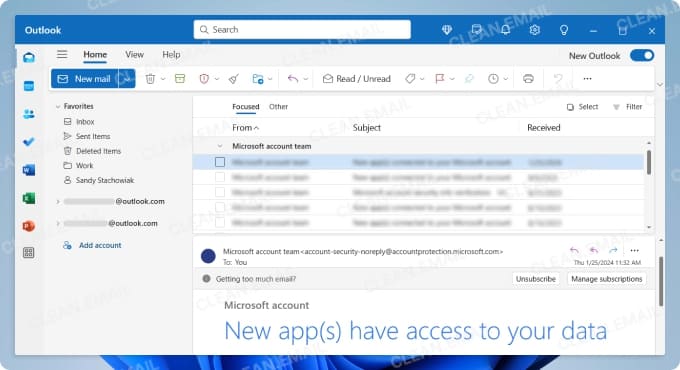
What changes: you trade Gmail's interface for Outlook's, and the new Outlook syncs a copy of your Gmail data through Microsoft's cloud to make those features work. If that bothers you, pick a client that talks to Google directly, like Thunderbird or eM Client. The free version also shows ads in your message list.
Get a free traditional desktop client: Thunderbird
Price: Free and open source, supported by donations.
📌 Verdict: Thunderbird is the best free Gmail client for Windows, and the safest choice if you want your mail stored locally with no subscription attached.
It runs on Windows 10 and later, sets up Gmail automatically through Google's sign-in, and supports as many accounts as you want with a unified inbox. Messages are stored on your PC, so full offline access is built in and years of archived mail stay searchable without a browser.
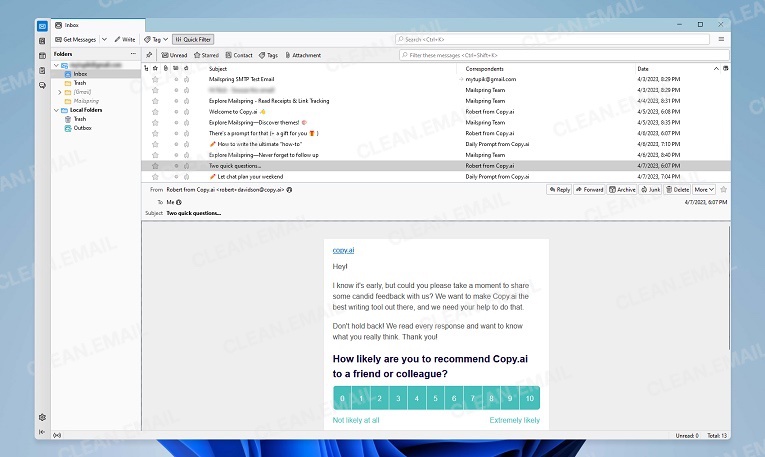
What changes: Gmail labels appear as folders, so a message with three labels shows up in three places, and Gmail's All Mail folder can look like duplication until you tell Thunderbird to ignore it. These are settings-level quirks, not dealbreakers, but expect an adjustment period and a plainer interface than the paid clients here.
Bring Google Workspace to the desktop: Kiwi for Gmail
Price: Subscription starting from $4.99/month (Starter, Pro, and Power Pro plans, monthly or yearly, with a 7-day trial on yearly plans).
📌 Verdict: Kiwi is for people who want the real Gmail and Google Workspace, just out of the browser and organized into one desktop app.
Rather than rebuilding Gmail, Kiwi wraps the actual Gmail interface in a desktop shell for Windows 10 and 11, so labels, filters, and Gmail add-ons work as they do on the web. It manages up to nine Gmail or Workspace accounts with notifications for each, opens Docs, Sheets, and Slides in their own windows, and adds a focus-filtered inbox for recent, unread, starred, or attachment-bearing mail.
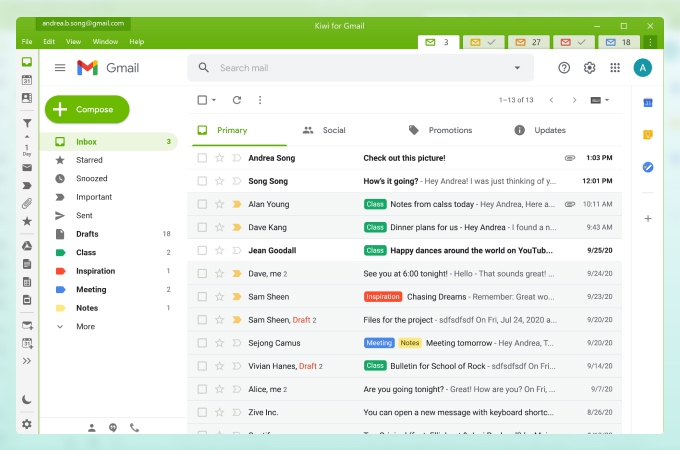
What to watch: Kiwi supports Gmail and Google Workspace accounts only, and there's no permanent free version. It retired its legacy plans in January 2026, so older pricing you may have seen no longer applies. Gmail's offline mode works, but you have to enable it inside Kiwi itself.
Combine Gmail with other email providers: Mailbird
Price: Free for one account; Premium from $4.03/month billed yearly or $99.75 one time.
📌 Verdict: Mailbird fits people who juggle Gmail alongside Outlook.com, Yahoo, or work IMAP accounts and want one inbox for all of them on Windows.
It runs on Windows 10 and 11, supports unlimited accounts on paid plans with a unified inbox, and connects to apps many people keep open next to email anyway: Google Calendar, Slack, WhatsApp, Trello, Asana, and around 30 others. A ChatGPT integration handles drafting.
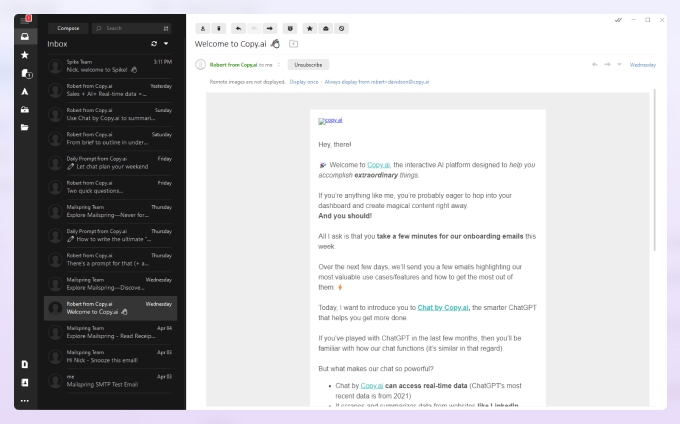
What changes: Mailbird connects to Gmail over IMAP, so labels come through as folders and you may need to adjust Gmail's "Show in IMAP" settings to sync everything. It also has no local offline folders, a poor match if you need your archive without a connection. And since the free version supports only one account, treat Mailbird as a paid product.
Customize almost every part of your workflow: eM Client
Price: Free for personal use with two accounts; Personal plans at $39.95/year or $59.95 one time.
📌 Verdict: eM Client is the pick if you want a full desktop suite, mail, calendar, contacts, tasks, and notes, that you can reshape to fit how you work.
It handles Gmail unusually well for a traditional client: setup uses Google's sign-in, labels are supported through its tag system, and paid plans can even manage Gmail's inbox categories. Google Calendar, Contacts, and Tasks sync in the same window, everything is stored in a local database for complete offline access, and QuickTexts, templates, snooze, mass mail, and automatic translation cover workflows Gmail alone doesn't.
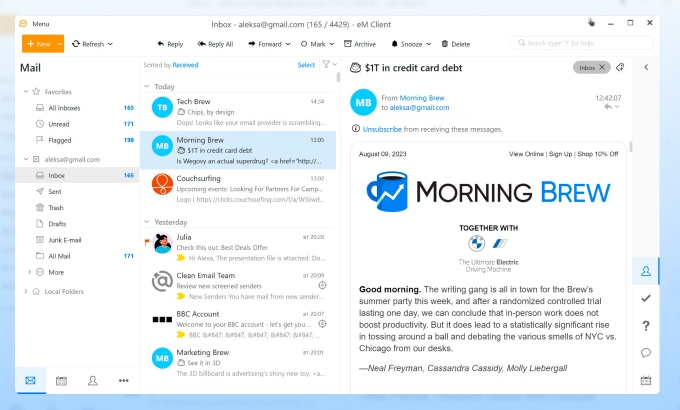
What to watch: the free license allows two accounts and personal use only, and several features just listed, including snooze and translation, sit behind the paid plans. AI writing is a separate add-on subscription. All that flexibility also means more menus than most Gmail users are used to.
Process high email volume faster: Superhuman
Price: From $30/month or $300/year; no free plan.
📌 Verdict: Superhuman is worth its price only if you spend hours a day in Gmail and want to cut that time with keyboard commands and AI, and it's a poor value for anyone else.
Its native Windows app is built around a command palette (Ctrl+K) that keeps your hands off the mouse. Split Inbox separates important mail, team mail, and everything else, and AI handles drafting, summaries, and follow-up reminders, with deeper automation on the pricier Business tier. It was designed for Gmail first, so labels and Gmail shortcuts carry over well.
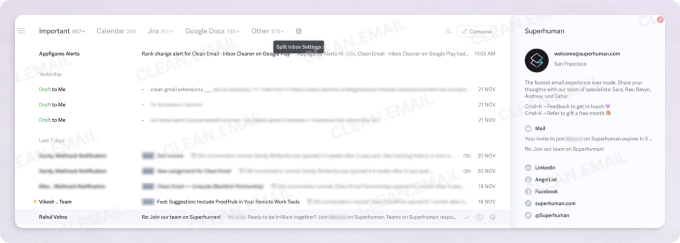
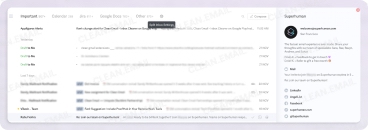
What to watch: there's no free plan, it supports only Gmail and Microsoft 365 accounts, and it has no unified inbox, so multiple accounts live in separate tabs. If you send twenty emails a day, this is the wrong purchase.
Gmail Compatibility Check
How each option handles the things Gmail users most often ask about:
| Option | Native Windows app | Multiple providers | Offline use | Gmail/Workspace fidelity |
|---|---|---|---|---|
| Gmail as a web app | ❌ No | ❌ No | 🟡 Partial | 🟢 Full |
| Outlook (new) | ✅ Yes | ✅ Yes | 🟡 Partial | 🟡 Partial |
| Thunderbird | ✅ Yes | ✅ Yes | 🟢 Full | 🟡 Partial |
| Kiwi for Gmail | ✅ Yes (wraps Gmail's web interface) | ❌ No | 🟡 Partial | 🟢 Full |
| Mailbird | ✅ Yes | ✅ Yes | ❌ No | 🟡 Partial |
| eM Client | ✅ Yes | ✅ Yes | 🟢 Full | 🟡 Partial |
| Superhuman | ✅ Yes | 🟡 Partial (Gmail and Microsoft 365 only) | ❌ Not documented | 🟡 Partial |
When a New Gmail Client Will Not Fix the Problem
Switching clients changes how your mail looks, not what's in it. Years of old messages, subscriptions you never read, and daily notification emails follow you into Outlook or Thunderbird on day one, because every client faithfully syncs the same overloaded mailbox. If that's your actual problem, you need a tool that cleans up the mailbox itself, not a new interface.
Clean Email: Best for Gmail cleanup and automation on Windows
📌 Verdict: Clean Email is the right choice when inbox volume, not the interface, is what's slowing you down.
Clean Email is an inbox management tool that connects to Gmail and runs in any web browser on Windows. You can also install Clean Email as a web app from Chrome or Edge using the same steps as for Gmail, so it opens in its own window with a taskbar icon. The one difference is that it won't work offline, since it needs a live connection to show the current state of your mailbox.
You can read, write, and reply to messages and handle everyday mailbox actions in it, but it isn't a full desktop email client, and it doesn't try to be. Its job is organization at a scale Gmail's own tools don't reach, alongside Gmail or any email client from this article.
What it adds that Gmail and conventional clients generally don't combine:
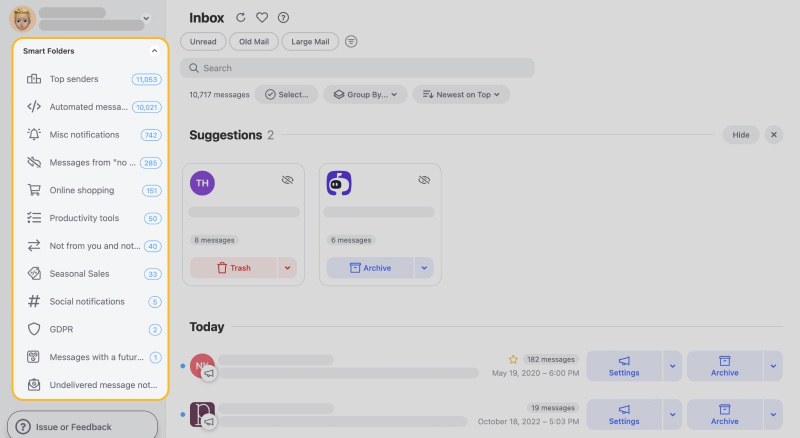
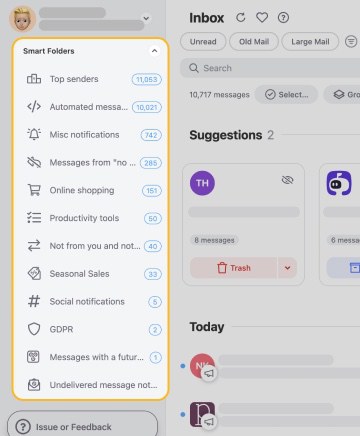
- Smart Folders that automatically surface useful groups of messages, with no manual folder setup.
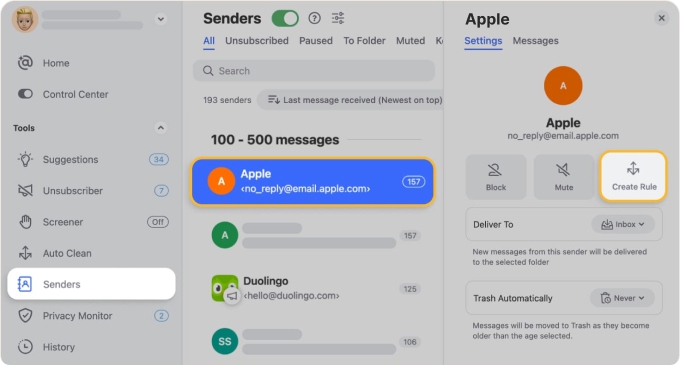
- Auto Clean rules that keep acting on matching messages as they arrive.
- Unsubscriber for reviewing and leaving many subscriptions in one sitting.
- Screener, which holds messages from first-time senders until you approve or block them.
- Sender-level controls to block, mute, or star everything from a given sender.
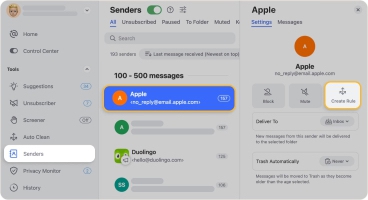
- Multiple accounts, so you can easily switch several Gmail or other supported mailboxes.
For basic reading, replying, and mailbox upkeep, it may be all you open most days; if you rely on a client's full feature set, keep that client and let Clean Email handle the cleanup. The app offers a free trial and paid plans.
How to Get Gmail on Your Windows Desktop Without Changing Clients
Using Google Chrome or Microsoft Edge, you can install Gmail so it opens in its own window when you select the Gmail icon, complete with a taskbar icon and Windows notifications.
Install Gmail as an app using Google Chrome
To install Gmail from Chrome, follow these steps:
- Open Chrome, visit Gmail, and sign in.
- Select the Customize and Control Google Chrome button (three dots) on the top right.
- Move to Cast, save, and share and pick Install page as app.
- Give the app a name and click Install.
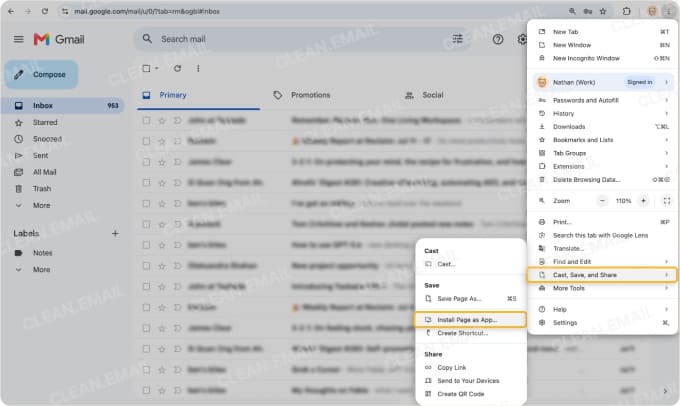
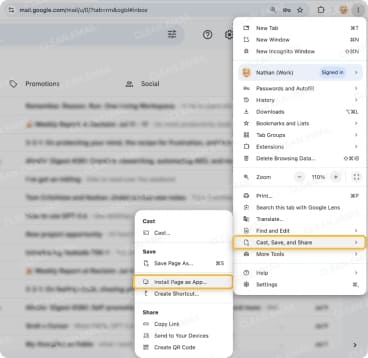
An Install icon may also appear at the right end of Chrome's address bar; either route gives the same result. If a pop-up offers to pin the icon to your taskbar, choose Yes or No thanks. You can always pin it later from the app's right-click menu.
Install Gmail as an app using Microsoft Edge
To install Gmail from Edge, follow these steps:
- Open Edge, visit Gmail, and sign in.
- Select the Settings and More button (three dots) on the top right.
- Move to More tools, then Apps, and pick Install this site as an app.
- Give the app a name and click Install.
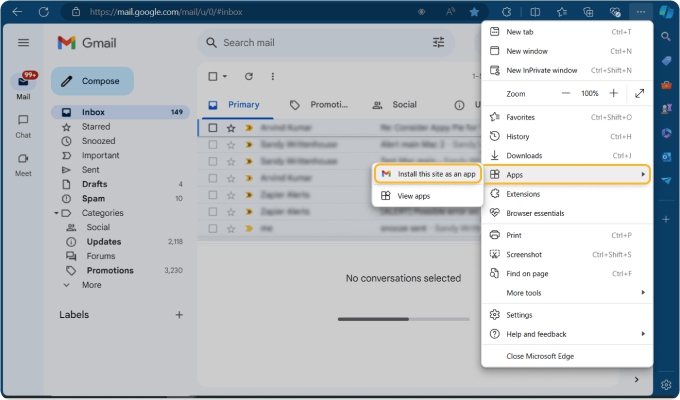
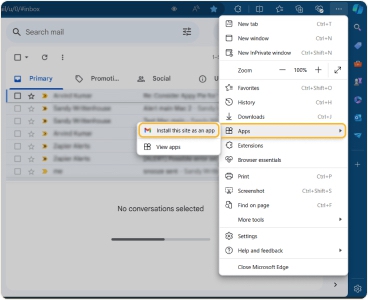
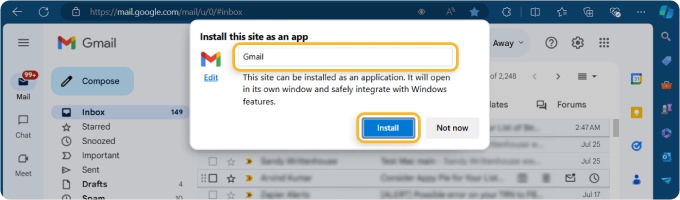
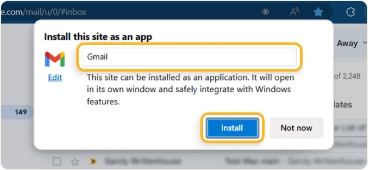
A pop-up may offer to pin the app to your taskbar or Start menu, create a desktop shortcut, and auto-start it at login. Check the boxes per your preference and click Allow. You can change these later at edge://apps under the app's Details.
Enable Gmail desktop notifications
First, enable notifications for Gmail itself:
- Visit Gmail, sign in, and select the Settings button (gear icon) on the top right.
- Choose See all settings.
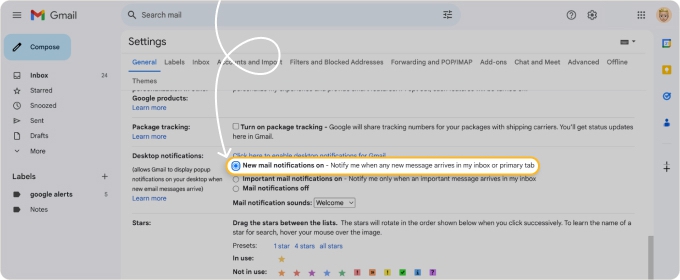
- On the General tab, scroll to Desktop notifications.
- Pick one of the first two options to enable new or only important mail notifications.
- Click Save Changes at the bottom.
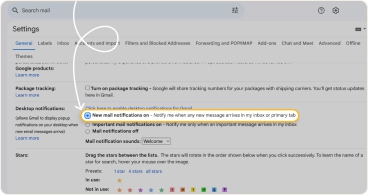
Then confirm that Windows 11 allows notifications from your browser:
- Open the Start menu and click the Settings button (gear).
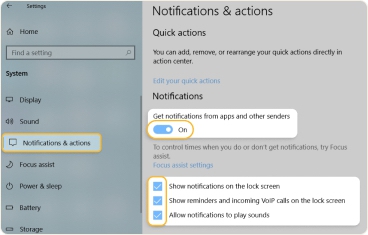
- Select System and choose Notifications & actions.
- Confirm that the toggle below Notifications at the top is enabled.
- Turn on the toggle next to the web browser.
- Optionally, select the browser to fine-tune the notification settings.
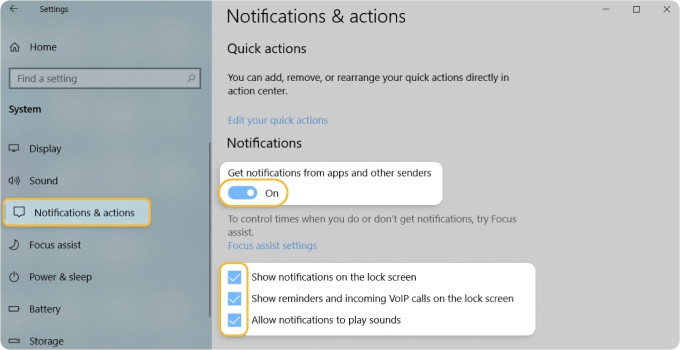
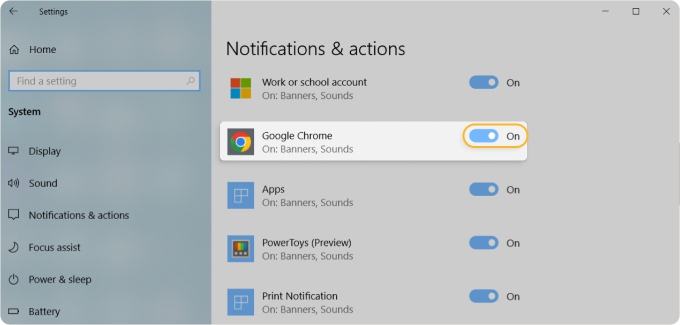
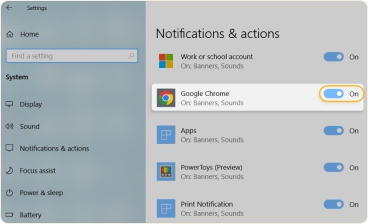
When you finish, you can close the Settings and test your Gmail notifications.
One thing to keep in mind: for browser notifications to come through, the Gmail app window you installed above must remain open. You can keep it minimized, but it must stay open to receive the alerts.
How to Choose Without Testing Every App
Work through these six checks in order and you'll usually land on one option without installing anything twice:
- Decide whether you want Gmail's interface or a replacement. If it's Gmail's, choose between the web app install and Kiwi, and you're done.
- Check which Gmail features must survive the move, especially if you rely on labels.
- Decide whether you need accounts from other providers in one inbox. If yes, that rules out Kiwi and Superhuman.
- Check offline needs. Thunderbird and eM Client store mail locally; Mailbird doesn't, and the web app depends on Chrome's offline mode.
- Confirm the free-plan limits and current price; prices on this page can change.
- Review the app's Google authorization and privacy documentation, especially where your mail is synced or stored.
Final Verdict
If Gmail already works for you, install it as a web app from Chrome or Edge and skip third-party clients entirely.
If you need a real desktop client, Thunderbird is the best free option and Outlook is the sensible one for Microsoft 365 households.
Kiwi suits Workspace-heavy users who want the real Gmail out of the browser, Mailbird suits multi-provider inboxes, eM Client suits customizers who want everything local, and Superhuman is for the small group whose email volume justifies $30 a month.
And if the problem is what's in the inbox rather than where you read it, Clean Email fixes that alongside whichever option you pick.
Related articles
FAQs
Is there an official Gmail app for Windows?
No. Google has never released a desktop Gmail client for Windows. You can install Gmail as a web app from Chrome or Edge, or connect your account to a third-party client such as Outlook or Thunderbird.
Can I install Gmail as an app on Windows 11?
Yes. In Chrome, open Gmail and choose the three-dot menu, then Cast, save, and share, then Install page as app. In Edge, use the three-dot menu, then More tools, then Apps, then Install this site as an app.
What is the best free Gmail client for Windows?
Thunderbird. It's free, open source, runs on Windows 10 and later, and supports unlimited Gmail accounts with local storage and offline access. Mailbird and eM Client also offer free versions, limited to one and two accounts respectively.
Can I use Gmail in Outlook for Windows?
Yes. The new Outlook for Windows adds Gmail through Google's sign-in and syncs mail, calendar, and contacts. Note that it keeps a copy of your Gmail data in Microsoft's cloud, and the free version shows ads.
Which Windows app keeps Gmail labels and categories?
The Gmail web app and Kiwi for Gmail keep labels and categories exactly as they are, because both show Gmail's real interface. Among full clients, eM Client supports labels through tags and Gmail categories on paid plans, while Thunderbird and Mailbird show labels as folders.
Is Clean Email a full Gmail client?
No. Clean Email is an inbox management tool that works with Gmail through the web on Windows. You can read, write, and reply to messages in it, but its focus is bulk cleanup and automation, used alongside Gmail or a full client app.