Key Takeaways
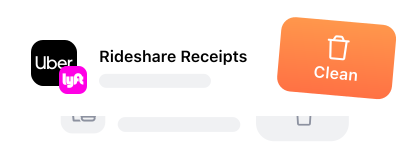
- Bulk delete old emails that you know you won’t need again.
- Archive emails that you may need later.
- Unsubscribe from newsletters that you no longer want to receive.
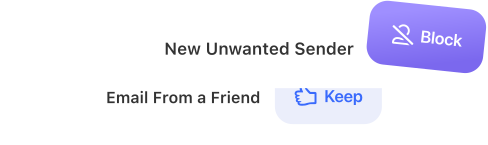
- Block unwanted senders from continually emailing you.
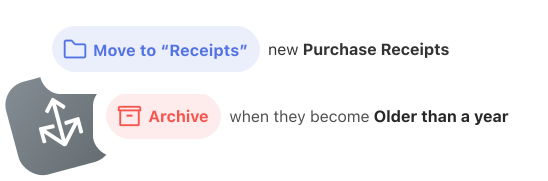
- Use automation tools for moving, archiving, and deleting emails automatically.
- Set a simple maintenance habit to clear your mailbox weekly.

What Is a Cluttered Inbox?
You may not even realize that your inbox is “cluttered.” But if you constantly scan past certain emails, leave messages unread, or delete emails without opening them, then you have a cluttered inbox.
Not only does a messy inbox make it difficult to spot the emails you really need, but can lead to a full mailbox and exceeding the storage limit set by your provider.
A cluttered inbox typically occurs from items like subscriptions, promotional emails, unsolicited messages, and outdated communications.
By unsubscribing, archiving, deleting, and automating, you can quickly reduce email clutter and focus on what’s important.
Now, we’ll show you how!
How to Declutter Your Email Inbox
With this simple 7-step process, you can perform an effective and efficient inbox cleanup in just minutes.
1. Delete Old Emails in Bulk
One of the best ways to clear out a cluttered mailbox is by deleting old, outdated emails you no longer need.
As an example, to find and delete emails before 2023 in Gmail or Outlook:
- Go to All Mail or your Inbox.
- Enter one of the following in the Search field at the top:
- In Gmail, use before:2023.
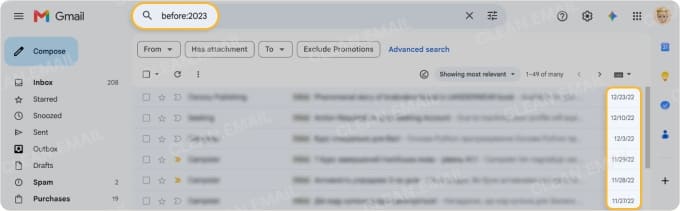
- In Outlook, use received:<2023-01-01.
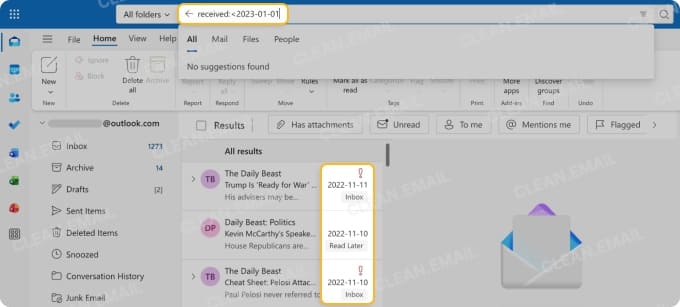
- Review and select the results, then click Delete in the toolbar.
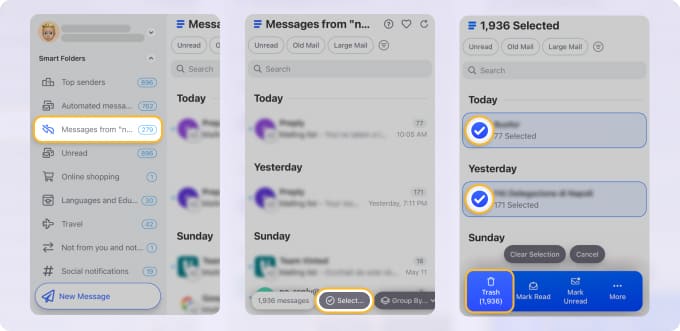
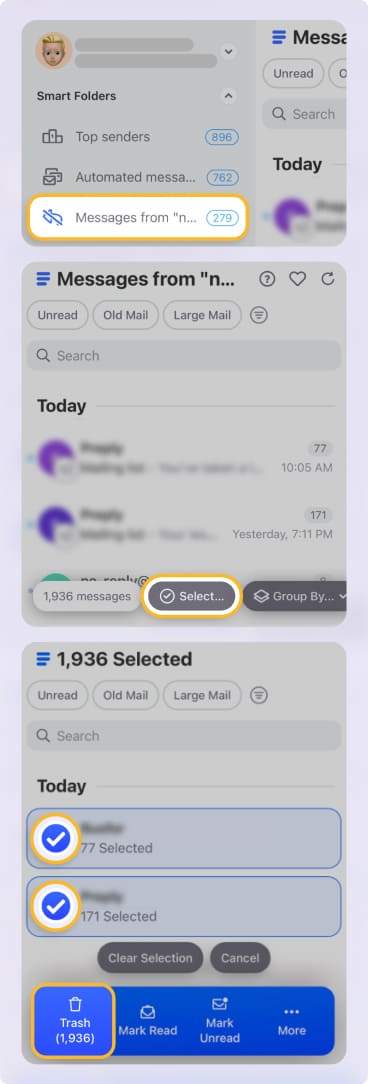
📌 Instead of relying on one search at a time, Clean Email’s Smart Folders organize your mailbox into ready-made views based on different criteria, such as top senders, automated messages, shopping, finance, travel, and more.
This gives you a fast way to remove outdated messages by category in bulk. Just select all emails in a folder and hit Delete.
2. Unsubscribe from Newsletters and Promotions
If there’s one type of email that takes up space it’s those from a mailing list like newsletters, marketing messages, and promotional emails. These messages can continue to arrive and accumulate over time increasing the clutter.
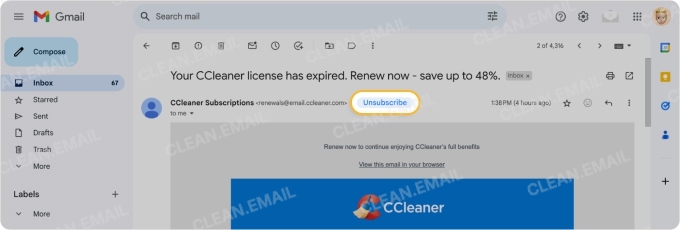
To unsubscribe from emails, providers like Gmail and Outlook offer an Unsubscribe link or button.
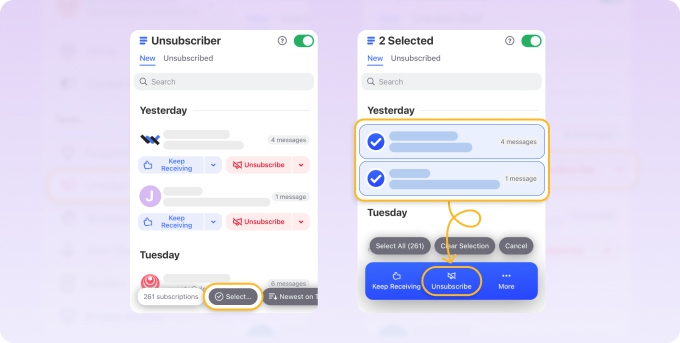
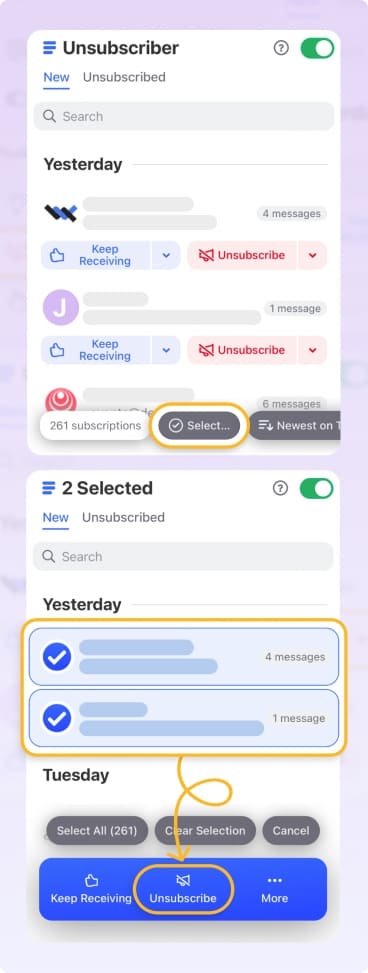
📌 If you want to unsubscribe in bulk in one step, you'll need a third-party tool because email providers don't offer bulk unsubscribing. Clean Email provides Unsubscriber lets you mass unsubscribe and then delete the messages by the thousands.
3. Block Spam and Unwanted Senders
Along with mailing list messages, spam and emails from unwanted senders can create a chaotic mailbox. You should mark junk messages as Spam, but can also block senders to stop the inflow.
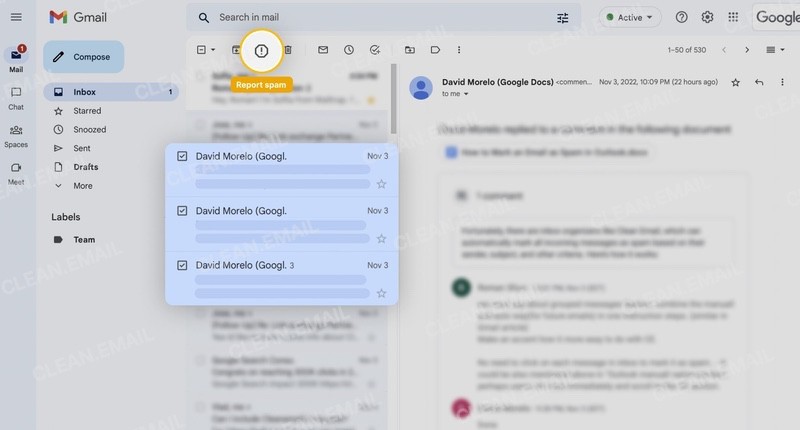
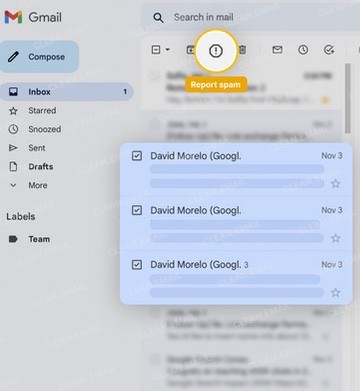
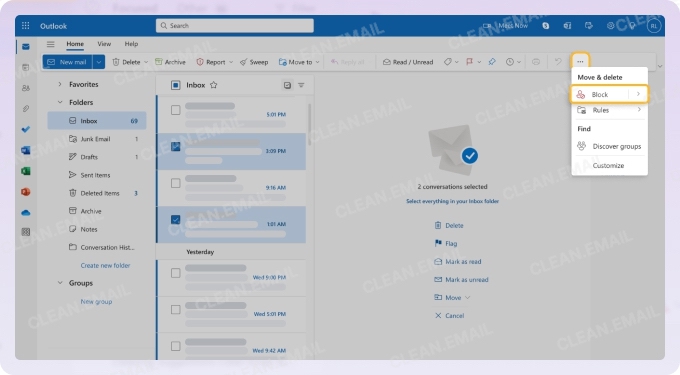
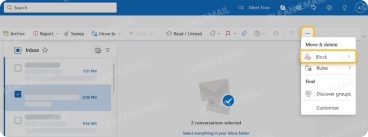
For instance, in Gmail and Outlook, you can block a sender using either the email’s menu or the context (right-click) menu.
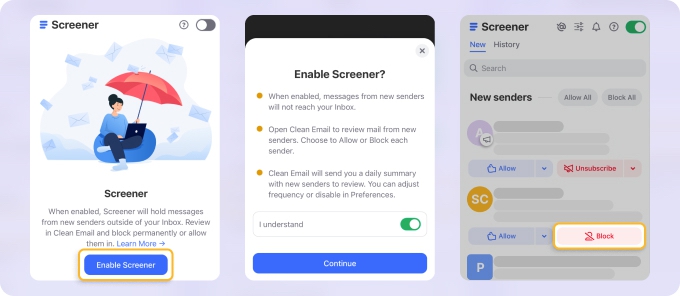
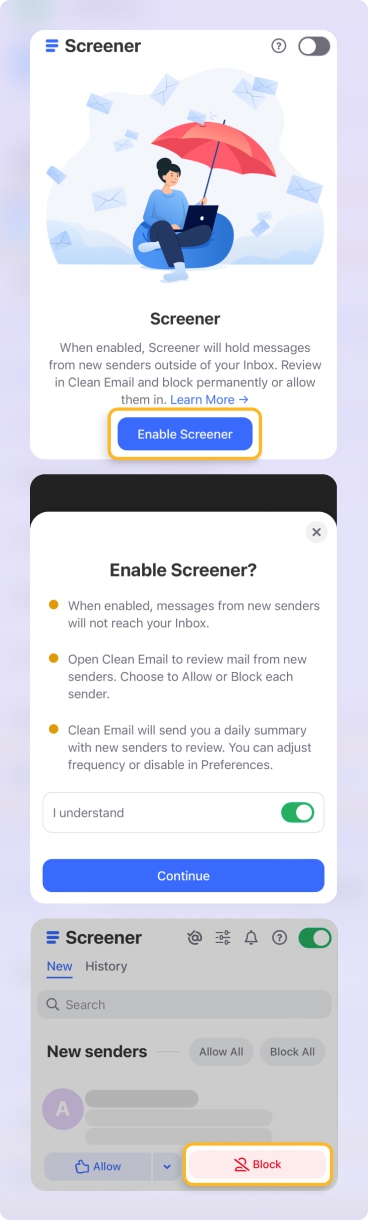
📌 To stop unwanted messages before they reach your inbox, Clean Email offers the Screener feature. This tool isolates emails from unknown senders in one spot. You can then Block them before they clutter your mailbox.
4. Archive Emails You Want to Keep
If you have messages that you don’t need at the moment, but may need later, you can archive them.
By archiving emails instead of deleting them, you can move them out of your inbox but still access them anytime.
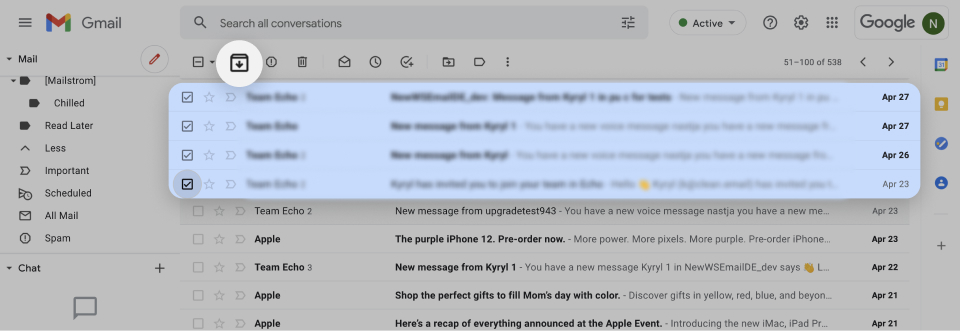
Gmail: On desktop, click the Archive button to the right of the email in your message list. On mobile, open the email and tap Archive at the top.
Outlook: On desktop, right-click an email in your list and choose Archive. On mobile, open the email and tap Archive at the bottom.
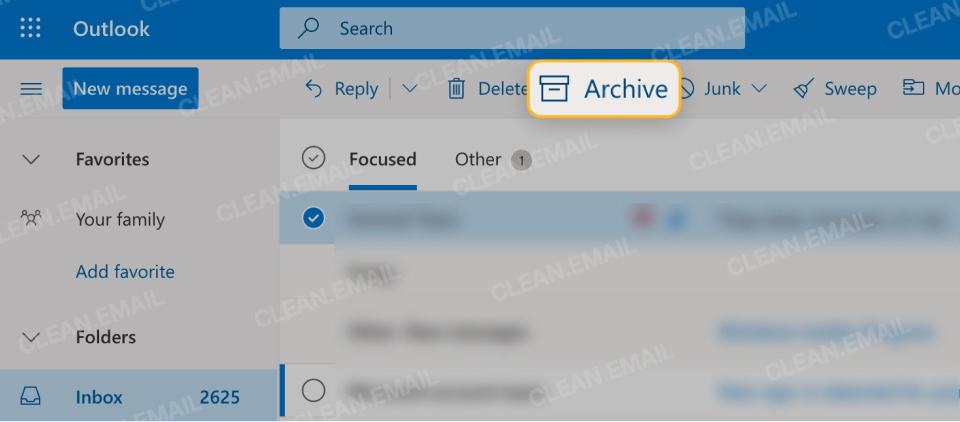
Note that each mobile app also lets you set up a swipe action to archive messages quickly.
5. Use an App to Declutter Email
As mentioned, third-party tools like Clean Email can help you perform a fast and easy cleanup of your mailbox using bulk actions and advanced tools.
Along with those features you read about earlier, you can also use Clean Email’s Cleaning Suggestions which provide recommendations based on your previous actions. This lets you archive, delete, or mark groups of messages in bulk.
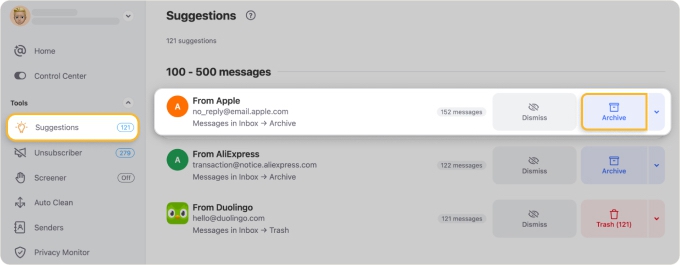
You can also use a simple workflow for your first-time cleanup. For example, you can easily identify large groups of emails, unsubscribe and delete in batches, and remove hundreds or thousands of emails at one time – all to reduce your inbox quickly.
Clean Email provides its entire feature set on the web app, Mac desktop, and mobile with full syncing. So, you can perform a solid declutter and cleanup from any device and for any IMAP provider.
6. Set Up Simple Folders or Labels
To reduce the clutter in your inbox and see only those new or important emails, consider organizing messages with labels or folders.
For example, if you apply a label in Gmail or move an email to a folder in Outlook, you can remove it from your inbox but easily retrieve it when you need it.
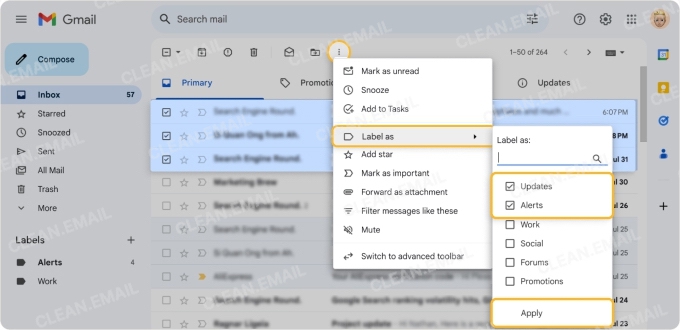
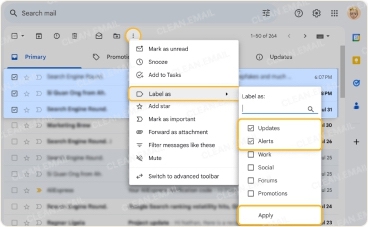
Consider creating labels or folders for things like work or business communications, personal messages from friends and family, emails related to clients, projects, and vendors, or newsletters that you want to keep.
7. Schedule Regular Inbox Maintenance
Rather than waiting until your inbox is unmanageable or you run out of storage space, create a regular maintenance routine.
This could be a 10-minute session each week to declutter and clean with the above steps.
📌 You can also use tools like Clean Email’s Auto Clean to automatically manage messages, like labeling, moving, archiving, or deleting.
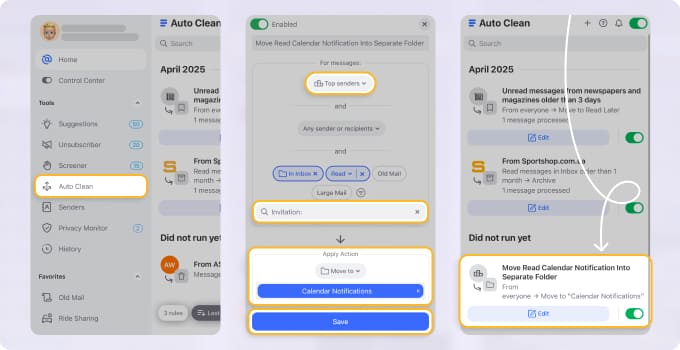
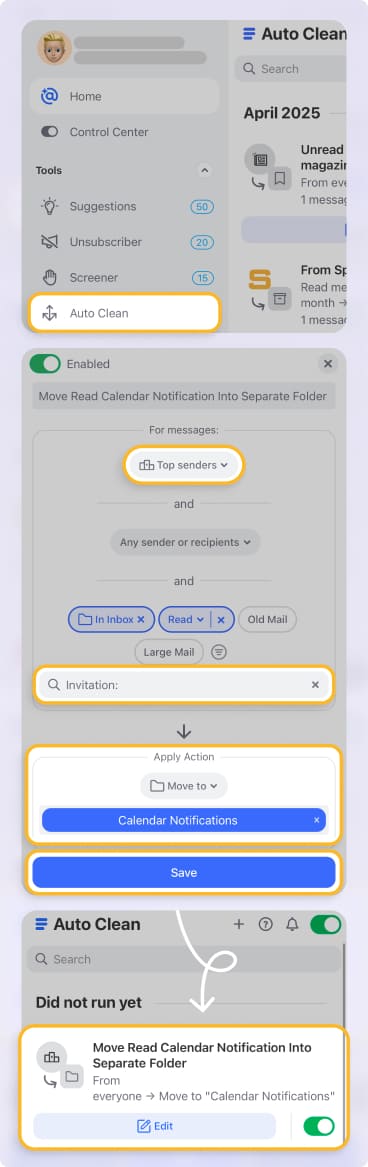
💡 Tip: By implementing both of these options, you can effortlessly take care of emails as they arrive and then spend just a few moments clearing out the one-off messages.
How to Declutter Email by Provider
Each email provider offers a different set of tools and features to manage your inbox. Below are suggestions for decluttering based on which provider you use.
Gmail
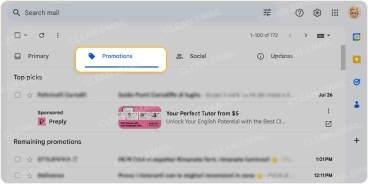
To organize Gmail, first use the built-in Categories like Promotions, Social, and Updates – you can sweep through and clear out messages in these categories easily.
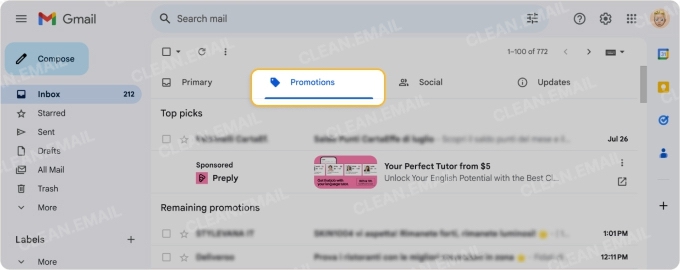
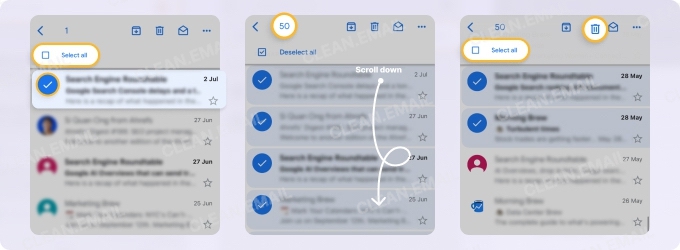
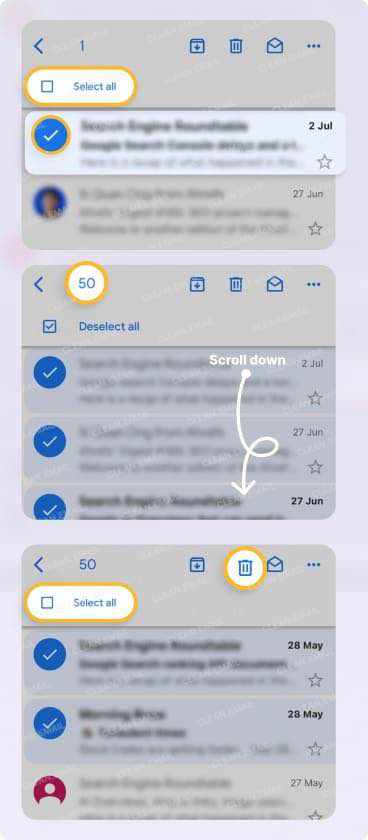
You can also archive a bulk selection of emails that you want to hold onto and delete those you no longer want in Gmail’s desktop and mobile apps.
Outlook
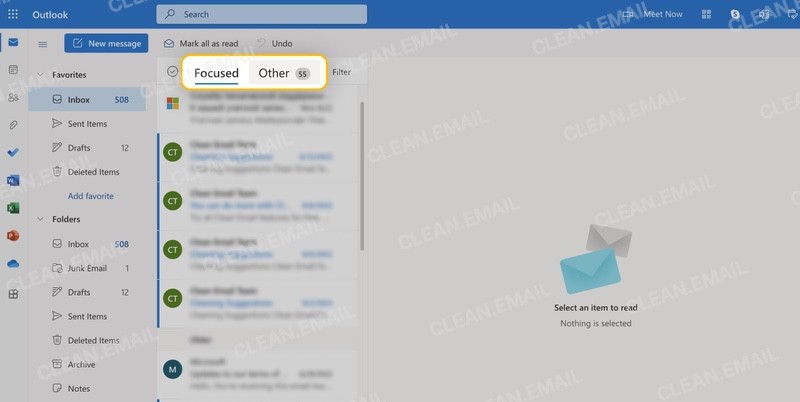
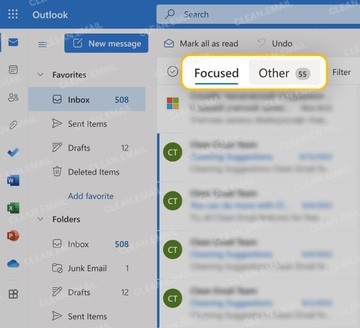
Start organizing Outlook by turning on the Focused Inbox which helps you spot important messages and those from frequent senders quickly. You can then access the rest of your emails on the Other tab and manage them accordingly.
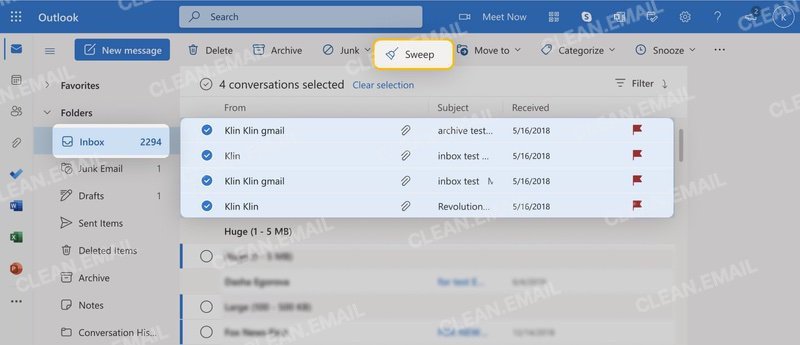
Outlook also offers tools like Sweep for deleting or moving bulk messages from certain senders, and Cleanup for finding large or old emails, clearing the Deleted Items folder, and archiving data.
Yahoo Mail
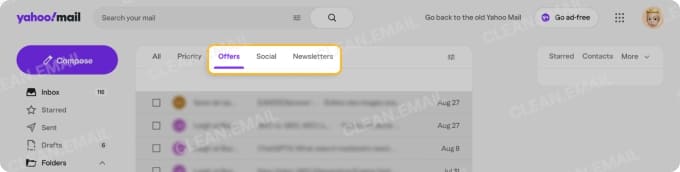
You can organize Yahoo Mail similarly to Gmail by cleaning out the Category tabs including Offers, Social, and Newsletters.
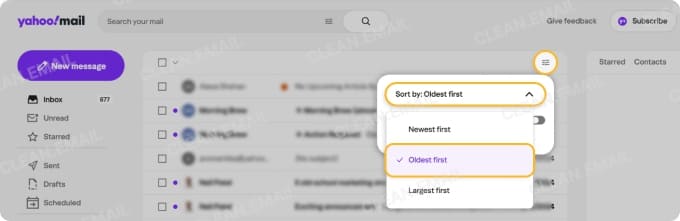
Additionally, you can sort by oldest to remove outdated messages or sort by largest to get rid of unwanted heavy emails. Yahoo Mail lets you bulk delete emails by selecting those you want to remove and pressing Delete.
iCloud Mail / Apple Mail
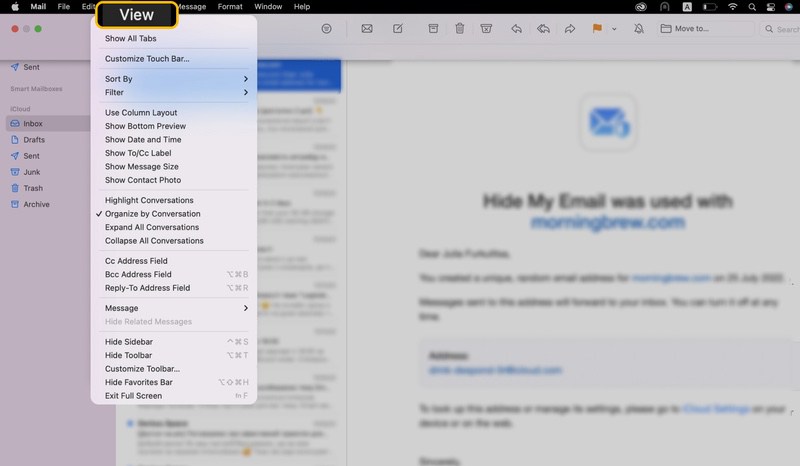
To organize iCloud Mail, you can use the Column Layout to sort by sender, age, or size to quickly remove unwanted, old, or large emails.
You can also use the Filter to find only emails with attachments for your largest messages or Organize by Conversation to archive threads you don’t need now but may need later.
How to Prevent Inbox Clutter from Coming Back
It can be difficult to keep your inbox clutter to a minimum with emails flowing in from all directions. But with a few simple suggestions, you can decrease the influx of messages.
- Be selective with subscriptions: You may sign up for a newsletter to get a discount or special rate, but that doesn’t mean you want to continually receive emails. Unsubscribe from messages those you don’t want.
- Use a secondary email for signups: Rather than using your primary email address for signups and form submissions, consider a secondary or burner email address. This can help you keep your main mailbox cleaner and avoid unwanted messages sent to it down the road.
- Perform regular inbox checks: As mentioned earlier; by setting up a maintenance routine, you can keep your inbox from becoming chaotic. Start with a 10-minute cleanup session each week and adjust as needed.
FAQs
How do I quickly declutter my email inbox?
For a fast cleaning, use these simple actions: Archive, Delete, Unsubscribe, and Block. Archive emails you may need later, delete messages you don’t need at all, unsubscribe from mailing lists, and block unwanted senders.
Should I delete or archive old emails?
If you have old emails that you might need later, archive them. But if you have outdated emails that you know you’ll never need again, delete them.
Remember, archiving holds onto messages until you remove them, but deleting sends emails to the trash where they can be automatically and permanently removed later.
How long does it take to declutter an email inbox?
While any type of cleanup duration depends on the size, decluttering can be managed using a scheduled approach. Consider an hour for your first initial cleaning and then 10 to 15 minutes for routine maintenance each week.
Also, you can reduce the time it takes to clean up by using an email declutter app that lets you archive, delete, and unsubscribe from messages in bulk.
What's the difference between decluttering and organizing email?
Decluttering refers to cleaning up emails whereas organizing refers to arranging, classifying, or categorizing messages. For example, if you’re running out of mail storage, you’ll want to declutter and get rid of messages. But if you have a messy mailbox, you’ll want to organize emails using labels and folders.
How do I stop new clutter from building up?
To maintain a healthy inbox, be choosy with the subscriptions you keep and consider using a secondary email address dedicated to signups instead. Additionally, using a combination of weekly inbox checks and automations to manage messages creates a solid maintenance method to reduce or even stop email clutter.