My Mailbox is Full, But Why?
A mailbox can fill up due to emails with large attachments, hidden items, shared storage, and lingering items in the Trash, Deleted Items, and Spam folders.
When a mailbox becomes full, or close to it, it can lead to issues.

What kind of “mailbox full” problem do you have?
❌ You can’t send emails: Sending messages is blocked and may result in additional mailbox full errors.
❌ You’re not receiving emails: Messages sent to you are not received and bounce back to the sender.
❌ Your inbox is slow: Storage is almost full, causing a slowdown when accessing your inbox and trying to perform mailbox tasks.
❌ Your storage is still full after deleting emails: Trash and Deleted Items folders contain emails contributing to your used storage.
Email Storage Limits by Provider
Knowing the storage space limit that you have with your email provider and regularly checking the space available is crucial to keeping it under control and avoiding problems.
| Provider | Free Storage Limit | What Counts Toward Limit | How to Check Storage |
|---|---|---|---|
| Gmail | 15 GB (shared) | Gmail + Drive + Photos | Settings → Storage |
| Outlook | 15 GB free / 100 GB (M365) | Mailbox only | Settings → Storage |
| Yahoo | 20 GB | Mailbox | Settings → More Settings |
| iCloud | 5 GB | Mail + backups + files | Settings → Apple ID |
As you can see above, Gmail provides a decent amount of storage space with a free Google account (15 GB); however, that space is shared by Gmail, Google Photos, and Google Drive. This means space can fill up quickly.
On the other hand, Outlook provides the same amount of space as Gmail, but that storage is only used for your mailbox. So, while you have more room for emails and attachments, you can still experience a full mailbox in Outlook without proper storage management.
How to Empty a Full Mailbox (What to Do First)
When your email inbox is full, regardless of your provider, there is one email storage full fix that can get you back to business fast.
- Open your inbox and optionally sort by size, age, or sender.
- Choose the messages or select them all.
- Delete the emails.
- Empty the Trash or Deleted Items folder.
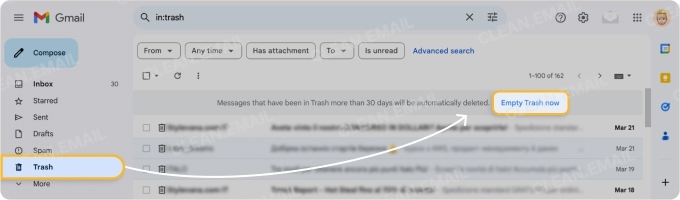
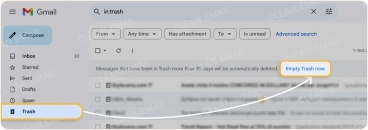
Optional variation:
If you need space immediately, delete the largest emails first. By clearing out the messages consuming the most space quickly, you can send and receive emails again and then clean out the backlog afterwards.
How to Empty a Full Mailbox in 2 Minutes Using Clean Email
If you’re interested in the fastest way to empty a mailbox using any provider, consider Clean Email. With this supplementary email management tool, you can delete thousands of messages at once.
- Open Clean Email.
- Choose All Mail or a Smart Folder.
- Sort by size, age, or sender.
- Select all emails or large groups.
- Choose Delete (immediately and permanently remove) or Trash (recoverable until deleted per your provider’s timeframe).
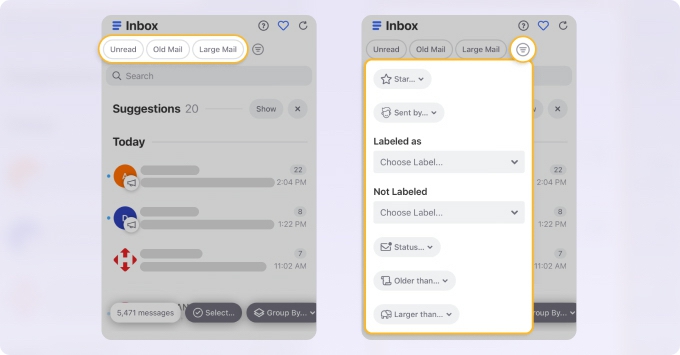
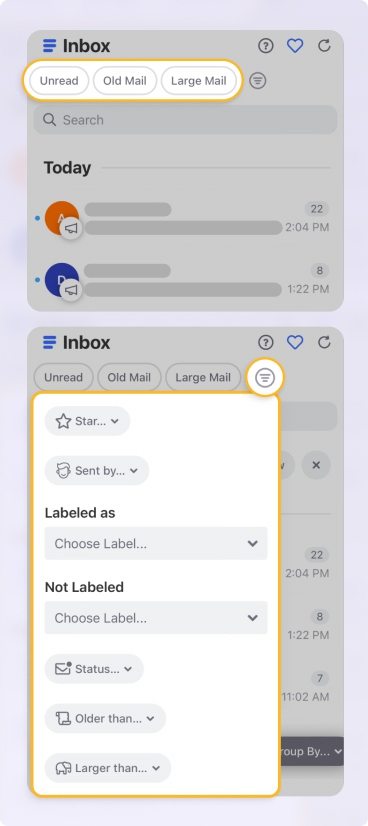
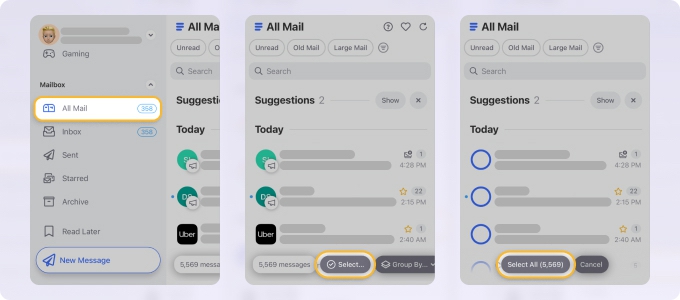
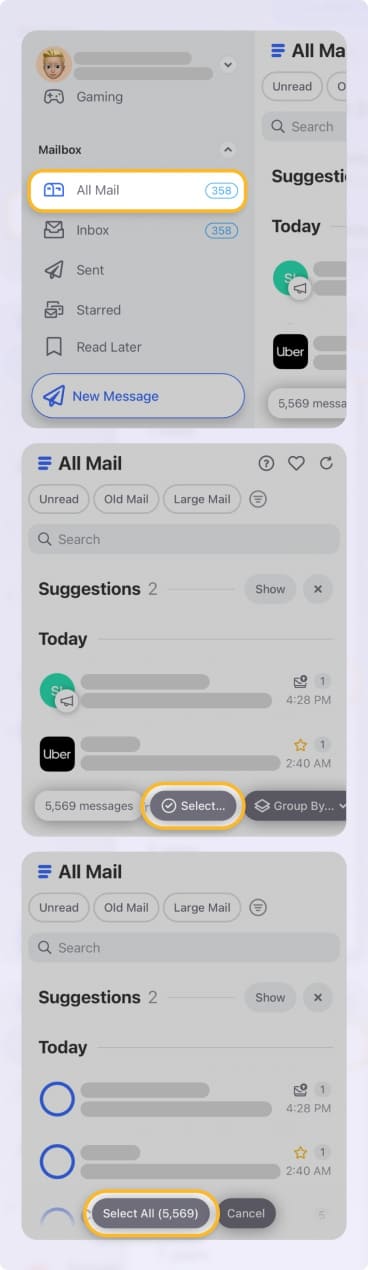
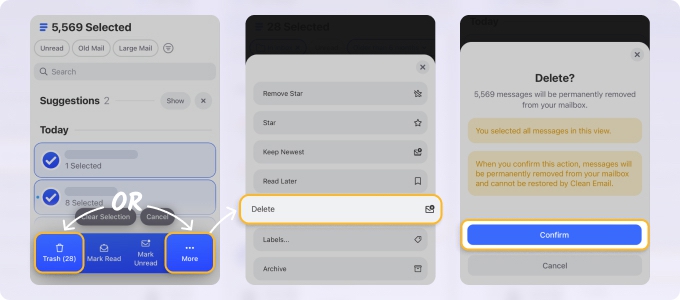
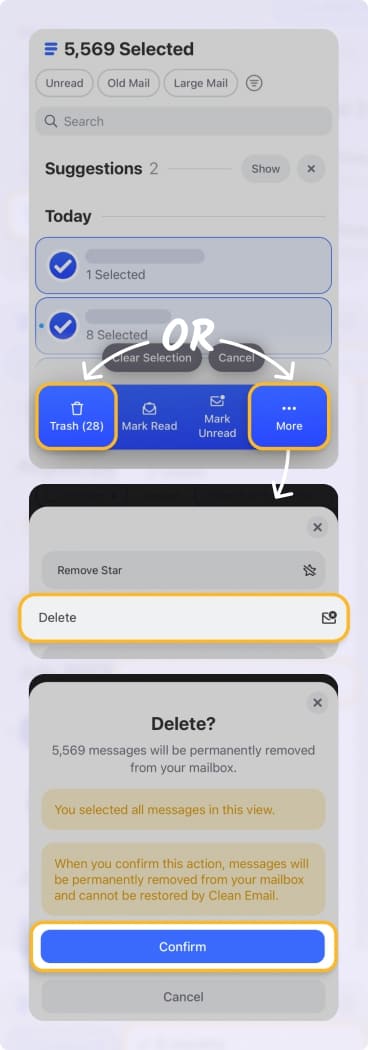
You can also use Auto Clean to set up auto-delete rules to effortlessly clear the clutter and Unsubscriber to remove yourself from mailing lists in bulk and delete the messages at the same time.
All Clean Email features are available on the web, Mac desktop, and mobile.
How to Empty a Mailbox on iPhone and Mobile
If you manage emails on your mobile device rather than desktop, you can still do a solid cleanup to regain space.
Here’s how to empty a mailbox on a phone for your particular provider.
Gmail App
To empty your mailbox on either Android or iPhone, open the Gmail app and follow the steps below.
- Select Inbox or a category tab in the left-hand menu.
- Long-press any message.
- Choose the emails or mark Select all on the top left.
- Tap Delete (trash can) at the top. Warning: You won’t be asked to confirm!
- Open the Trash folder using the left-hand menu.
- Tap Empty trash now at the top.
- Select OK to confirm.
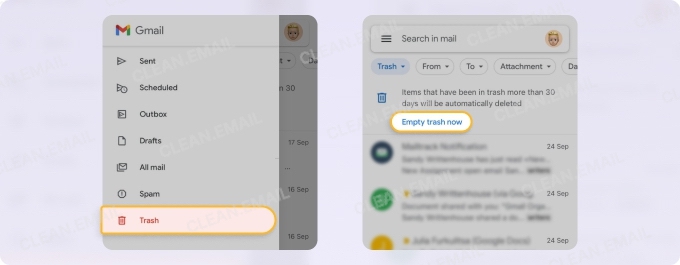
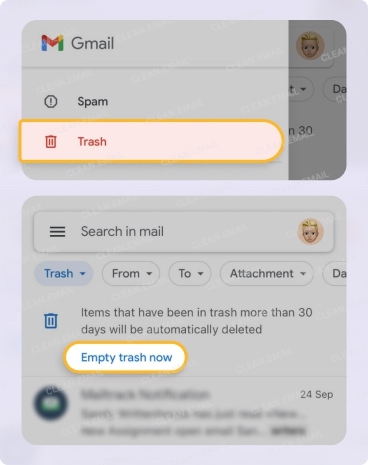
📌 Gmail’s “Select all” feature only selects the first 50 emails by default. If you have more than 50 messages to remove, learn how to delete all emails in Gmail for a complete cleanup.
iCloud Mail (Apple Mail App)
To empty your mailbox on iPhone, launch the Apple Mail app and follow the steps below.
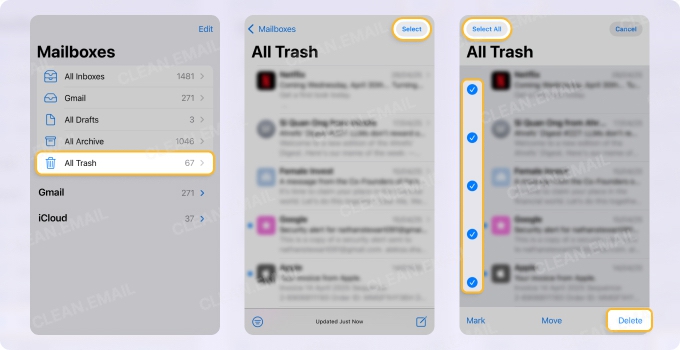
- Select iCloud on the Mailboxes screen if you have more than one connected email account.
- Choose Select and then Select All at the top.
- Tap Delete (trash can) at the bottom.
- Select Trash All to confirm.
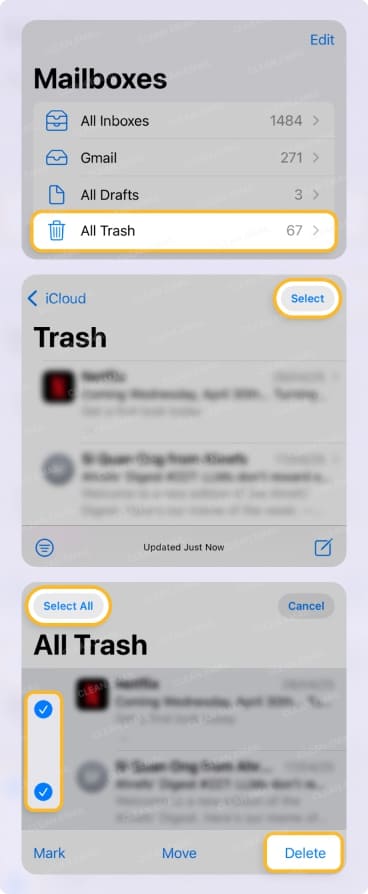
- Open the Trash folder using the left-hand menu.
- Choose Select → Select All.
- Tap Delete.
- Select Delete All to confirm.
Outlook App
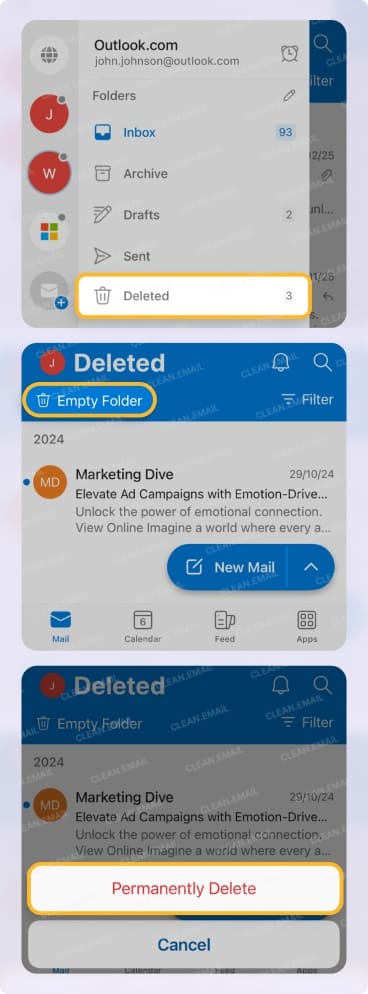
To empty your Outlook mailbox, open the mobile app and follow the steps below.
- Select Inbox using the left-hand menu.
- Long-press any message and mark Select all on the top left.
- Tap Delete (trash can) at the bottom.
- Select Delete to confirm.
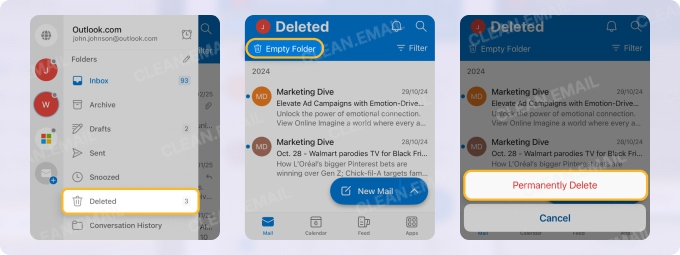
- Open the Deleted folder.
- Tap Empty Folder at the top.
- Select Permanently Delete to confirm.
Yahoo Mail App
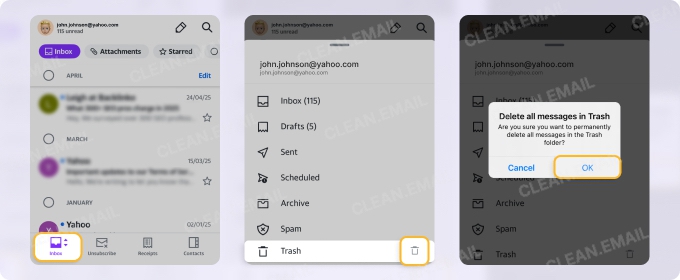
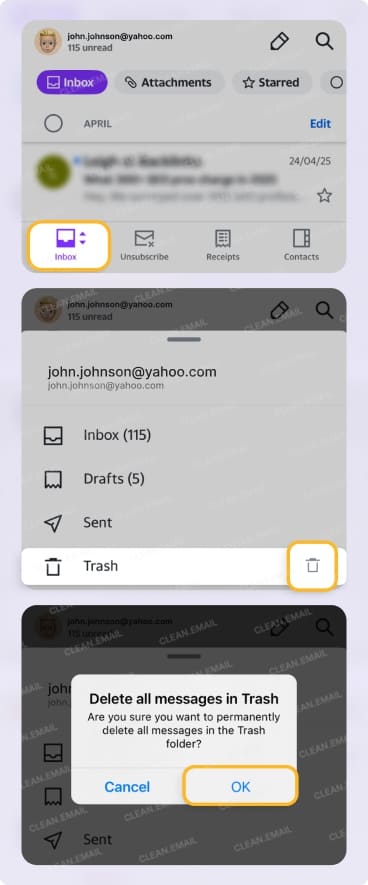
To empty your mailbox in Yahoo Mail, launch the mobile app follow the steps below.
- Select the Inbox menu in the bottom-left.
- Tap Delete all messages in Trash (the trash can icon) next to the Trash folder.
- Select OK to confirm.
Why Is My Mailbox Full After Deleting Emails?
If after removing emails you continue to see a mailbox full error message, this is likely due to those emails still hiding in your Trash or Deleted Items folder.
Items in those folders continue to count toward your storage space until they’re permanently removed.
Emails are retained:
- In the Gmail, iCloud, and Yahoo Mail Trash folder for approximately 30 days before they’re automatically deleted.
- In the Outlook Deleted Items folder until you manually empty the folder or set up an auto-delete schedule in Outlook on Windows.
📌 Note: For all providers, you should also check and empty the Spam folder as emails in that location also consume storage space until they’re permanently deleted.
What Happens When Your Mailbox Is Full
Having a full mailbox can cause obvious issues such as not being able to send emails. But it can also cause problems that you may not realize.
Emails that are sent to you bounce back to the sender. The sender receives an automated message called a Non-Delivery Report (NDR). The NDR includes the reason for the rejection, which in the case of a full mailbox, is a temporary failure or “soft bounce.”
The biggest issue with this is that you probably won’t notice these “missing” messages unless you are waiting for one in particular.
Unfortunately, you won’t be aware of those emails you aren’t expecting which can be detrimental, especially for business communications.
Prevention: Stop Your Mailbox From Filling Up Again
To avoid another full mailbox down the road, consider the following prevention tips:
- Set up rules or filters to automatically delete emails based on sender, age, size, or another condition. Learn how to auto-delete emails in Gmail.
- Delete large emails frequently to keep them from consuming storage space.
- Unsubscribe from unwanted senders to stop unnecessary mailing list messages.
- Empty the Trash or Deleted Items regularly to prevent deleted emails from taking up space.
- Check your storage monthly to ensure you have enough space to continue sending and receiving emails and dodge last-minute emergency cleanups. Learn how to check your Gmail storage.
Conclusion
Now that you know what causes a full inbox, how to empty a mailbox, and ways to prevent future email storage incidents, heed the cautions and considerations. Also, keep in mind that you can free up space with the Clean Email iOS app and manage the clutter faster.