Why Transfer Emails from Outlook to Gmail?
Microsoft Outlook is the go-to email service for business users, and it’s also loved by many home users thanks to its rich features, reliability, and, in many cases, familiarity.
So, why would someone who has been using Outlook for some time suddenly want to learn how to import emails to Gmail? There are many good reasons why! Here are some of them:
- Personal preference: There’s a good reason why Gmail is the most popular email service in the world; lots of people love the user experience it offers. If you’re among them, then that alone is a good enough reason to transfer emails from Outlook to Gmail.
- Ecosystem integration: Gmail is part of Google’s growing digital ecosystem. As such, it’s well-integrated with services Google Drive, YouTube, or Google Docs, just to give three examples.
- Deliverability issues: Outlook’s anti-spam filter is infamous for quarantining messages sent by legitimate senders. Gmail doesn’t suffer from similar deliverability issues, making it a great alternative for those who don’t want to lose important messages.
People usually look up Outlook-to-Gmail migration when something feels stuck. They’re worried about losing important emails, or they’re switching jobs, or they’re just tired of juggling two inboxes. Sometimes they tried to import things before and it didn’t work. Sometimes Outlook feels too cluttered to even begin. And sometimes, honestly, they just want everything in one place — one inbox they actually enjoy using.
A few quiet fears sit underneath all this:
- “What if I lose years of messages?”
- “Why is this so complicated?”
- “What if I break something?”
- “Why is Outlook so full? How did it even get this bad?”
The article helps calm those nerves.

Before You Export Outlook Emails
There are a few things you should know before you export Outlook emails:
- It can take some time to export all messages, especially if your inbox is large.
- You should avoid using your mail account during export to avoid interfering with the process.
- It’s a good idea to get rid of spam and other unwanted messages before you export your messages.
Everything clear? Great! Then it’s time for us to finally explain how to transfer emails from Outlook to Gmail.
Method 1: Use the Built-In Import Feature in Gmail
Gmail makes it very easy for new users to import their messages and contacts directly from Outlook (no need to export them first). Here’s how it works:
- Log in to your Gmail account.
- Click the Gear icon in the top-right corner.
- Select the See all settings option.
- Navigate to the Accounts and Import tab.
- Click Import mail and contacts.
- Enter your Outlook email address and click Continue.
- Confirm your decision to sign in to your Outlook account by clicking Continue.
- Follow the instructions in the popup window to give Gmail the necessary permissions.
- Specify the desired import options. At the very least, you need to select the Import mail option.
- Click Start import.
It may take Gmail a while to migrate all emails from Outlook to Gmail, but at least you can continue using it without any limitations.
Method 2: Export/Import Your Messages Using the Outlook Desktop App
The Outlook desktop app for Windows can export all messages into a file and then import them to a different inbox. You can use this feature to easily move emails from Outlook to Gmail:
- Launch Outlook.
- Open the File menu.
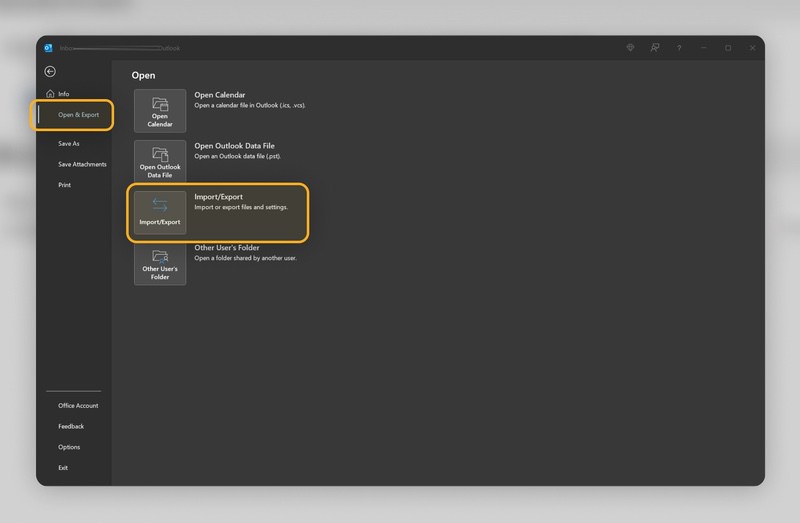
- Click Open & Export then Select the Import/Export option.
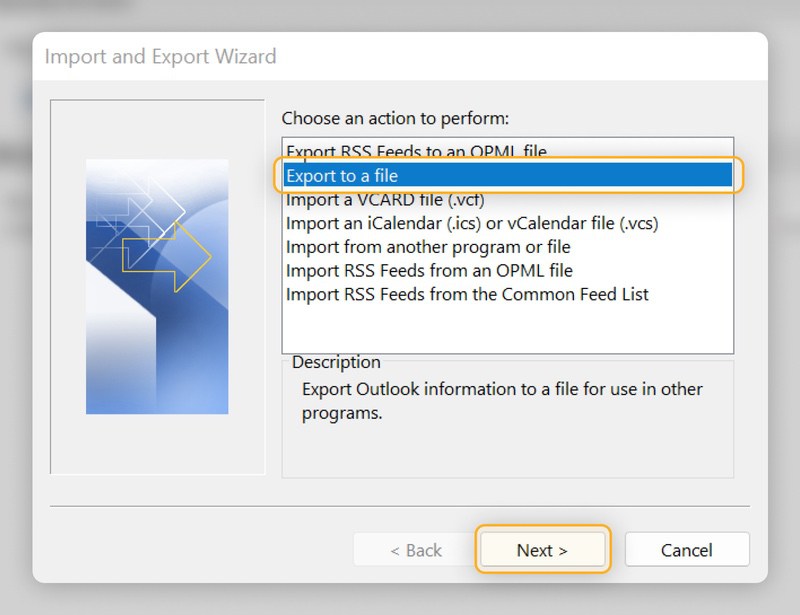
- Choose the Export to a file action and click Next.
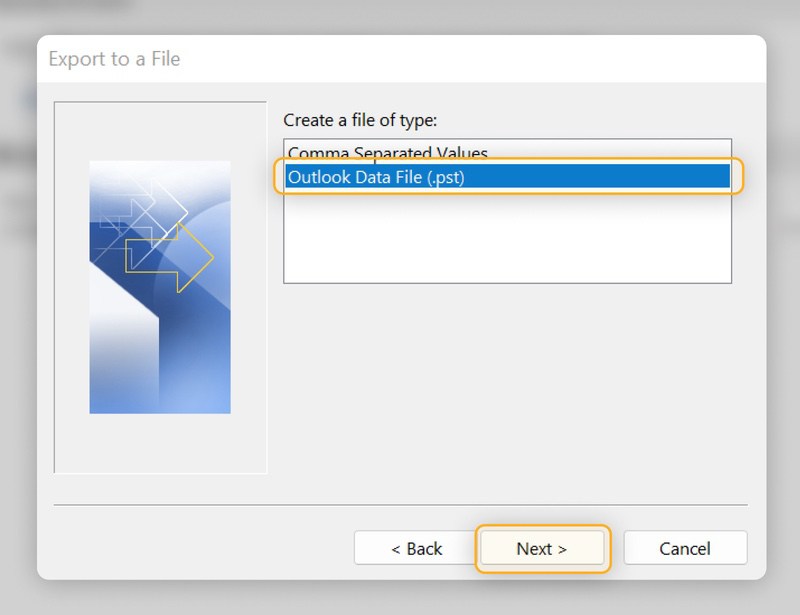
- Select Outlook Data File (.pst) as your file type of choice and click Next.
- Select the folder you want to export and click Next. You can select your address to export the entire account.
- Choose where you want to save the exported messages and click Finish.
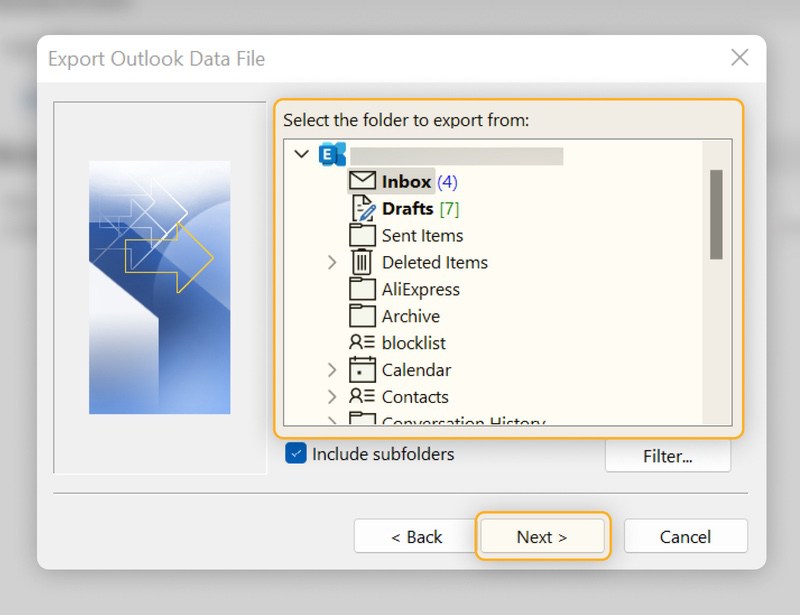
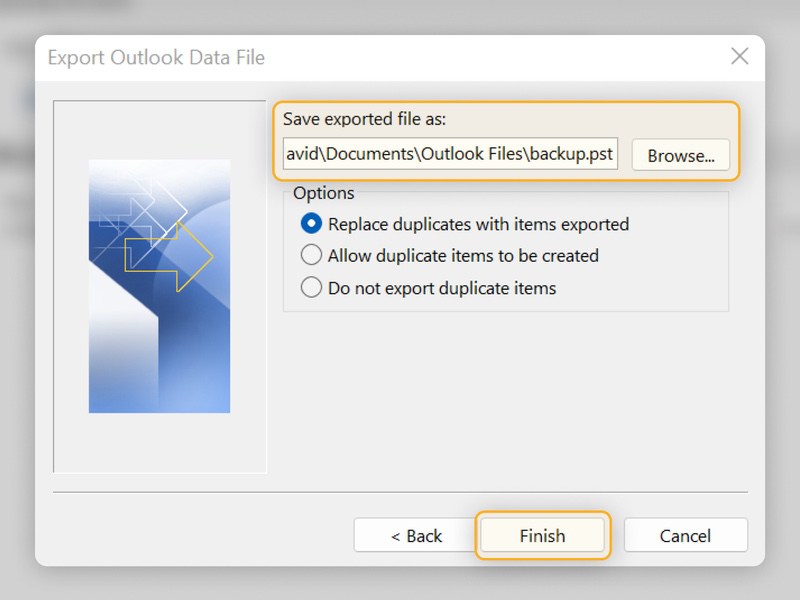
You now have your entire inbox exported as a file. To import it, you need to enable Gmail IMAP access and add your Gmail account to Outlook. Once that’s done, you can follow these instructions:
- Launch Outlook.
- Open the File menu.
- Click Open & Export.
- Select the Import/Export option.
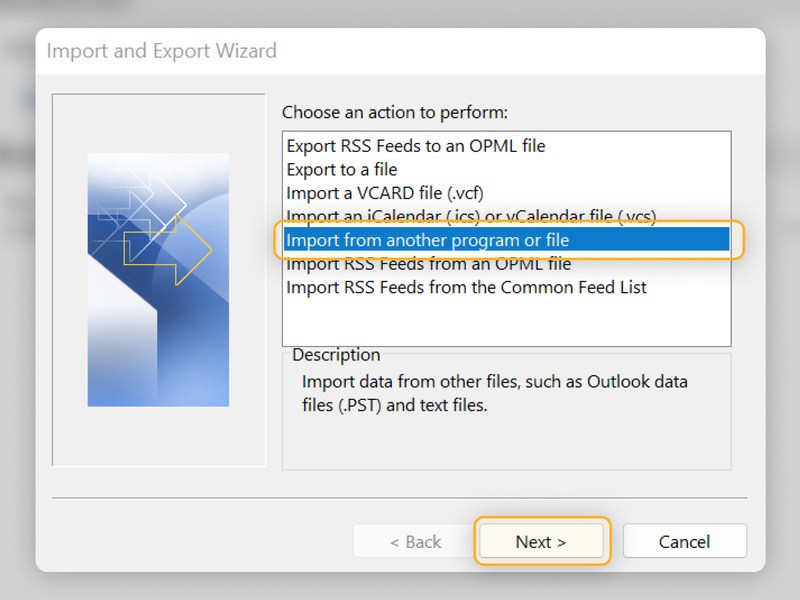
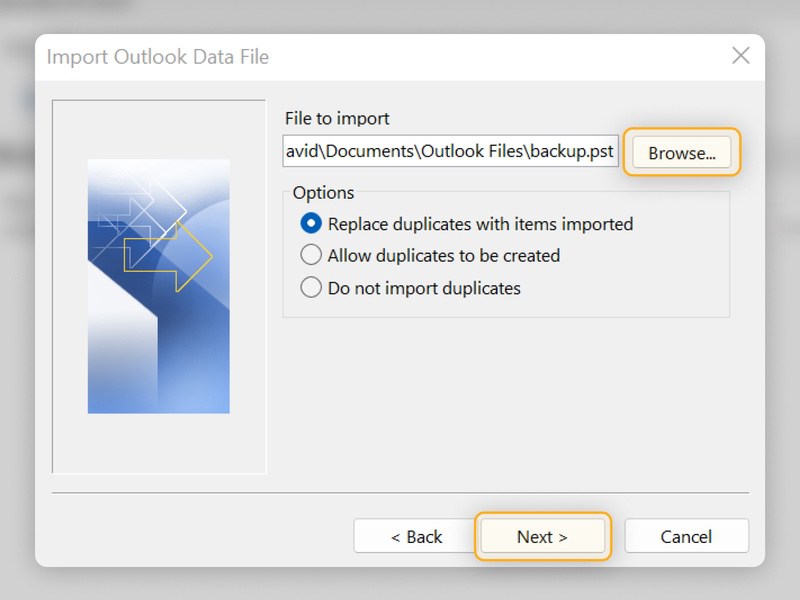
- Choose the Import from another program or file option and click Next.
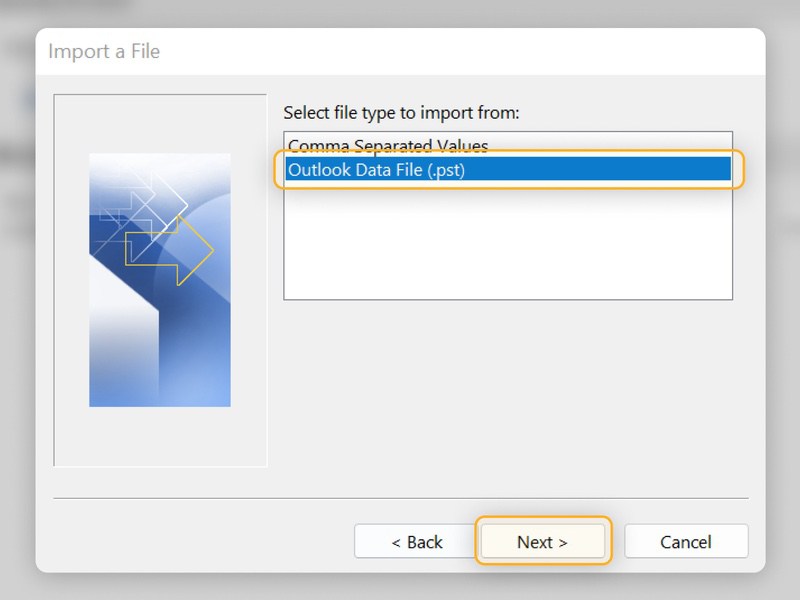
- Select Outlook Data File (.pst) as your file type of choice and click Next.
- Click Browse and select the .pst file you’ve just exported. Click Next to continue.
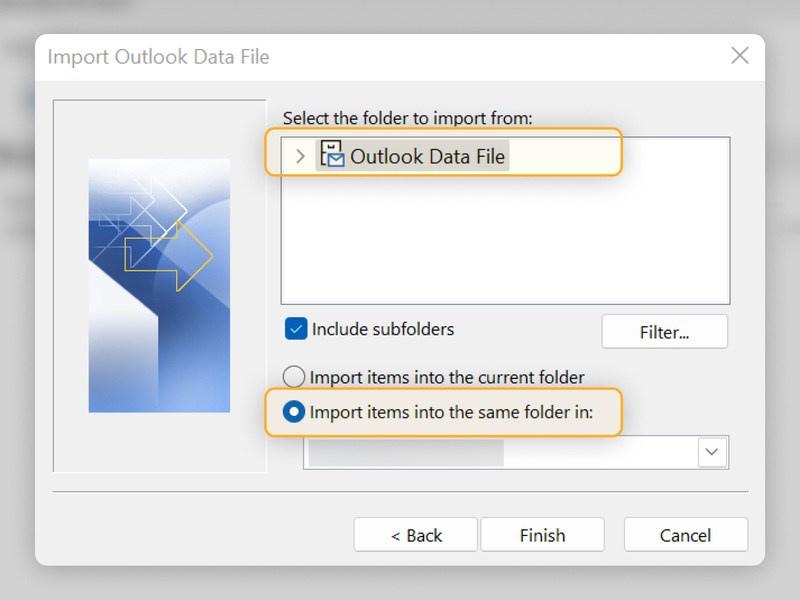
- Select Outlook data file and choose Import Items into the same folder in your Gmail account.
That’s how to transfer emails from Outlook to Gmail using the desktop app for Windows.
Prepare Your Inbox for Migration
If you’ve been using your Outlook account for a while, there’s probably a whole history living in there — old receipts, newsletters you meant to read (but didn’t), random notifications you don’t even remember signing up for. It piles up quietly, and moving all that into Gmail is the digital version of packing every drawer, every dusty box, and calling it “moving.” It just slows everything down.
Clean Email makes this part so much easier — almost peaceful, honestly — because it lets you clear out years of clutter in a way that doesn’t feel like work.
It’s oddly satisfying: you pick a timeframe (maybe older than 6 months), or a size limit, and suddenly all the heavy, forgotten messages appear in one place.
Then there’s the low-value stuff. Things like social notifications, shopping alerts, travel promos, that “seasonal sale” folder you didn’t know you had. Clean Email’s Smart Folders gather all of that into ready-made piles, so you can wipe out entire categories with a couple of taps.
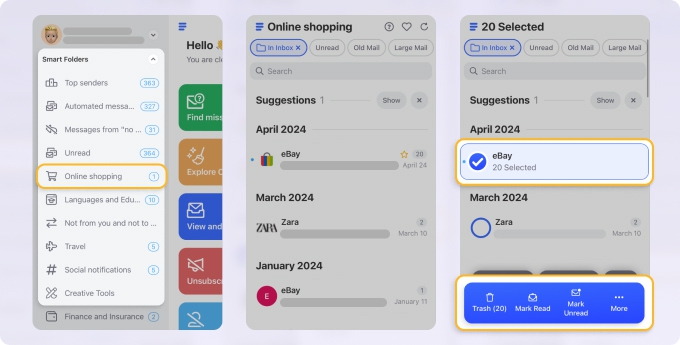
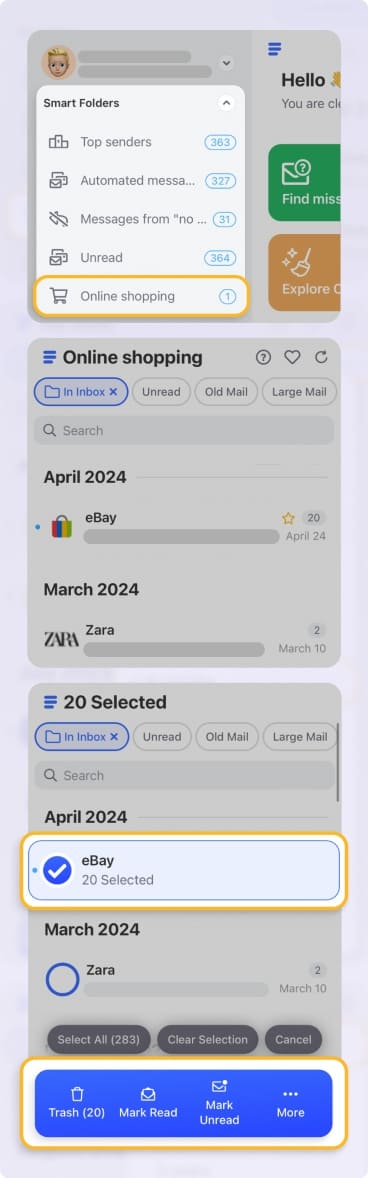
If you’re going to forward all Outlook emails into Gmail, it’s a good idea to clear out all unwanted subscriptions in bulk. If Outlook has turned into a cemetery of marketing emails, the Unsubscriber tool is your shortcut out. It shows every subscription Clean Email detects and lets you leave them with one click. You can also delete all messages from that sender while unsubscribing, which frees up a surprising amount of space.
And yes, it works exactly the same on web, macOS, and mobile.
Doing all of this before you migrate means you carry only the good stuff into Gmail. Cleaning your Hotmail email makes migration faster, lighter, and honestly, a lot more pleasant.
Migrate Your Entire Email Workflow from Outlook to Gmail: Final Steps
If you’re not just dragging old messages over but actually making Gmail your new home, there are a few extra things worth doing. Think of them as the “tie up loose ends” part of the migration — the stuff that saves you from those tiny annoyances later.
Forward new Outlook messages to Gmail.
Outlook.com can automatically pass along anything new that lands there, straight into your Gmail inbox. It helps during the “transition phase,” when people still haven’t updated your email in their contacts.
Read more: How To Set Up Automatic Email Forwarding: A Full Guide
Update your contacts and recovery details.
Once your messages are moved, double-check that your recovery phone number, backup email, and any connected services are tied to Gmail. It’s one of those small chores you forget about until you really need it.
Read more: Gmail Security: 8 Ways To Protect Your Account
Recreate rules and filters.
Gmail thinks in labels and filters, not folders and rules, so you’ll want to rebuild a few habits here. Set up filters to label or sort new mail so your new inbox doesn’t drift into chaos. It’s simple, really — just different from Outlook.
Read more: How to Create Rules in Gmail to Stop Inbox Overload
Reconnect apps and calendars.
If you lived in Outlook Calendar or kept files inside OneDrive, now’s the moment to sync things with Google Calendar, Drive, and whatever else you use. It makes Gmail feel more like the center of your digital life, not just a new mailbox.
Read more: Best Productivity Apps to Help You Accomplish More in 2026
None of these steps are glamorous, but they make Gmail feel familiar fast — and they help make sure nothing slips through the cracks while you settle in.
FAQ
What is Outlook .PST file?
A Personal Folders file (. PST) is created by Outlook when exporting messages to a file. The file can then be used to import the messages it contains to a different email account or stored securely for backup purposes.
Are there any 3rd party migration tools to transfer Outlook emails into Gmail?
Yes, there are multiple 3rd party migration tools that make it easier to transfer Outlook emails into Gmail, including:
How long does Outlook to Gmail migration take?
It depends on how full your Outlook inbox has gotten over the years. Gmail might take a few hours to pull everything in, especially if you’ve got old archives or lots of unread messages. The good part: it all runs quietly in the background. You can keep using Gmail while it works.
Can Outlook send emails to Gmail automatically?
Yes. Outlook.com has a forwarding feature that instantly relays new mail to your Gmail address. It’s helpful if you’re switching over but still expecting messages at your old account.
Do I need IMAP enabled to import mail into Gmail?
If you’re using the .pst export method, then yes — IMAP needs to be enabled so Outlook knows where to place everything inside Gmail.
Is it possible to migrate only selected emails from Outlook to Gmail?
Absolutely. You can export a single folder as a .pst file and import just that. Or you can use Gmail’s built-in importer to bring over only mail and contacts you care about.
What should I clean up before I migrate emails from Outlook to Gmail?
A little decluttering goes a long way. Clear out old newsletters, massive attachments, social notifications, and whatever else you don’t want to drag into your new inbox. A lighter Outlook equals a smoother migration.
Can I migrate my Hotmail account to Gmail the same way as Outlook?
Yes — Hotmail, Outlook.com, Live, and MSN all run on the same Microsoft system, so the migration process is identical. You can import Hotmail into Gmail using the built-in Gmail importer or by exporting a .pst file through Outlook and bringing it into Gmail that way. Everything works the same, which is a relief if your Hotmail inbox is… well, a little older than the others.