


Looking for an Email You Can’t Find?
Have you ever saved an email for later but can’t find it when later inevitably rolls around? Sometimes, even after you filter emails in Outlook, you still can’t find what you’re looking for. It happens to us all, even those with the most organized inboxes.
Thankfully, Outlook has a tool that can help you easily track down the message you’re looking for. You just need a bit of information about the message, and you’ll be all set to find that missing email.
💡 Note: This guide provides information on how to search emails in Outlook. If you need to locate messages in a different app, we also have guides on Gmail search and Yahoo Mail search operators.

How To Search in Outlook
Outlook’s search feature essentially works the same way across all platforms. However, there are some nuances in the directions based on whether you are doing an Outlook email search through the desktop app, web version, or mobile app.
Search emails in Outlook desktop app
For Mac:
- Open the Outlook desktop app from your laptop or desktop.
- Find the Search box at the top of the window.
- Click inside the bar, then type the sender’s name, subject line, or phrase from the message that you remember.
- Hit Enter or Search to see matching results.
- When you’re done, select the Exit Search icon in the search box or choose any folder in the navigation pane.
If you want to refine your results to narrow the results, you can try any of the following recommendations:
- Use quotation marks (“) to look for an exact phrase or name.
- Select the Filters icon at the right end of the search box to narrow results by folder, From, To, Subject, keywords, date, or attachments. Outlook will then only show emails that match the word or phrase you entered plus these criteria.


- Use the dropdown to the left of the search box (for example, Current Mailbox) to narrow or widen where Outlook looks for messages.
You can also type search operators directly into the box: from: or subject: followed by a term (no space after the colon), hasattachment:yes for emails with files, or received: with a date in MM/DD/YYYY format to search by date.
For Windows:
- Click the Search box at the top of the Outlook window.
- Type the sender's name, mail address, or part of the email subject.
- If you want to narrow the results in classic Outlook, use the Refine group on the Search tab: From, Sent To, Subject, Has Attachments, Flagged, Unread, and more. In the new Outlook, select the Filters icon on the right side of the search box instead.
- Select Calendar or People in case you need to look for contacts or events. Tap the Search box in either location and fill in the details you are looking for.
How to search for an email in Outlook web app
- Open your preferred web browser and go to https://outlook.live.com/.
- Sign in to your email account.
- Locate the Outlook search bar — it’s located at the very top of the page.
- Click in the bar, then start typing your criteria.
- From here, you can either select the term you were looking for if it automatically populates below the bar, or you can hit Enter at any time to perform the scan.
- Once the list populates, you can scroll through and click on the message you want.
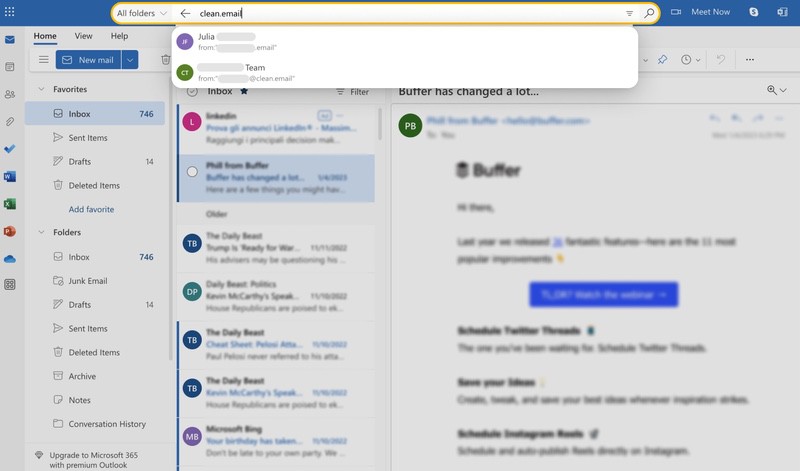

Like with the desktop app, you can refine your desired results. To perform an Outlook advanced search in the web version, follow these steps:
- Sign into your mail account on the web and locate the Search Bar at the top.
- Click the Filters icon on the right side of the bar, next to the magnifying glass. This will open the advanced search options.
- Fill in as many criteria as you’d like to narrow your results.
- Press Search at the bottom right of the menu.


How to search emails in Outlook mobile app
- Open the mobile app from your device.
- Tap the Search button in the bottom center of the screen.
- Now, tap into the searching bar at the top of the screen and begin typing your criteria.
- If you see an option you’re looking for, tap it to find messages based on that criteria.
- If you need to narrow your results further, use the options under the bar. For example, on iPhone, turn on the Attachments slider to see only emails with files.
- Once you select the criteria you want, a list of messages that meet those criteria will appear. Scroll and tap on the message when you find it.


💡 Note: If you use the Apple Mail app on your iPhone, you’ll need to learn how to search email on iPhone instead.
Clean Email Can Find Messages and More
Sometimes, figuring out how to search in Outlook is complicated. However, Clean Email makes it easy for users to perform an Outlook email search so they can locate items and organize their mailbox.
Here is how to find emails in Clean Email:
- Launch the app through the web or mobile.
- Choose All Mail (or any other option like Inbox or Unread) from the left-side panel.
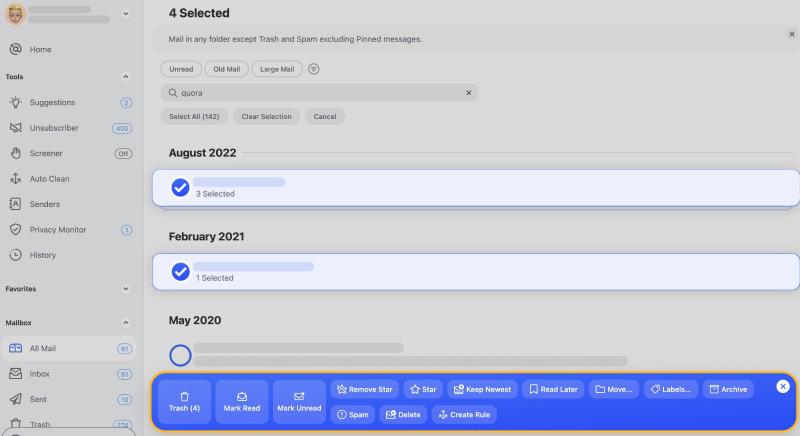
- Type the name of the sender or the sender’s email domain in the search field.
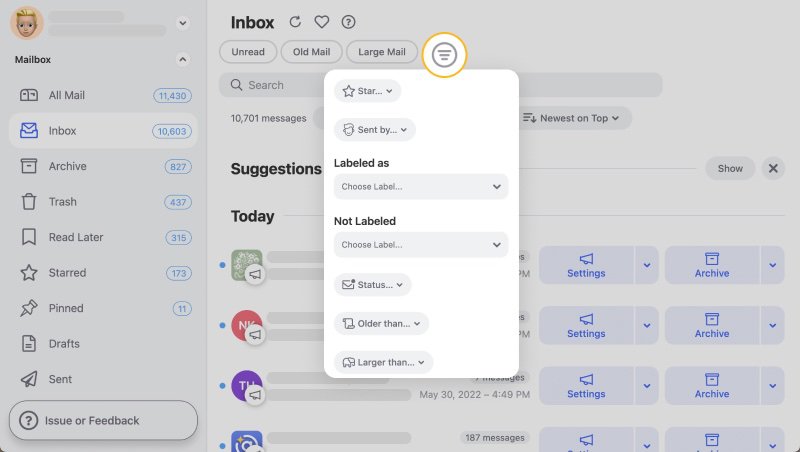
- You can use the funnel to apply more filters, like ‘older than’ or ‘larger than,’ and more.
- Select the messages you need and choose an action you want to apply to them.


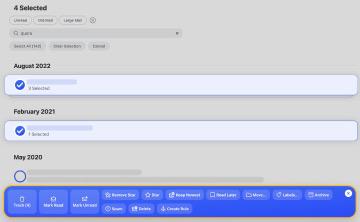
💡 Note: Clean Email requires you to log into the account using the email address you are trying to clean and organize. The app supports the Outlook email provider (your email address should look like this abc@outlook.com); however, it doesn’t reflect changes you make in the Outlook email client (please don’t mix with the email address), especially if other email accounts such as Gmail, Yahoo, etc. are connected to your Outlook email client. Luckily, Clean Email supports virtually all email providers, so you can sign up with any email address and do what you need.
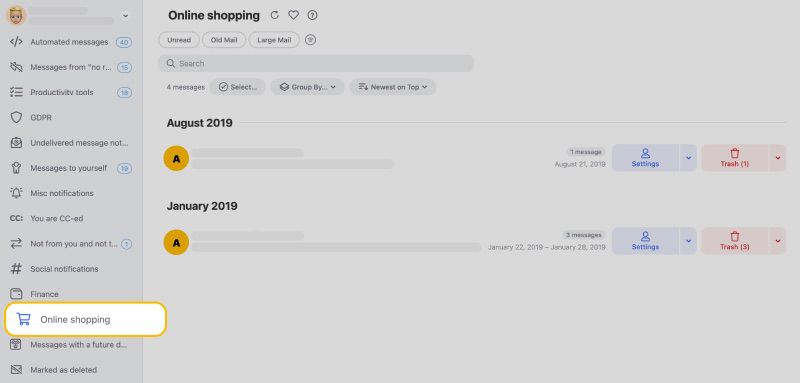
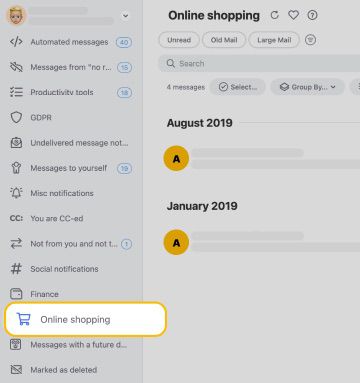
If you want to learn how to sort emails in Outlook through Clean Email, the Smart Folders feature can help. To use this tool, open the app, then look for Smart Folders in the left panel. Once you select a smart folder (e.g. ‘Online shopping’), you can use the filters to pair down the hunt even further.
Since Clean Email is a complete mailbox management app, it can do much more than find messages. In addition to the two previously mentioned tools, some valuable app features include:
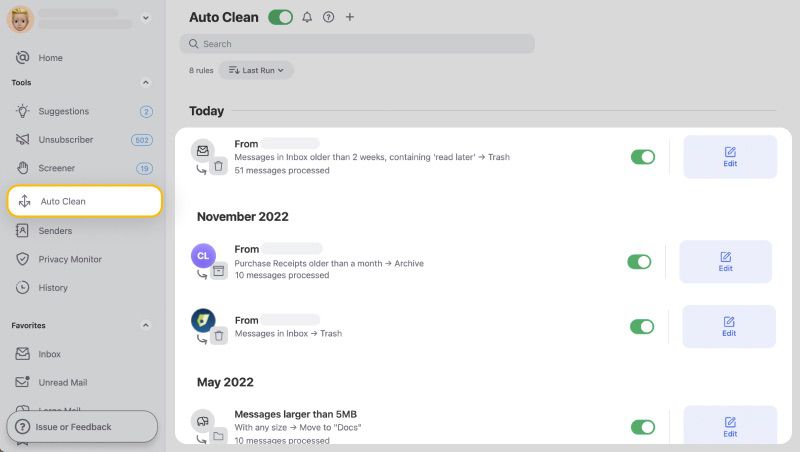
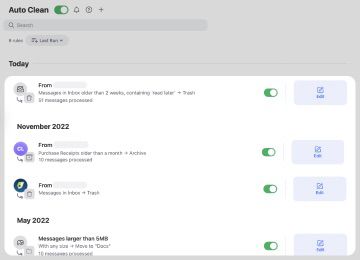
- Auto Clean: a feature that sets up automatic rules for sorting, labeling, or removing messages as they roll into your inbox
- Cleaning Suggestions: a tool that provides personalized organization recommendations based on how you interacted with certain messages in the past
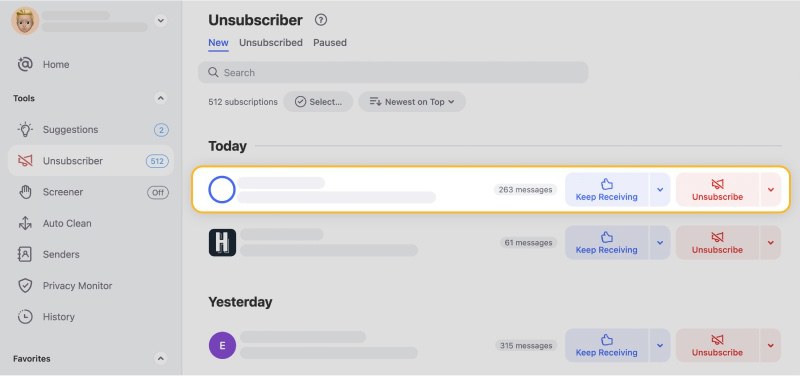
- Unsubscriber: a feature that removes subscriptions and promotional messages from your mail by sending unsubscribe requests and completing unsubscribe forms for you
- Screener: a tool that places messages from unknown senders into a folder that isn’t part of your inbox to review them before sending to your inbox
Clean Email was created with your privacy in mind. Therefore, the app never collects, sells, or shares your data. Also, we use encryption measures to keep everything safe and secure. The app is easy to use, works with most major email providers, and is available on the web, as a mobile app, or for macOS.
Search Emails In Outlook Effectively - FAQs
Where is the search bar in Outlook?
Usually, the bar is located at the top of the screen in both the desktop app and webmail. If you can’t see it in classic Outlook for Windows, press Ctrl+E to jump straight to the search box.
How do I do an advanced search in Outlook?
You can use Outlook advanced search by simply selecting the filter button on the right side of the box. If you want to know how to search folders in Outlook, you can use the selection tool to the left of the bar.
How do you search all emails in Outlook?
If you want to perform an Outlook search that includes all of your messages, make sure All Folders is selected.
How do I customize my search in Outlook?
You can create a custom Outlook email search that includes a custom search folder. In classic Outlook for Windows, go to the Folder tab, then select New Search Folder.
Why does my search not work in Outlook?
Sometimes this feature doesn’t work. This can simply be an issue that requires you to restart Outlook, or, in classic Outlook for Windows, you may need to fix your indexing settings by going to File → Options → Search → Indexing Options. In the new Outlook, go to Settings → General → Search to check which folders are searched and whether deleted items are included.


