


Can You Actually Select All Emails in Gmail?
Yes, you can select all emails in Gmail on the web and in the mobile app. However, there are limitations which may cause some confusion.
When you select all messages:
Gmail only selects those that are visible on the current page (50 conversations by default). Emails on the following pages are not included. To show up to 100 per page, go to Settings >See all settings >General >Maximum page size.
Gmail provides a link at the top to select all additional emails, making this a two-step process. This allows you to truly highlight all emails on all pages.

How Do I Quickly Handle a Large Number of Emails on the Gmail App?
To quickly handle a large number of emails in Gmail, consider using the Clean Email app. It organizes your emails into easy-to-review bundles, lets you create rules for automated actions, and provides advanced filters to target specific messages.
How Do I Choose All Emails on the Current Gmail Page?
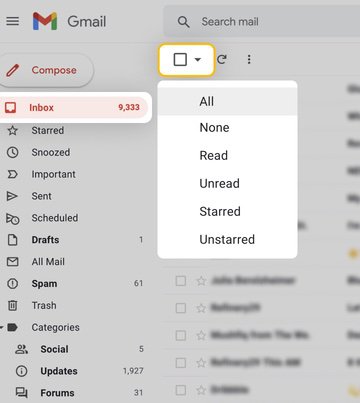
To select all emails on the page on the web, mark the Select checkbox on the top left. You can then perform the action you want.
To select all emails on the page using a filter, click the arrow next to the Select checkbox and pick Read, Unread, Starred, or Unstarred. Gmail then checks only the matching emails on the current page, and you can act on them.
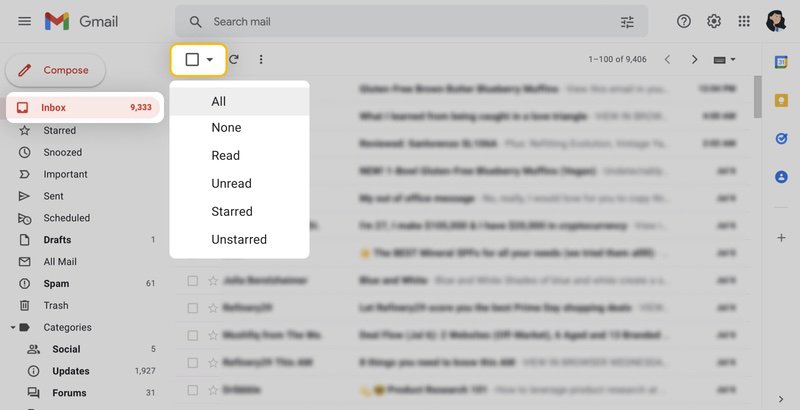
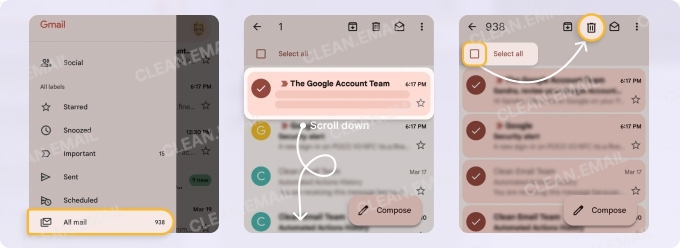
To select all emails on the page in the Gmail mobile app, long-press an email in your message list (or tap the sender’s profile icon) and then tap Select all. This selects up to 50 emails that have loaded in the list.
💡 Note: You can’t use selection filters like Read or Starred in the mobile app like you can on the web.
How to Select All Emails in Gmail Across All Pages
To select all emails on the web, mark the Select checkbox. Gmail then shows a notice such as “All 50 conversations on this page are selected. Select all 2,000 conversations in Inbox.” Click the Select all conversations link to include every page.
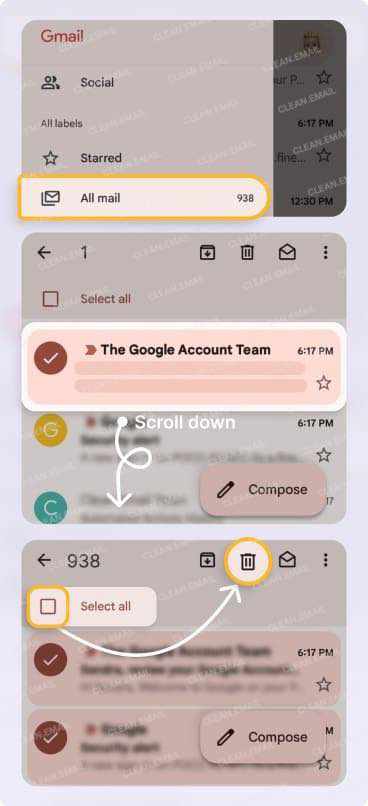
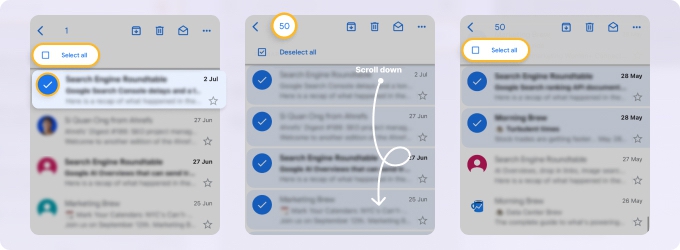
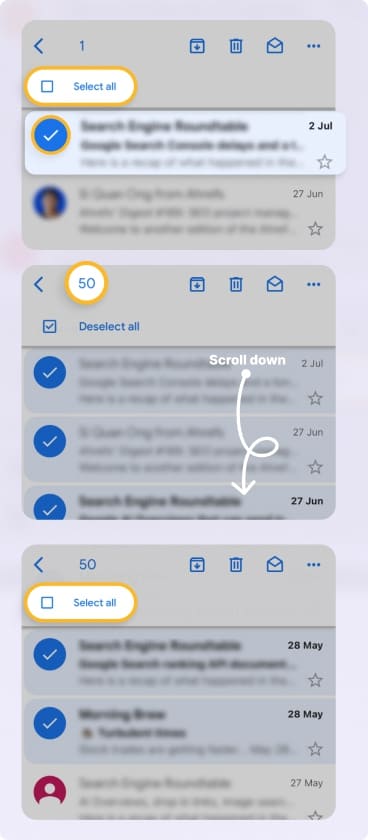
To select all emails in the mobile app, long-press an email in your message list, mark the Select all checkbox, scroll to the bottom to load more messages, and mark the Select all checkbox again. Continue this process until you’ve selected all emails.
Select All Using the Clean Email App
As you can see, selecting all emails in the Gmail mobile app is tedious, especially if you have a lot of emails in your inbox.
But don’t worry—the Clean Email app, available for Android and iOS Gmail management, simplifies the process of handling your emails on mobile when the Gmail app features are not enough.
With just a few taps, you can easily select multiple emails—even all of them—just as if you were using Gmail tricks from the desktop on mobile, and quickly apply various actions to them.
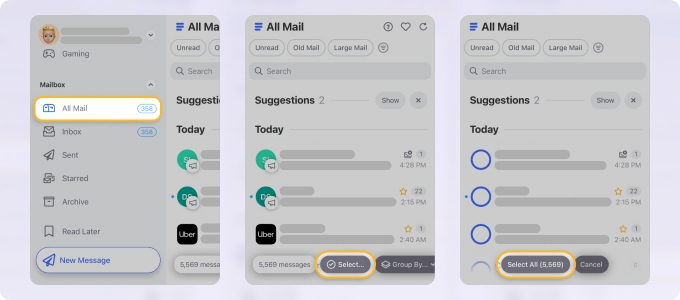
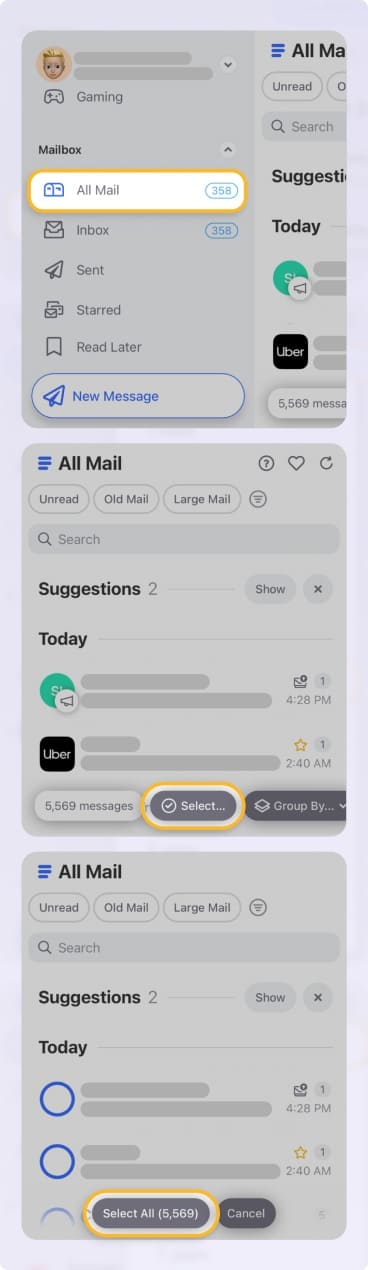
To select all messages in your mailbox using Clean Email:
- Go to the All Mail folder (or other folder).
- Tap the Select button below or the circular icon next to any sender to select a message bundle.
- Tap Select All at the bottom to mark all messages.
How Do I Select All Emails Matching a Search in Gmail?
Perform your search as you normally would using the Search Options at the top or a search operator. Then, mark the Select checkbox and, if the results span more than one page, click the Select all conversations that match this search link.
For example, to select all emails from one sender, search for from:name@example.com and then select all the results the same way.
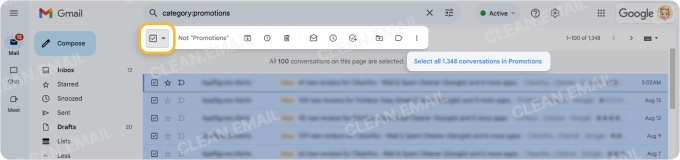
This method narrows down the messages to only those you want to act on and is the safest way to go when you don’t want to perform that action on all emails in your Inbox or All Mail.
Why Gmail’s “Select All” Works Differently Than People Expect
The Select checkbox works on one page of conversations, not your whole mailbox. Selecting beyond that page always takes a second, deliberate click on the Select all conversations link, and Gmail shows how many conversations the action will affect.
That extra step matters before an irreversible action such as mass deletion of emails. Also note that Gmail counts conversations, not individual messages, so one selected conversation can contain several emails.
When Is Selecting All Emails Risky (And When Is It Fine)?
Selecting all messages in Gmail is risky if you do so in All Mail to take an action. Unlike your Inbox, All Mail contains new, archived, and labeled emails and only excludes messages in the Trash or Spam.
For instance, if you select all messages in All Mail and then hit Delete, this sends all of your emails to the Trash. As another example, if you select all messages in All Mail and then click Report Spam, this reports every email as junk and sends it to the Spam folder.
It’s typically safe to select all emails when:
- You want to mark them as read or archive them.
- You select them in a custom label that holds only a few messages.
- You narrow down the selection first using the Search features.
It’s typically unsafe to select all emails when:
- You use All Mail to take an action such as Delete, Report Spam, or Add to Tasks.
- You have thousands or tens of thousands of emails to act on and can’t risk performance issues.
- You use the mobile Gmail app and rush the “select all” process. (This can cause accidental actions on unintended emails.)
How to Avoid Repeating “Select All” Actions
You can avoid repeatedly selecting all messages in Gmail with a couple of simple tricks. The suggestions below are most easily performed with supplementary tools like Clean Email which provide the same features on the web and your smartphone.
Group-Based Handling: You can group your Gmail emails by sender, address, domain, date, label, and more. Then, perform a bulk action on only specific groups rather than all emails.
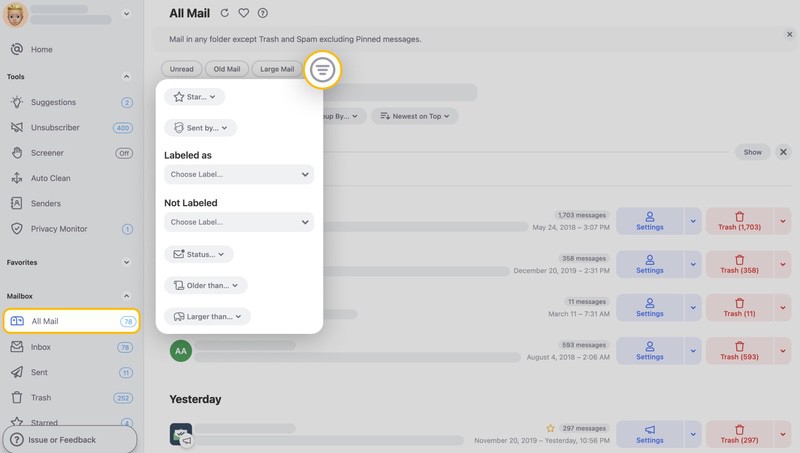
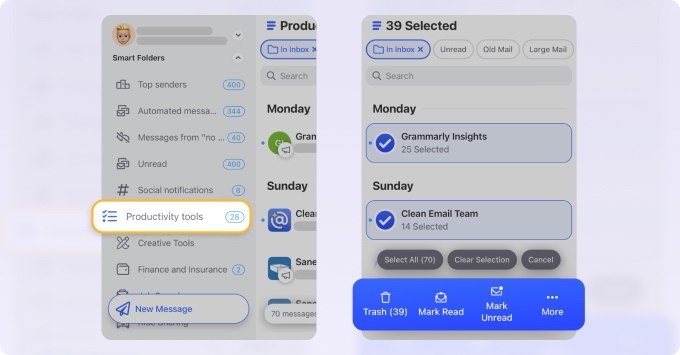
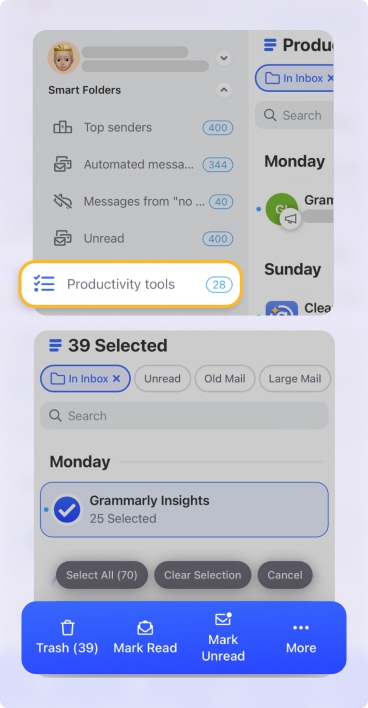
Smart Folders feature: It sorts messages for you based on criteria they share, like Social notifications or Productivity tools. This makes it much easier to clean out the clutter without setting up complex rules and filters within the Gmail app.
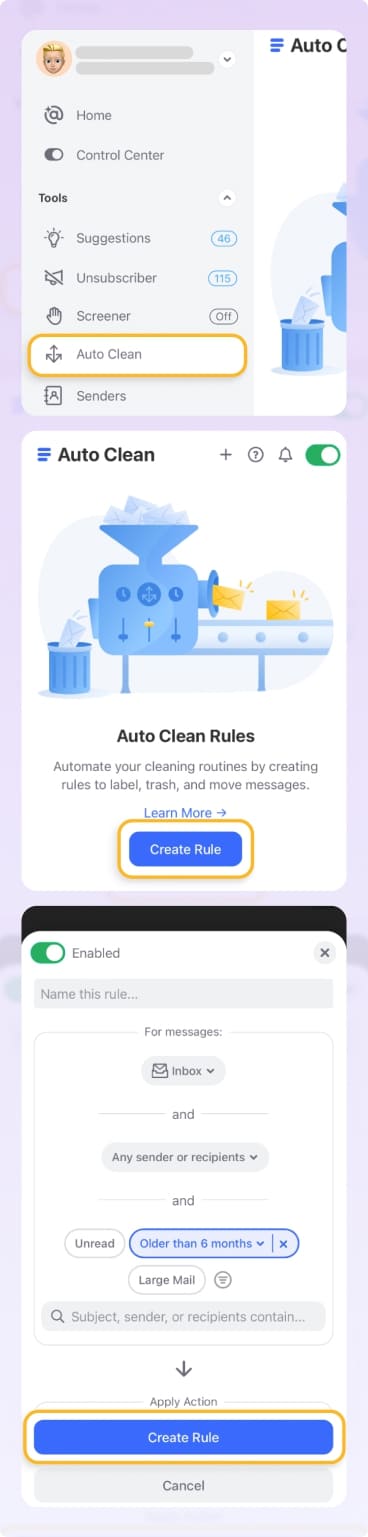
Similarly, the Auto Clean feature lets you automate any email task you’d like.

When a Tool Makes Sense Instead of Gmail’s Native Selection
There’s no doubt that Gmail offers convenient features for email management. But when it comes to selecting all messages in Gmail, is a third-party tool a more sensible choice? Let’s look at a few helpful scenarios, along with their drawbacks, to help you decide.
Selecting all emails on a page: Gmail can help you perform a fast cleaning, email status change, or archive action. The downside is that you may miss other messages you want to include.
Selecting all emails from a search: This assists in narrowing down the messages you plan to act on, which provides a lower risk of mistakes. The drawback is that you may end up acting on emails by mistake if the search query is skewed.
Using a third-party tool: With tools like Clean Email, you can manage large volumes of messages at once, have multiple “select all” options in both the web and mobile apps, and use smart features for ongoing mailbox control. The disadvantage is that you’re using an external tool rather than the official Gmail app.
| Method | Best for | Risk level | Scale limit | Biggest drawback |
|---|---|---|---|---|
| Gmail page select | Quick cleanup | Low | Page only | Misses emails |
| Gmail search select | Targeted cleanup | Medium | Search-based | Easy to over-delete |
| Clean Email | Ongoing control | Low | Large volumes | External tool |
With the above in mind, if you’re performing a safe “select all” action, Gmail is an obvious choice that gives you what you need. But if you want a more flexible selection process along with simpler long-term management, a third-party tool is probably the way to go.


