Outlook Organization Hacks: Get Organized Like a Pro
To get started, it’s best to get your mailbox in order. These Outlook organization tricks help you manage important messages and emails you want to keep.

Turn on the Focused Inbox
To separate noise from real email, use Outlook’s Focused Inbox. This separates your inbox into two tabs for Focused which are important emails like messages and contacts you often interact with, and Other which are messages like automatically generated or bulk emails.
💡 Read more in our guide on how to Use Outlook Focused Inbox.
Consider Archive vs Delete
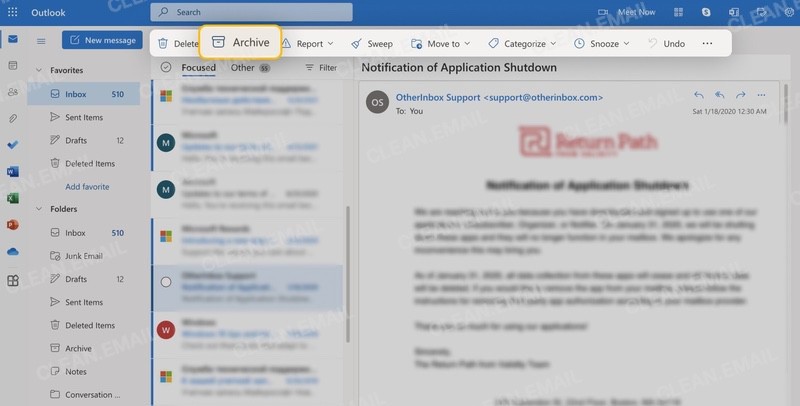
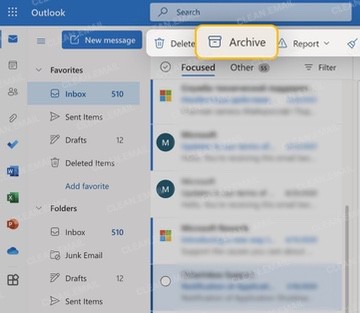
When cleaning up your inbox, consider using Archive instead of Delete to remove the clutter and keep the history. You may have messages that don’t belong in a folder or emails you’re not sure whether or not you’ll need later.
By using Archive, you can hold onto the messages and view them in the Archive folder. But if you Delete an email, it goes into the Deleted Items folder where it’s automatically and permanently removed after 30 days.
- Right-click a message and choose Archive or drag the email to the Archive folder in the menu.
Use Color-Coded Categories and Folders
To spot emails quickly or organize them by project or priority, use the built-in color-coded categories and folders.
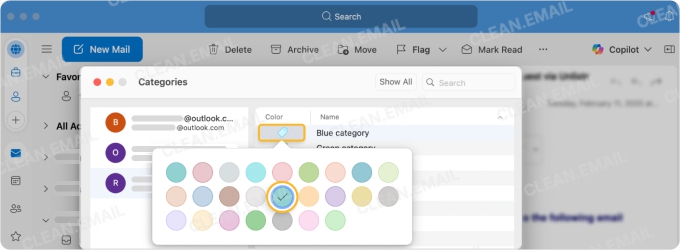
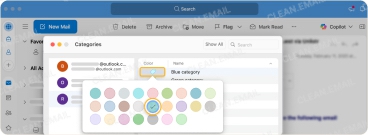
With categories, you can apply the colored tag to an email to easily find related messages. Plus, you can use the Sort option to reorder your inbox by category.
- Open the Categories menu in the toolbar and assign a category, create a new one, or manage categories like changing the name or color.
With folders, you can move emails you want to save for easy access later. You can also change the color of a folder and even have it match the color of a category you assign.
- Right-click an email, slide down to Move, and pick a folder or create a new one. To change the color, click the three dots to the right of a folder in the menu and choose Change color.
Outlook Efficiency Tips: Automate Everything You Can
Automations can speed up inbox triage, email organization, and other actions you perform over and over. Simply set up the automation and let Outlook handle the rest so you can move onto other tasks.
Create Smart Rules
Inbox rules are fantastic for automatically managing emails as they arrive. In Outlook, you can do things like move messages to a folder, apply a category, or forward emails without lifting a finger.
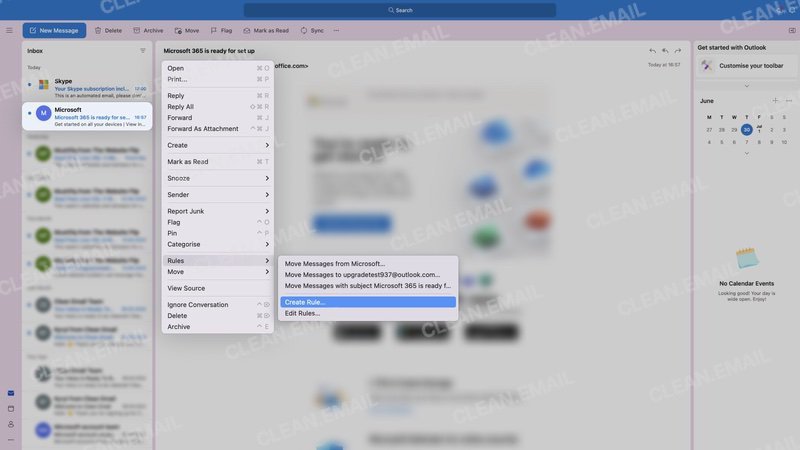
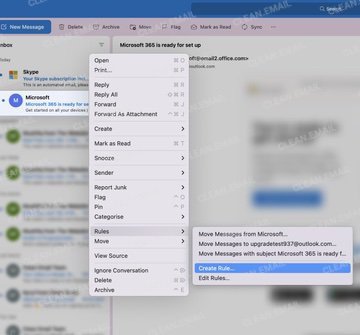
- To set up a simple rule to move messages from a particular sender to a folder, right-click the email, move to Rules, and pick Create rule. For an advanced rule with multiple conditions or exceptions, pick Manage rules (Edit rules on Mac) instead.
Set Up Quick Steps
Quick Steps are a favorite Outlook automation for recurring actions. With a single click instead of multiple ones, you can move and mark an email, flag and create a task for a message, or categorize and snooze an email.
- Open the Quick steps menu in the toolbar and choose Manage quick steps. Add a new Quick Step, give it a name, and choose one or more actions.
You can then use the Quick Step by selecting an email and picking the action in the Quick Steps menu.
Save Search Folders
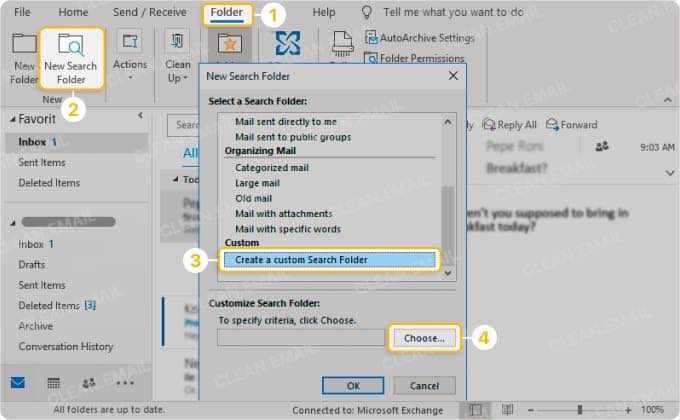
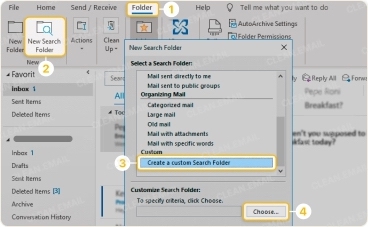
If you find yourself often searching for certain emails such as those flagged for follow up or others that have categories applied, consider automating this task by creating Search Folders. You simply choose the type of search, add a name, and then open the folder from the menu.
- Select the three dots next to Search Folders in the menu and pick Create new search folder.
Outlook Productivity Hacks: Hidden Power Features
For even more tools that can increase your productivity, consider these Outlook.com tricks that help with both sending and receiving emails.
📌 Turn Emails Into Tasks or Events: When a message prompts a new task or event, simply convert it by dragging it to the navigation bar. There’s no need to create the item from scratch — just use the email.
📌 Delay Sending: Schedule emails to send later for better timing. You can pick a quick option like tomorrow at 8 AM or select a custom date and time.
📌 Templates and Canned Replies: Create and reuse templates for composing the same email with slight changes and automatic replies for responding to FAQs.
📌 Advanced Search: Outlook provides a basic search with criteria like From, To, and Date. But to locate emails with other conditions, you can use search operators. For example, to find large messages, you can enter messagesize:large or for flagged emails, enter hasflag:true.
📌 Pin Emails: To keep important messages at the top of your inbox, pin them using the Pin option in the toolbar, to the right in the message list, or in the email menu.
Outlook Email Tips: Use Microsoft Copilot to Supercharge Your Inbox
Copilot is Microsoft’s AI assistant that helps you draft, summarize, and organize emails in Outlook. It’s a time-saving tool that can be accessed easily using the Copilot button to the right of the ribbon on Outlook.com.
📌 Note: To enable and use Copilot in Outlook, you need an eligible Microsoft 365 subscription or Copilot license.
Power moves with Copilot in Outlook:
- Summarize threads or lengthy messages to catch up in seconds.
- Draft smarter replies using natural language like “Make this more concise and polite” or “Reply to this email as a friendly update, 75 words or less.”
- Rewrite emails to adjust the tone, clarity, or format.
- Ask Copilot to suggest you the best Outlook rules for productivity like “Organize emails from my manager” or “Flag emails from Bill.”
- Summarize attachments like reports, proposals, or presentations.
Copilot is great for high-volume, low-risk tasks. Just remember when using Copilot to create content in Outlook, be sure to always review the outputs. For instance, you may want to add personalization or confirm meeting details.
Where Outlook’s Native Features Fall Short
Outlook offers strong built-in tools for search, rules, templates, scheduling, categories, and Copilot-assisted writing. But if your main problem is inbox volume, Outlook’s native features can still feel limited because many cleanups have to be handled manually or managed across separate settings.
That’s where Clean Email can work alongside Outlook. While Copilot helps you summarize, draft, and rewrite messages, Clean Email helps you reduce recurring clutter with tools that Outlook does not offer in the same way. Some of them include a mass Unsubscriber for getting rid of unwanted newsletters in bulk, Screener tool for keeping unknown and potentially spammy senders out of your main Inbox, and advanced Sender Settings for managing unwanted mail more directly.
📌 In short, Outlook is best for daily email handling, while Clean Email is useful when you need more control over inbox cleanup, bulk actions, and long-term organization.
The app can work alongside Outlook on any device, including macOS, mobile, and the web, to keep things clean and sorted with less manual maintenance.
Outlook Quick Tips: 5-Minute Wins
For a few ways to do things just a bit quicker, consider these additional Outlook hacks that’ll turn you into a power user in mere minutes.
- Mention others: Enter @Name to tag a teammate in a shared thread.
- Customize the layout: Try dark mode for easing eye-strain, a compact message list to see more at once, and the right-side reading pane for faster triage.
- Add to Favorites: Add frequently-used folders to the Favorites section for quick access.
- Use keyboard shortcuts:
- R or Ctrl + R = Reply
- Shift + F = Forward
- N = New message
- E = Archive
- Alt + S or Ctrl + Enter = Send
Conclusion
Now that you know how to maximize Outlook email management, give a couple of these Outlook tips and tricks a try. Whether you use categories and folders to organize your mailbox or inbox rules and fast actions for managing messages quickly, you’re sure to find at least one helpful suggestion to speed up your workflow.