What Is an Anonymous Email Account?
It's an email account that protects anonymity, allowing you to send emails without them being traced back to you. These accounts don't store any of your information, and you typically don't create them with secure email providers you use in your daily life to avoid compromising your account from accidental negligence.
Who Is the Best Anonymous Email Provider?
Choosing the top anonymous email sender to use is a big task, but we've simplified the steps. Before we discuss our top five service providers that have the capability of sending an unidentified message, we want to make sure you know what features you should be looking for in your anonymous email sender.
- Is there a built-in encryption feature?
Message encryption is not only important for anonymity purposes, but it is also for protecting sensitive information in general from hackers or other unwelcome eyes. Having the ability to encrypt your message will give you an extra sense of security when sending unidentified mail. - What will you be using the unidentified email for?
Think about how you want to use your new incognito mail account. Do you want to solely send emails, do you plan on only receiving them, or do you want both features? Many service providers have limitations on ways users can utilize their accounts due to security and performance reasons, so decide how you'll use it in the future before setting one up. - Can you use it to configure messages using IMAP (Internet Message Access Protocol)?
If you want to keep track of the messages you send in incognito status, then you will need to make sure that you have your mail connected to IMAP. IMAP allows your messages to be saved on your Internet Provider's Server and for you to have access to them on any device you want to view them on. Basically, you won't be tied down to only viewing or sending messages from your computer. - What kind of privacy features does it have, for example, two-step verification, no ads?
Although many service providers that allow users to send emails anonymously claim to fully protect their identity, we've found that some companies still use ads within their software. Typically, when a company uses ads within their product, they have sold or shared your information to third parties, which defeats the purpose of being unidentified. You also want to make sure that the email client keeps your login credentials secure to avoid hackers retrieving any real information you had to provide to the site to get the anonymous account. Two-step verification is one of the best features to provide peace of mind about your information not ending up in the wrong hands.
Now that you know a few things you need to look out for, here are the top 5 private email services we recommend using for sending your messages incognito:
Note that for most users, complete anonymity in sending emails isn’t necessary. However, these measures are often the best way to answer their most common concern—keeping their personal information private and avoiding being tracked.
So before jumping into fully anonymous methods, it’s worth understanding how much protection Gmail and Outlook already offer and how you can strengthen it without switching providers. Not only are these routines easier to integrate with your usual workflow of sending emails, but they can also work well to improve your overall online security.
Improving Your Email Privacy and Protection
Emails are sent for plenty of reasons, but there are only three types of email senders. There are your everyday email users, the privacy-conscious users, and the ones that need full anonymity. Think of those working in journalism or law enforcement.
Adding to the fact that most services we interact with have some way of tracking us, the need for everyday privacy (even when sending emails) becomes an important consideration for any person looking to take their online security seriously.
Fortunately, email clients such as Gmail and Outlook already offer features that can protect most users from privacy risks. Even more dedicated privacy management tools like Clean Email can also help strengthen your inbox security even further.
Clean Email: An Extra Layer of Privacy for Regular Users
As an email management tool, Clean Email has plenty of features that not only organize your inbox but also keep it private and secure. It has several features that work alongside Gmail and Outlook, including:
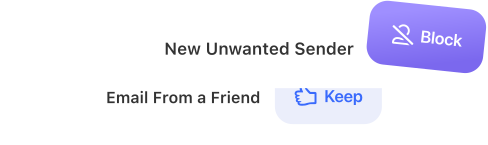
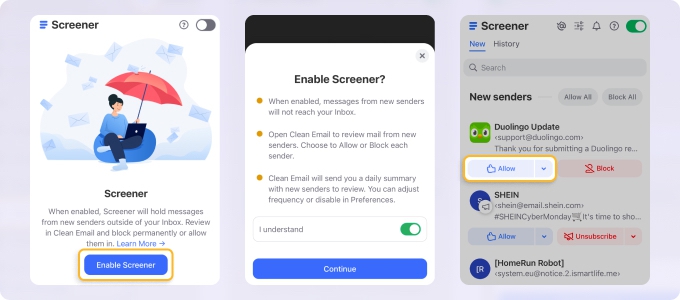
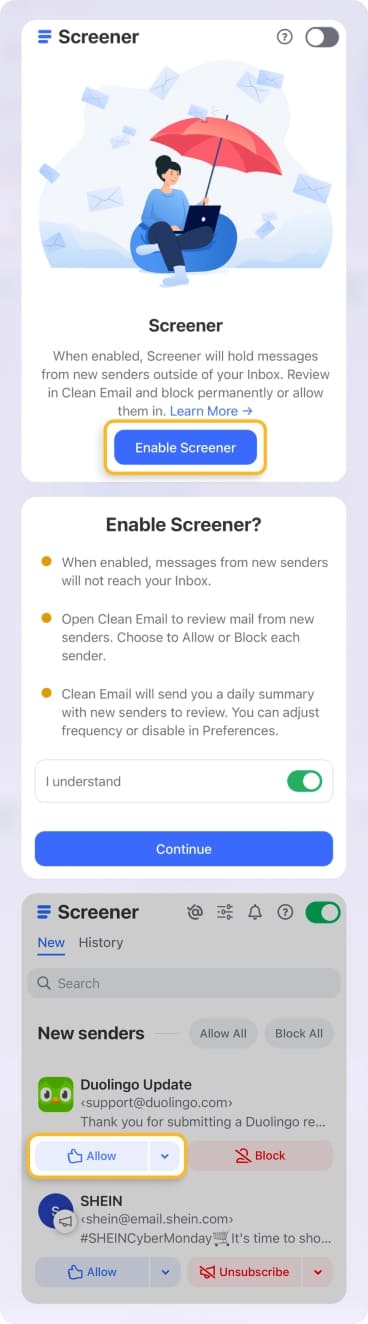
- Screener automatically filters out emails from unknown senders until they've been approved, minimizing the risk of spam or phishing.
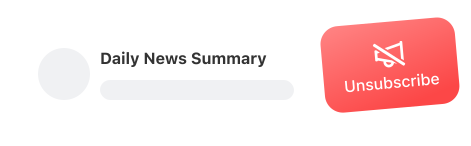
- Unsubscriber simplifies the removal of unwanted newsletters and email lists, even from senders that don’t provide an unsubscribe link, and in bulk.
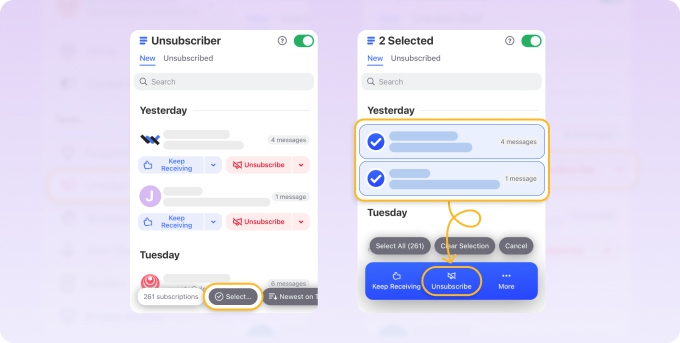
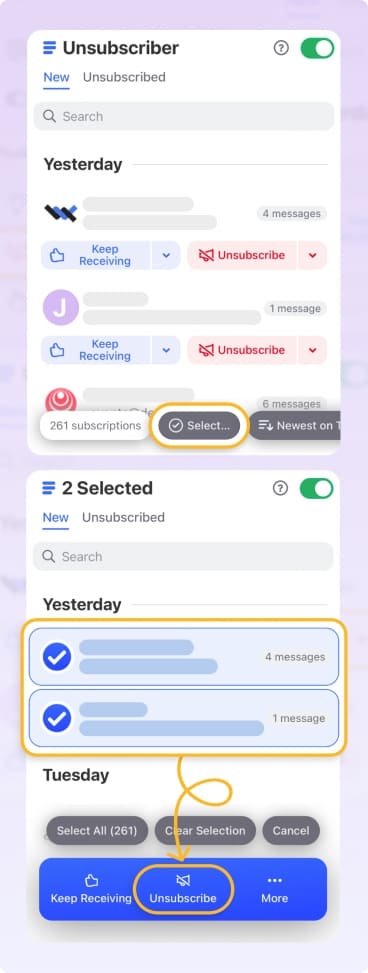
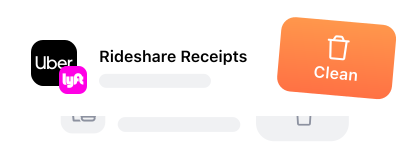
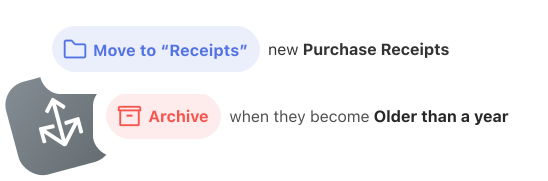
- Auto Clean automates inbox management by sorting and removing irrelevant emails, which can reduce the likelihood that you’ll be tracked by websites or other similar services.
Additionally, Clean Email uses encrypted, metadata-based processing to keep your data secure and private. It doesn’t read the information that you put into your emails, and neither does it sell any data about your email habits.
What Is the Difference Between an Encrypted Email and an Anonymous Email?
While they share similar goals (enhancing the privacy of emails), encrypted and anonymous emails have different methods for improving your email’s security and privacy:
📌 Encrypted email uses cryptography to protect the content of an email from unauthorized access during transmission, ensuring that only the intended recipient can read the message. This encryption typically involves public and private keys, as seen in protocols like PGP or S/MIME.
📌 On the other hand, an anonymous email hides the sender’s identity by stripping out any identifiable information, often through services that don't require personal details to create an account. Some of these services are standalone (typically only acting as an email client) while others can be part of a full security or communications solution.
The best way to differentiate the two is the specific areas they concern themselves with when it comes to emails: encryption secures the message itself, while anonymity addresses the sender’s privacy.
Gmail Privacy and Security Tools
Gmail offers several key protections to help secure user data:
- Confidential mode: This feature allows users to send emails with expiration dates and restrict forwarding, copying, downloading, and printing of the message.
- Two-Step Verification (2SV): Gmail’s 2SV requires users to provide a second form of authentication (such as a code sent to their phone) in addition to their password.
- Message encryption: Gmail uses TLS (Transport Layer Security) encryption to protect emails as they travel between Google servers and recipients.
- Built-in phishing and spam detection: Gmail automatically detects and filters out phishing attempts and spam messages using machine learning, helping users avoid malicious or unsolicited content.
These features are not automatically enabled for your email client, but can be used to enhance your everyday privacy measures. Additionally, enabling these features also protects your email account from security risks.
How to send an anonymous email on Gmail
As per their Privacy Policy, Gmail requires users to create accounts with personal information (such as a name, phone number, or recovery email), so actually sending an anonymous email through your Gmail account isn’t possible.
However, there are methods you can use to increase the privacy of your Gmail:
- Creating secondary accounts: Users can create additional Gmail accounts with minimal personal information, such as not linking a phone number or using a pseudonym.
- Using aliases/labels: Gmail allows users to create aliases by adding labels to their email address (e.g., name+label@gmail.com). This enables users to categorize or filter emails without revealing their primary email address.
- Using Gmail with a VPN: When accessing Gmail through a VPN, users can mask their IP address, preventing Gmail or other services from tracking their physical location.
- Using Apple's "Hide My Email" feature: For iOS users, Apple’s "Hide My Email" feature allows them to create disposable email addresses that forward to their primary Gmail account.
Outlook Privacy and Security Tools
Microsoft Outlook offers several privacy settings and built-in tools to protect user identity and enhance security:
- Encrypt or Expire Messages: Outlook allows users to encrypt their emails or set expiration dates for sensitive messages, preventing unauthorized access and ensuring that emails are no longer accessible after a certain time.
- Two-Factor Authentication (2FA): Outlook supports 2FA, adding an extra layer of security by requiring a second form of identification (like a phone number or authenticator app) in addition to the password.
- Focused inbox: The Focused Inbox feature automatically filters and prioritizes important emails, helping users focus on legitimate messages.
- Phishing and Spam Filtering: Outlook uses machine learning to detect and filter out suspicious messages, ensuring that harmful or unsolicited emails are automatically moved to the Junk folder.
How to send an anonymous email on Outlook
Like Gmail, Outlook also requires some personal information from you so it can work effectively, so you can never send an anonymous email through it. However, it also has several features that improve email privacy and security.
📌 Encrypt and Do Not Forward are the two most common options to ensure that the contents of the email are readable only by the intended recipient and prevent them from forwarding, copying, or printing the email you sent.
However, note that these features and additional permission options are only available through Office 365 Message Encryption or Information Rights Management (IRM).
Limitations of Built-In Privacy Protections
While convenient, the built-in privacy protections of email clients like Gmail and Outlook aren’t completely anonymous. They still:
- Collect metadata and behavioral data.
- Retain IP logs.
- Have limited unsubscribing and filtering options.
- Allow some marketing tracking via images or embedded links.
If you’re determined to increase the level of privacy in your email inboxes, tools like Clean Email will be essential to help you get that level of control.
Additional Tips for Strengthening Email Privacy
Here are some quick tips you can follow to keep your email habits more private:
- Use strong, unique passwords for your email account and enable two-factor authentication (2FA) to prevent unauthorized access.
- Avoid clicking on suspicious links or attachments in emails.
- Encrypt sensitive emails to ensure that only the intended recipient can read them.
- Regularly review your email account's privacy settings and permissions.
- Consider using an alias or a disposable email address when signing up for online services.
- Disable auto-loading of images and other media in emails to prevent trackers from collecting data on your email interactions.
- Use a VPN when accessing email on public or unsecured networks to mask your IP address and protect your location.
Overall, your usual email clients like Gmail and Outlook already offer excellent ways to keep your data and email habits safe and secure. But if your situation requires total anonymity (where even headers and IPs must remain hidden), here’s how to send a completely anonymous email.
How to Send Anonymous Emails
You have confidential information to send to a journalist or your office that you don't want to be traced back to you. You're concerned that if your identity is exposed, you could be fired, scrutinized, or embarrassed, depending on the information you're sending in the message. We're going to show you how to send messages via email that can't be traced back to you to give you the peace of mind you need to confidently share your important message.
- Create a brand new email account using a well-known provider like Outlook, but don't use any of your personal information that can potentially identify you as the owner of the account. This is how to send an anonymous email in Outlook without your identity being compromised. However, keep in mind that although you'll be sending from an account that doesn't include your personal information, your IP address will still be attached to the account, which can risk the chance of the message being traced back to you.
- Another option is to use a VPN (Virtual Private Network) to mask and change the IP address associated with your device. The VPN blocks Google and other third parties from tracking your location to ensure anonymity, especially if you use a public server. If you're unsure which VPN provider offers the best combination of security and ease of use, resources like G2’s overview of the best free VPN services can help you compare your options quickly.
- Get a burner email for receiving or sending messages without compromising your identity. These types of emails expire within a certain timespan. However, these disposable addresses can be limited because some only allow you to receive incoming messages, while others only allow you to send them.
- Encrypt your messages to secure your outgoing emails so no one can view the information being sent in the email except for the party receiving it.
⚠️ Important safety note: Creating a new account on a mainstream service and using a VPN provides only weak pseudo-anonymity. For high-risk disclosures (e.g., whistleblowing, reporting abuse), use:
- A privacy-focused email provider.
- Tor or a trusted no-logs VPN.
- Enable end-to-end encryption.
- Strict operational security (separate device, avoid reusing accounts).
If legal risk is involved, consult legal counsel, law enforcement, or a digital security adviser.
💡 Looking for more email management tips? Follow our guides on how to back up emails and how to whitelist an email.
Conclusion
Knowing how to send an unidentified message can help you keep your identity safe from backlash from colleagues and employers, being a source for a journalist, and for other valid reasons. If you want to have additional email security on what types of messages enter your inbox, try using the Clean Email app. This inbox cleaner is designed to block unwanted senders, organize, and prevent spam from entering your inbox. The best part is that it never shares, sells, or analyzes your data to keep you safe from pesky third parties.
How to Send an Anonymous Email – FAQs
Can you send an anonymous email?
Yes. You can send an unidentified message through disposable addresses, a secure VPN service, encrypt your message, create an anonymous email account, etc.
Is sending an anonymous email illegal?
Sending a message anonymously isn't illegal as long as you're not using it to break the law. For example, if you're not using your anonymity to spam or breach any digital laws such as the American CAN-SPAM Act, you are not doing anything illegal.
Can you find out who sent an anonymous email?
If the message was sent from a public IP address, like a coffee shop, then you won't be able to figure out who sent you the unidentified message. You can find IP tracking tools all over the web.
How to send an anonymous email without being traced?
We recommend using a service provider that specializes in anonymous emails or using a VPN. These are the easiest and most secure ways to send messages anonymously.
How to send an anonymous email from Gmail?
When you create your Gmail account, make sure you don't use any personal information that will tie back to you. Next, you will need to make sure you have the email connected to a VPN for further security when sending emails you don't want to be traced back to you.
How to create an anonymous email account?
First, pick a service that specifically provides its services for users who want to send or receive messages without their personal identity being associated with the email. Then follow the steps that the provider gives to set up your account, and learn how to hide your email address when sending emails. Here are some of the best options out there: ProtonMail, Hushmail, Tutanota, Mailfence, and Guerrilla Mail.