

GMX SMTP Settings
GMX Mail is a free, ad-supported email service (GMX stands for Global Message eXchange). Your mail app needs to support TLS 1.2 or 1.3, since GMX no longer accepts older TLS versions.
Below are the GMX SMTP Settings:
| Option | Description |
|---|---|
| SMTP Host: | mail.gmx.com |
| SMTP Port for SSL: | 465 |
| SMTP Port for STARTTLS (recommended): | 587 |
| SMTP Username: | Your full email address (name@domain.com) |
| SMTP Password: | Your email account password |

GMX Email Receiving Settings
GMX supports both POP3 and IMAP for incoming mail, and both use SSL/TLS.
With that, here are the GMX POP3 settings, as well as the GMX IMAP settings:
GMX POP3 settings
| Option | Description |
|---|---|
| POP3 Host: | pop.gmx.com |
| POP3 Port: | 995 |
| Requires SSL: | SSL or encryption |
| POP3 Username: | Your full email address (name@domain.com) |
| POP3 Password: | Your email account password |
GMX IMAP settings
| Option | Description |
|---|---|
| IMAP Host: | imap.gmx.com |
| IMAP Port: | 993 |
| Requires SSL: | SSL or encryption |
| IMAP Username: | Your full email address (name@domain.com) |
| IMAP Password: | Your email account password |
Our Blog's Email Settings category contains specs for all major mail service providers.
Simplify GMX Email Cleanup with Quick Tools
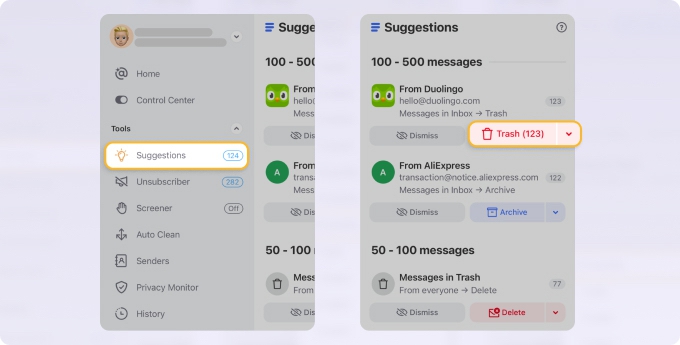
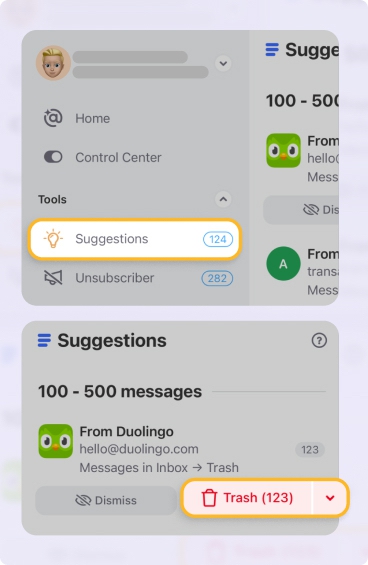
If your GMX inbox is full of years of unread messages, don’t worry—you don’t have to clean it up one email at a time. Clean Email’s Cleaning Suggestions feature gives you a fast, one-click way to archive or delete large groups of emails, like old social updates or unread newsletters.
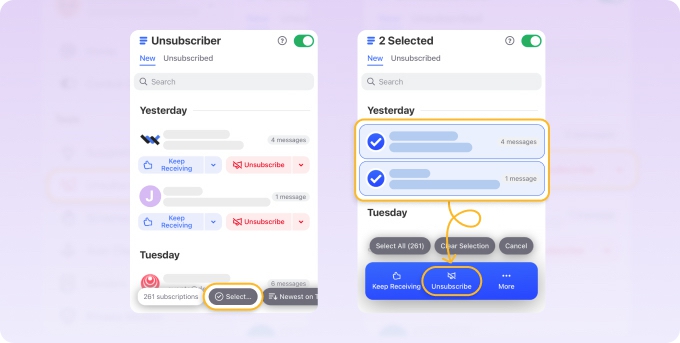
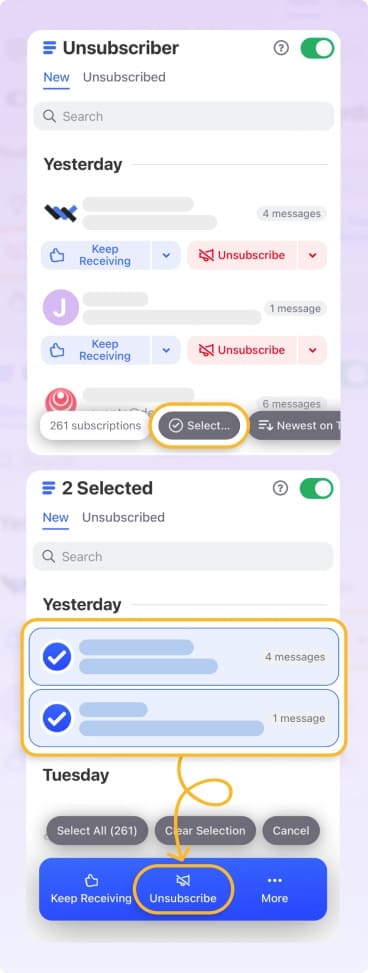
Unsubscriber is another huge help. It shows you every subscription you’re on—even the sneaky ones without unsubscribe links—and lets you leave them in one tap. You’ll finally stop getting those daily sales you never asked for.
Need more space on your email server? Use Filters to find large attachments or old emails that are taking up room. Clean Email helps you clear those out quickly so you don’t hit your storage limits.
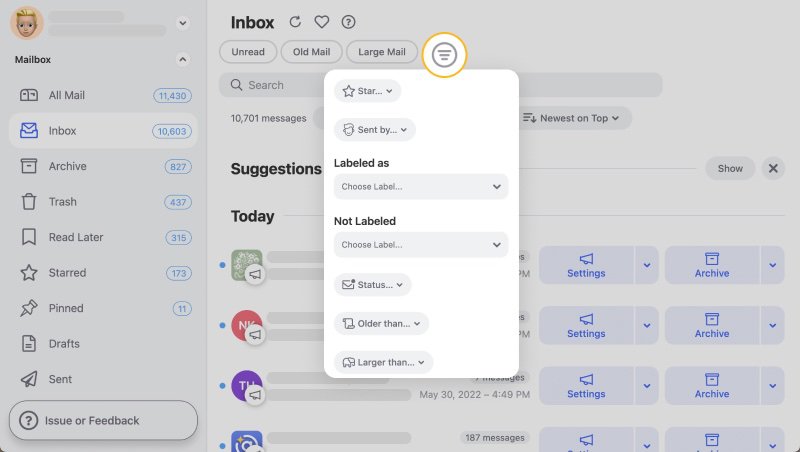
If you’re using IMAP, everything you clean in Clean Email syncs across devices. So your email client stays clean too—no more cleaning the same inbox twice.
Clean Email has been trusted by millions and consistently passes Gmail’s rigorous third-party security audits, meaning it meets industry-leading standards. Whether you’re using Gmail, Bluehost, or any provider in between, Clean Email is built to be safe and secure.
Points to Remember
You must enable POP3/IMAP sync in your GMX settings to utilize third-party email programs.
POP3/IMAP synchronization gets disabled by default. Thus, you must enable this function to sync your email with third-party applications or mobile apps in your settings.
- Click Settings on the Email tab.
- Select POP3 & IMAP from the drop-down menu.
- Enable access to this account via POP3 and IMAP by checking the Enable access to this account via POP3 and IMAP box.
- Click Save.
💡 Note: If you do not utilize POP3/IMAP for an extended time, this setting will be switched off automatically again for security reasons.
POP3 downloads messages from your GMX Inbox folder only. To keep them in GMX webmail too, turn on the “Leave a copy of messages on the server” option in your mail app.
If your mail app can’t connect, sign in at gmx.com in a browser first: GMX may show an account notice there that mail apps don’t display, and it confirms your password works. Then check the server settings above. If the app set up the account automatically, delete it and add it again manually, and update the app if it’s outdated.
Difference Between IMAP and POP3
When setting up an email address in an email client, you must decide whether you wish to use POP3 or IMAP. Both are methods of connecting to the mail server to read your emails using an email client.
- With Internet Message Access Protocol (IMAP), the message gets stored on the server rather than a local device, such as a computer.
- With Post Office Protocol (POP3), messages get downloaded to a local device, such as a computer or phone.
Finally, if you will be accessing your email from several devices, such as a work computer and a smartphone, IMAP is the way to go. POP3, on the other hand, suits people who read mail on one device. It also lets you read downloaded messages without going online. IMAP is more likely to meet the demands of the majority of individuals.
Please let us know, and we’ll fix them immediately.


