Can You Get Hacked by Opening an Email?
Opening an email by itself usually does not give someone access to your account. Hacking risk starts when the message pushes you into an action: signing in through a fake link, sharing a verification code, approving a login request, downloading a file, or replying with sensitive information.
A suspicious email can still be a warning sign. It may be part of a phishing attempt, credential theft attempt, or account takeover campaign. If the message claims there is an urgent account problem, payment issue, security alert, or delivery failure, treat it carefully before clicking anything.
How to check if your email address has been hacked in Clean Email
Clean Email’s Privacy Monitor helps you check whether your email address appears in known data breaches. This is useful if you are worried that your address or related account data may have been exposed and could be used in phishing or account takeover attempts.
- Open the Clean Email app.
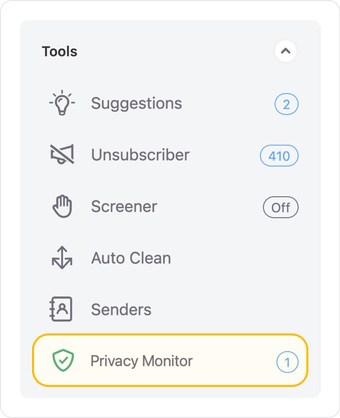
- Go to Tools.
- Select Privacy Monitor.
- Review any breach information connected to your email address.
- Check what type of data may have been exposed.
- Follow the recommended security steps, such as changing passwords, using unique passwords, and enabling two-factor authentication.
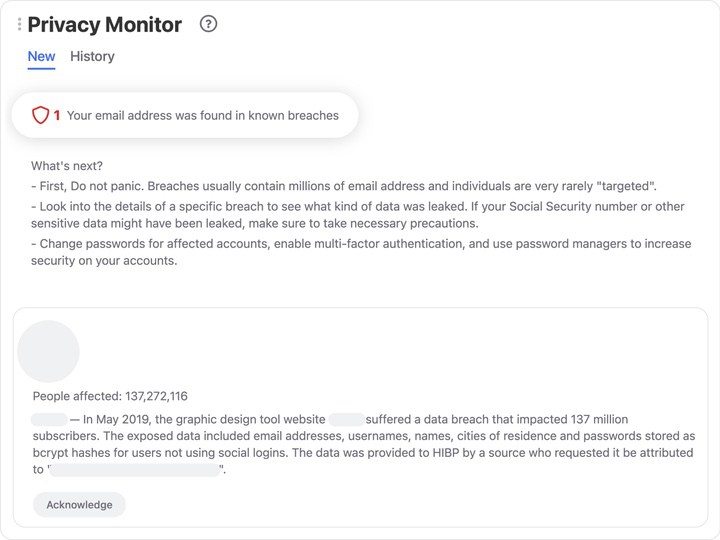
Privacy Monitor is best used to understand whether your email address has appeared in known leaks. If it has, attackers may use that information to send more convincing phishing emails or try reused passwords on other services.
What should I do if I opened a suspicious email?
If you only opened the email, avoid interacting with it further. Do not click sign-in links, enter passwords, share codes, approve login prompts, or reply with personal information.
If you entered your login details after opening the email, change that password immediately. Use a different password if you reused it elsewhere. Then enable two-factor authentication and review recent account activity for unfamiliar sign-ins, forwarding rules, recovery email changes, or connected devices.
If the email relates to a work, school, banking, or other sensitive account, report it to the provider or administrator.
📌 Note: The main hacking risk is not viewing the message. It is trusting the message and taking an action that gives an attacker access to your account.
Learn more:
Please contact us and we will be happy to help.