Key Takeaways
- Two web methods: block via Settings (Security and Privacy → Blocked addresses → Add) or directly from the inbox toolbar (select email → ••• More → Block Senders)
- Blocking sends future emails to Trash — the sender is not notified
- Mobile app can't block: use Yahoo Mail in a mobile browser (request Desktop Site), or mark as spam as a fallback
- Domain limits: free accounts can block up to 3 domains; Yahoo Mail Plus — users up to 500 domains
- Address limit: up to 1,000 blocked addresses per account — if you've hit this cap, Yahoo Filters are an alternative
- Storage context: since July 2025, Yahoo free accounts have a 20 GB limit — every blocked spam sender is storage you protect
How to Block Emails on Yahoo Mail on the Web
Method 1: Block via Settings
- Go to mail.yahoo.com and log in.
- Click the Settings gear icon at the top right and select More Settings.
- Choose Security and Privacy from the left menu.
- Click Add under the Blocked addresses section.
- Type the email address you want to block and click Save.
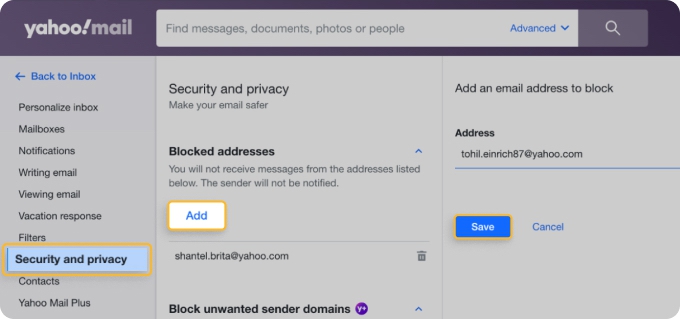
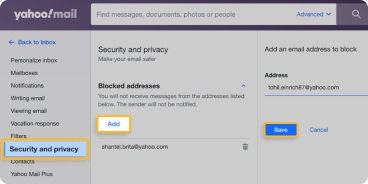
Use this method to add addresses manually or to manage your full blocked list in one place. You can block entire domains here too — free accounts allow up to 3 domains, Yahoo Mail Plus users up to 500.
Method 2: Block Directly from the Inbox
Use this to block without opening the email — safer when dealing with suspected spam.
- In your inbox, select the message from the sender you want to block (click the checkbox or check the circle next to it).
- Click the ••• More icon in the toolbar at the top of the inbox.
- Select Block Senders.
- In the popup, choose whether to block future emails and/or delete existing messages from that sender. Click OK to confirm.
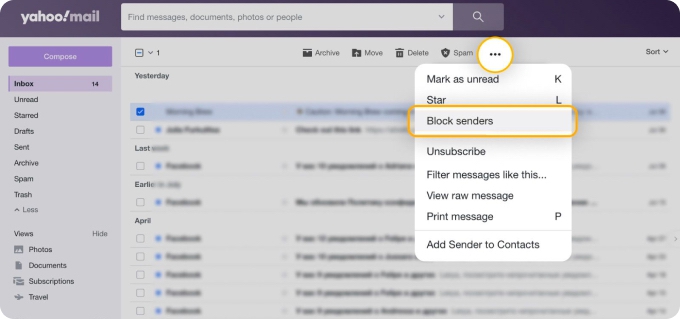
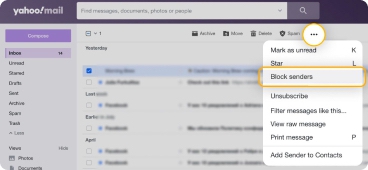
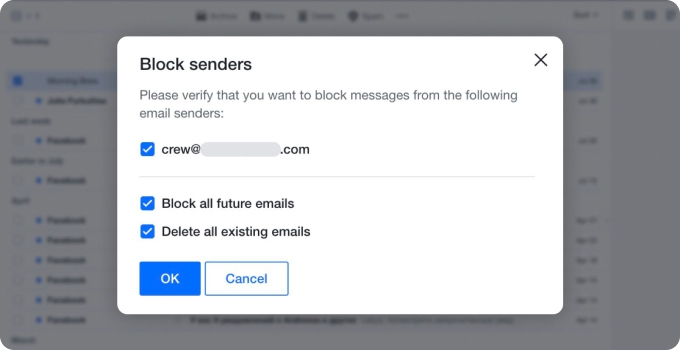
What happens when you block someone on Yahoo: future emails from that address are automatically moved to your Trash folder — not Spam. The sender is not notified. This counts toward your 1,000-address limit.
To unblock a sender, see the full How to unblock emails on Yahoo guide.
⚠️ Note: Yahoo is rolling out a new interface gradually. Some accounts may not see a "Security and Privacy" tab. If yours is missing, use Method 2 (inbox blocking) instead.
Blocking vs. Marking as Spam on Yahoo: What's the Difference?
These two actions are often confused but have different effects:
Block Senders moves all future emails from that address to Trash. It stops delivery entirely and counts toward the 1,000-address cap. The spam filter is not involved.
Mark as Spam moves the message to your Spam folder and signals to Yahoo's SpamGuard filter that this type of message is unwanted — improving automatic filtering over time, including for addresses you haven't blocked yet. It does not prevent future delivery on its own, but consistent marking trains the filter to catch similar messages automatically.
For one-off senders you never want to hear from: block. For ongoing spam campaigns from rotating addresses: mark as spam to train the filter.
How to Block Emails on Yahoo on Mobile (Phone)
Using Yahoo Mail in a Mobile Browser
The Yahoo Mail app has no native block feature, but the full block option is available when you open Yahoo Mail in your phone's browser and request the desktop site.
- Open Safari (iOS) or Chrome (Android) on your phone.
- Go to mail.yahoo.com and sign in.
- Enable the desktop version of the site:
- Safari: tap the AA icon in the address bar → Request Desktop Website
- Chrome: tap the three-dot menu ⋮ → Desktop site
- Select the email from the sender you want to block.
- Tap ••• More in the inbox toolbar → Block Senders → OK.
All blocking options — individual addresses, domains, and the full blocked list — are available through this method.
Mark as Spam in the Yahoo App
If you'd rather stay in the app, you can mark messages as spam to train the filter:
- Open the message in the Yahoo app, tap the three-dot More icon in the top right corner.
- Choose Mark as spam.
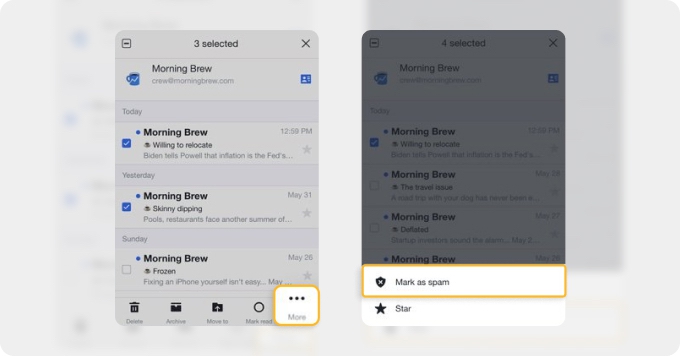
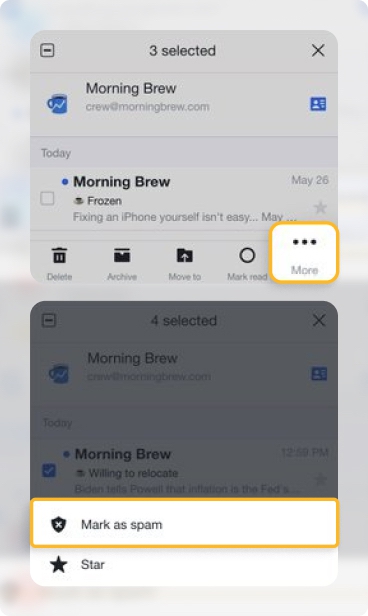
Messages from that sender will route to your Spam folder. This trains Yahoo's spam filter but doesn't block the address outright.
Yahoo Limits — and When to Use Filters
Yahoo caps blocked addresses at 1,000 and blocked domains at 3 (free) or 500 (Yahoo Mail Plus). If you've been on Yahoo for years and hit the address cap, the only native option is to prune your blocked list under Settings → Security and Privacy → Blocked addresses.
A more scalable alternative is Yahoo Filters (Settings → More Settings → Filters). Unlike the blocked addresses list, Filters can auto-delete or move messages based on sender, subject, or body keywords — and there's no limit tied to the 1,000-address cap.
For example, you can create a filter that deletes any message from addresses containing a specific domain pattern, even if you've never received a message from that exact address before.
Filters also handle situations where blocking isn't available — such as on the mobile app — since they apply server-side regardless of which device you use.
Why Am I Still Getting Emails from a Blocked Sender?
The most common reason: the sender changed their address. Blocking applies to the exact address you targeted — not the person.
Spammers and automated senders routinely rotate through dozens of addresses from the same domain: noreply@example.com, then info@mail.example.com, then offers@example.com. Each block you place stops one address; the next email arrives from a new one.
Two approaches help:
Domain blocking
If you're on Yahoo Mail Plus, add the sender's domain under Security and Privacy → Blocked addresses (scroll to domain section). Free users are limited to 3 domains — if you've used them up, Yahoo Filters (covered above) can match domain patterns without the cap conflict.
The 1,000-address limit
If you've hit the cap, new blocks silently fail. Check your current count under Security and Privacy → Blocked addresses and remove stale entries. Clean Email's Auto Clean is an alternative with no address cap — it can block an entire domain with a single rule, covering all current and future addresses from that sender.
Block Yahoo Emails by Domain with Clean Email
When a spammer keeps reaching you from new addresses under the same domain, Clean Email lets you block the entire domain at once with an Auto Clean rule:
- Open Clean Email and select Auto Clean from the left panel, then click the + icon or Create Rule button.
- Name your rule, tap Any sender or recipients, choose Sender Domain, type the domain, and select it from the results.
- Set the action to Move to Trash, toggle on Apply to existing messages to also clean up what's already in your inbox, and click Create Rule.
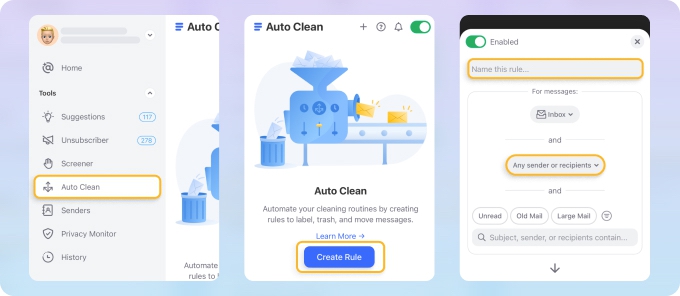
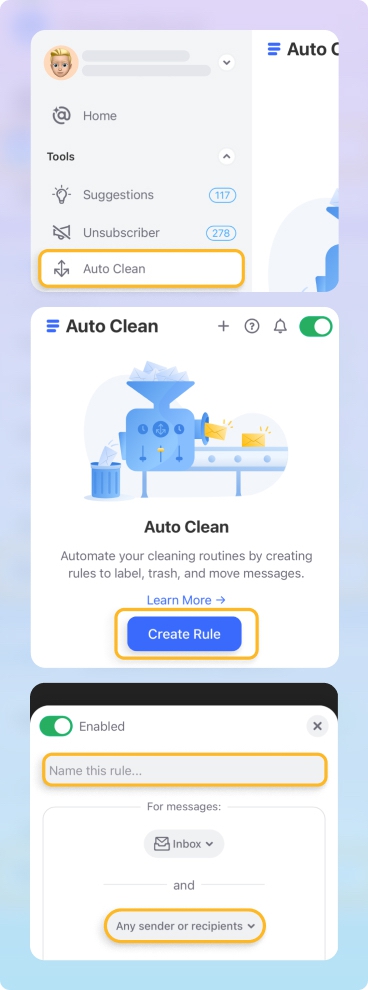
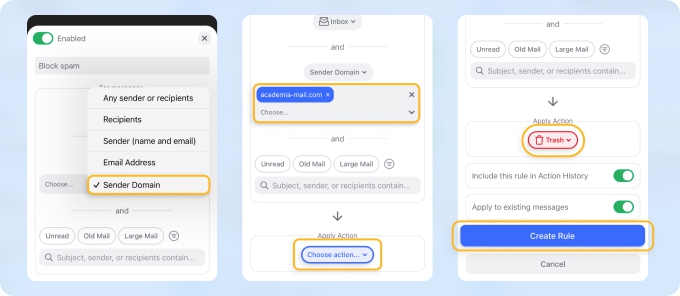
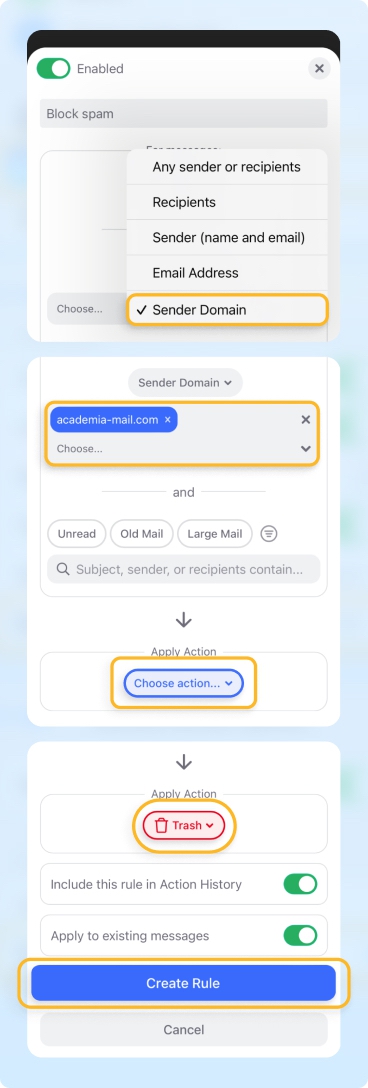
All future emails from that domain go to Trash automatically. Clean Email has no blocked-address cap and is available for iOS, Android, Mac, and web.
Frequently Asked Questions
What happens when you block someone on Yahoo Mail?
Emails from a blocked address are automatically moved to your Trash folder — not Spam. The sender is not notified that they've been blocked. The block applies to that specific address only and counts toward Yahoo's 1,000-address limit.
What's the difference between blocking and marking as spam in Yahoo?
Blocking moves future emails from that address directly to Trash and prevents delivery. Marking as spam moves the message to Spam and trains Yahoo's SpamGuard filter — future messages from similar addresses may be caught automatically, even ones you haven't blocked.
How many email addresses and domains can I block on Yahoo?
Yahoo allows up to 1,000 blocked email addresses per account. Domain blocking is available too: free accounts can block up to 3 domains; Yahoo Mail Plus users can block up to 500 domains. If you hit the address cap, Yahoo Filters (Settings → More Settings → Filters) are a cap-free alternative for pattern-based blocking.
How do I block bulk emails on Yahoo?
Blocking bulk emails on Yahoo isn't easy, as you must manually enter each address in the Security and Privacy settings. However, you can use an app like Clean Email to stop getting messages from certain domains or multiple senders at once.