Can you really change your Gmail address without creating a new account?
Sometimes. And only if your account has the feature.
In late December 2025, Google began rolling out a long-requested option: the ability to replace your existing @gmail.com address with a new one while keeping the same Google account, inbox, and data intact. That reporting came from both CNBC and The New York Times, and it was real—not a rumor.
What made this messy from the start was where the documentation appeared. The earliest instructions showed up on a Hindi-language Google Account Help page stating the feature was “gradually rolling out to all users.” 9to5Google flagged that detail early.
At the same time, Google’s main English help page continued to say Gmail addresses “usually can’t be changed.” That contradiction still hasn’t been cleaned up. And it’s your first clue that the rollout is incomplete and heavily gated by account eligibility.
So yes—the feature exists. But no, not everyone has it.

Which regions are seeing the Gmail change first?
Google hasn’t published an official list.
What we do know is that the earliest documentation appeared in Hindi, strongly suggesting India—or accounts using a Hindi locale—were among the first to see it documented. CNBC and 9to5Google both pointed this out.
Beyond that, Google stays vague. The company only says the feature is “gradually rolling out,” without naming countries. In practice, access seems to depend more on the individual account than your physical location.
I’ve seen accounts in the same household where one has the option and the other doesn’t. That’s frustrating, but consistent with how Google rolls out sensitive account features.
How do you check if your account has the option?
There’s no shortcut here. No hidden flag. No support request that unlocks it.
The only reliable path is:
- Sign in to myaccount.google.com
- Open Personal info → Email → Google Account email
- Look for an Edit option next to your @gmail.com address
If it’s there, your account has access. If it’s not, the feature simply hasn’t reached you yet. VICE confirmed there’s no workaround, and that matches what I’ve seen.
Until that option appears, Google still treats “create a new Gmail account and migrate manually” as the only fully supported path.
What limits apply if you can change your Gmail address?
The feature is real—but it’s tightly controlled:
- You can change your Gmail address once every 12 months
- There’s a lifetime cap of three changes
- One Google account can have up to four Gmail usernames total
Once the change happens:
- The new address can’t be removed
- The original address stays attached permanently
These limits apply only to personal @gmail.com accounts. Google Workspace accounts play by different rules.
What actually happens to your old Gmail address?
It doesn’t disappear.
After the switch, your original @gmail.com address becomes an alias. It continues to receive mail in the same inbox and remains valid for signing in to Google services—Gmail, Drive, YouTube, Maps, the whole stack.
There’s also no indication that the alias expires. Every piece of documentation and reporting describes it as long-term. For all practical purposes, permanent.
That’s reassuring. It also means you’ll likely keep seeing mail sent to the old address for years.
Will third-party services break?
Generally, no.
Because the underlying Google account doesn’t change, services that use “Sign in with Google” continue to work without interruption. Both CNBC and The New York Times explicitly confirmed that.
Where things get subtle is with services that treat your email address as a plain identifier in their database. In those cases, the account still exists and messages sent to the old address still arrive—but the email shown on your profile won’t automatically update.
So the login works. The notifications still land. But the label doesn’t change unless you update it manually.
For anything important—banks, subscriptions, work tools—it’s still smart to update the email over time. Slowly. No rush.
When you reply, which address do people see?
In most cases, your new one.
Mail sent to the old address flows through the alias. When you reply, Gmail typically uses your new primary address in the From field.
What Gmail can’t control is other people’s contact lists. If someone saved your old address years ago, that’s what they’ll still see until they update it. The Verge made that point, and it’s worth keeping expectations realistic.
Does the old alias ever stop working?
There’s no published end date.
The old Gmail address can’t be deleted, reassigned, or detached from the account. The only way to fully remove it would be to delete the entire Google account.
That permanence is intentional. It prevents impersonation and account recycling—but it also means aliases tend to hang around forever.
Can the old address still be used for account recovery?
Yes.
Because the alias remains fully tied to the same account, it continues to work for recovery steps like verification codes and alternative sign-in methods.
That’s one of the quieter benefits of Google’s approach. Nothing gets orphaned.
How do Google Workspace accounts differ?
This is where things change.
Workspace admins can rename users and convert old addresses into aliases—but those aliases can later be removed or reassigned, depending on company policy. Google’s admin documentation is clear about that flexibility.
Consumer Gmail accounts don’t get that option. Once an address becomes an alias, it’s permanent.
How do other email providers handle address changes?
It varies. A lot.
Outlook.com / Hotmail / Live
Microsoft has supported aliases for years. You can add a new address, set it as primary, and keep older ones active for mail and sign-in—without creating a new account. It’s still the cleanest implementation overall.
Apple ID / iCloud Mail
Apple lets you change your Apple ID sign-in email, but generally doesn’t allow renaming an existing @icloud.commailbox. Aliases are the usual workaround, and they’re limited.
Yahoo Mail
Yahoo still requires opening a new account if you want a different primary email username. No real alias-first model here. → Read more.
Seen in context, Gmail’s new feature brings it much closer to Microsoft’s long-standing approach—even if the rollout is slower and more restrictive.
Step-by-step: how address changes work
Gmail (new feature, where available)
Based on confirmed reporting and technical breakdowns:
- Go to myaccount.google.com
- Open Personal info → Email → Google Account email
- Click Edit (if it appears)
- Choose a new @gmail.com address
- Confirm with your password or a verification code
Once confirmed, the new address becomes primary. The old one stays as an alias.
Outlook.com / Microsoft account
Microsoft’s official flow:
- Sign in at account.microsoft.com
- Open Your info → Sign-in preferences
- Add a new alias
- Set it as primary
- Keep or remove the old alias
Apple ID (sign-in email)
Apple focuses on login identity:
- Go to appleid.apple.com
- Open Sign-In and Security
- Change the Apple ID email
- Verify the new address
When will Gmail finish rolling this out?
There’s no confirmed date.
Google continues to describe the feature as “gradually rolling out.” Early access appeared in late December 2025. Coverage from CNBC, 9to5Google, and Forbes suggests wider availability sometime in 2026—but there’s no official timeline or regional schedule.
If you don’t see the option yet, that’s normal. Annoying, but normal.
Managing your inbox after an address change
This part catches people off guard.
Changing an address—especially when aliases stay active—tends to trigger a wave of old subscriptions, alerts, and forgotten senders. Messages you hadn’t seen in years suddenly show up again. Both addresses keep pulling mail into the same place.
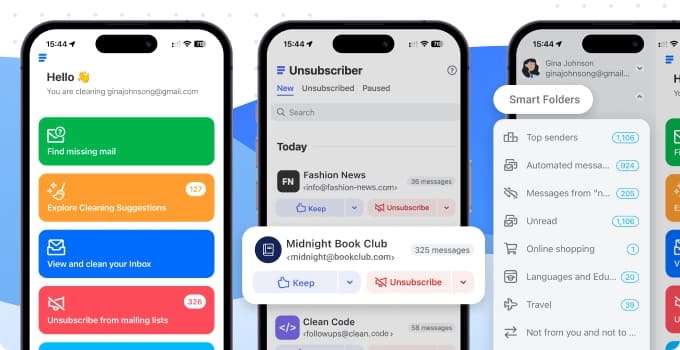
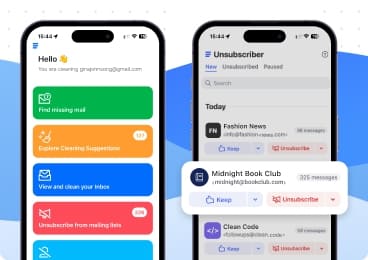
This is where tools like Clean Email fit naturally.
It groups related messages, supports bulk unsubscribing, and lets you set long-term rules so both your old alias and new address stay manageable. → Try it for Free
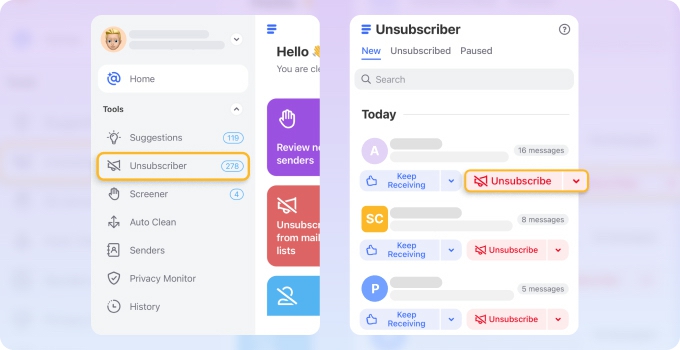
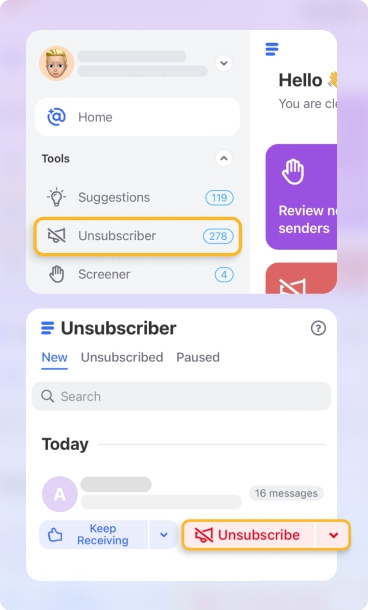
It works with Gmail and other IMAP providers and is fully safe to use (it only analyzes metadata, not message content).
Used alongside an address change, it prevents things from quietly getting out of hand. And honestly, that’s the bigger risk here.
Final takeaway
Email providers are finally loosening the rules around address changes—but not all at once, and not in the same way.
Gmail’s new option is real, useful, and long overdue. It’s also limited, slow to roll out, and easy to misunderstand if you rely on outdated advice.
Know what’s permanent. Know what’s capped. Expect some manual cleanup no matter which provider you use.
With realistic expectations—and a bit of inbox maintenance—changing your email address no longer has to mean starting over.