Email Attachment Size Limits by Provider
Before trying to bypass limits, it helps to know how big of a file you can email in the first place. Most providers cap attachments at 20–25 MB.
Here’s a quick comparison:
| Provider | Limit | What Happens If Exceeded | Built-In Cloud | Cloud Option |
|---|---|---|---|---|
| Gmail | 25 MB | Prompts Google Drive upload | Yes | Google Drive |
| Outlook | 20 MB | Prompts OneDrive upload | Yes | OneDrive |
| Yahoo Mail | 25 MB | Requires cloud link | Partial | Dropbox integration |
| iCloud Mail | 20 MB | Mail Drop auto-activates | Yes | iCloud Mail Drop |
| AOL Mail | 25 MB | Attachment fails | No | None |
| ProtonMail | 25 MB | Attachment fails | Yes | Proton Drive |
If you’re wondering how large of a file can I email, the practical answer is: 20–25 MB as a direct attachment. Anything larger requires a link.
And remember — attachments count toward mailbox quotas. If you’re unsure whether emails take up storage space, they absolutely do, especially with large PDFs and videos attached.
If you’re comparing providers for flexibility, it’s worth reviewing how different platforms handle cloud integration when you compare email providers.

Method 1 – Use Cloud Storage Links (Best Overall Method)
For most people, this is the best way to send large files via email.
Instead of attaching the file directly, you upload it to cloud storage and share a link. This bypasses the traditional email attachment size limit entirely.
How to Send Large Files via Gmail (Google Drive)
- Open Gmail.
- Click Compose.
- Click the Google Drive icon at the bottom.
- Select your file or click Upload.
- Choose Drive link (recommended for large files).
- Click Insert → Send.
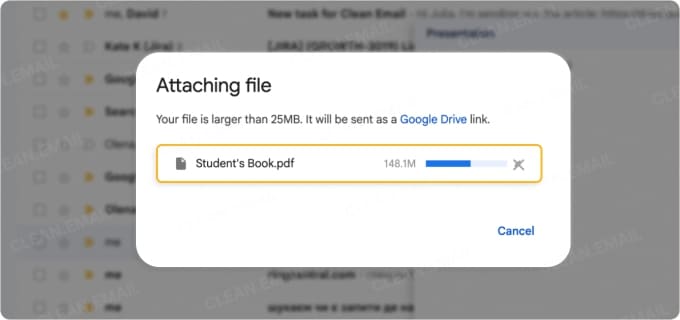
If your file is over 25 MB, Gmail automatically prompts you to upload it to Drive.
How to Send Large Files via Outlook (OneDrive)
- Open Outlook Web.
- Click New mail.
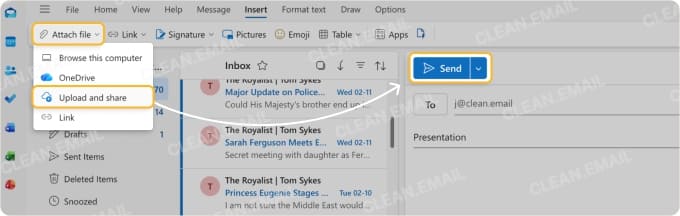
- Select Attach file.
- Choose Upload and share.
- Confirm upload to OneDrive.
- Click Send.
If you regularly need to send large attachments through Outlook, OneDrive integration is the most reliable path. It keeps everything inside Microsoft’s ecosystem and avoids bounce-backs caused by the 20 MB attachment ceiling.
Outlook automatically suggests uploading to OneDrive when the file exceeds 20 MB.
Using Dropbox (Works with Gmail, Yahoo, Outlook)
- Upload your file to Dropbox.com.
- Click Share.
- Select Create link.
- Copy link.
- Paste link into your email.
This is especially useful when sending large files through email to recipients outside your organization.
Method 2 – Use File Transfer Services (Free Options)
If you don’t want to use cloud storage tied to your email account, file transfer services are a clean alternative. They’re ideal when you need to send large files via email for free without creating accounts.
Below are the most reliable free options as of February 2026 (always double-check limits — these change frequently).
WeTransfer
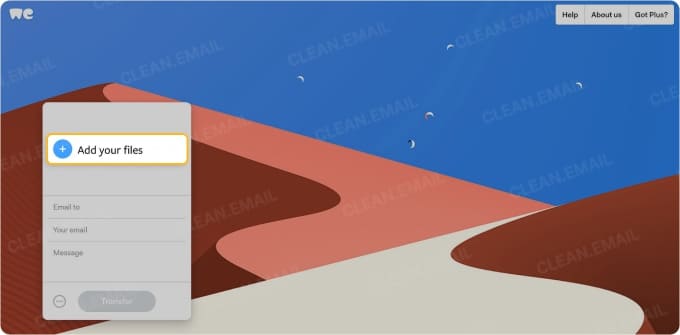
Simple interface, no account required for free use. Great for quick 1–2 GB transfers.
Smash
Markets itself as unlimited file size on the free plan. Large uploads may be deprioritized during peak times.
Filemail
Higher free limit (5 GB), but links expire in 7 days.
TransferNow
Similar to Filemail — generous free cap, easy interface.
Comparison Table (Free Plans)
| Service | Free Limit | Max File Size | Link Expiry | Password Protect | Registration |
|---|---|---|---|---|---|
| WeTransfer | 2 GB | 2 GB | 7 days | Paid only | No |
| Smash* | Unlimited | Unlimited | 14 days | Yes | No |
| Filemail | 5 GB | 5 GB | 7 days | Paid only | No |
| TransferNow | 5 GB | 5 GB | 7 days | Paid only | No |

If you’re searching for how to send files over 25MB or the best file transfer service, this table should give you clarity fast.
Method 3 – Compress the File Before Sending
If your file is slightly over the limit (say 30 MB), compression might bring it under 25 MB.
This works best for documents, spreadsheets, and PDFs. It doesn’t help much with already-compressed video or image files.
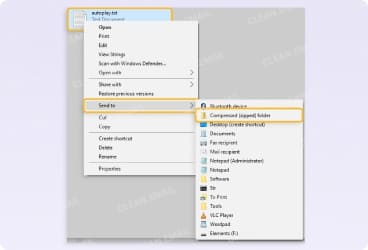
How to Compress Files for Email (Windows)
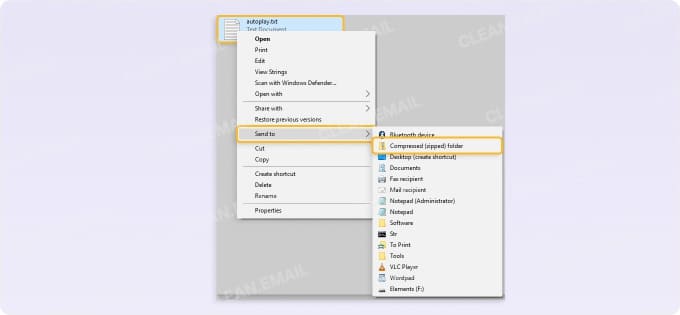
- Right-click the file.
- Select Send to.
- Click Compressed (zipped) folder.
- Attach the new ZIP file.
How to Compress Files for Email (Mac)
- Right-click the file.
- Select Compress [filename].
- Attach the new ZIP archive.
For more control over compression, tools like 7-Zip (Windows), WinRAR (Windows), or Keka (Mac) let you split files into smaller parts or use stronger compression algorithms. This can help when a zip file is too large to email and you need to break it into manageable pieces.
If your zip file is too large to email, compression won’t help — switch to cloud storage instead.
How to Send Large Files in Gmail
How to Send Large Files in Gmail (Web)
- Open Gmail.
- Click Compose.
- Click Attach files (paperclip).
- Select your file.
- If over 25 MB, Gmail prompts Google Drive upload.
- Click Send.
For most users, Gmail’s automatic 25 MB prompt is actually the fastest method. You don’t need to manually upload the file first — Gmail handles the Drive upload in the background and inserts the link for you.
The benefit of sending a Drive link instead of a direct attachment is that recipients can preview the file in their browser without downloading it. That’s especially helpful for large PDFs or videos.
If Gmail refuses to send, check for a queued email in Gmail, which sometimes happens with large uploads.
If you’re close to storage limits, it may help to delete emails in bulk to free up Gmail storage before uploading large files.
How to Send Large Files via Gmail on Mobile (iPhone & Android)
- Open the Gmail app.
- Tap Compose.
- Tap the paperclip icon.
- Choose Attach file or Insert from Drive.
- Tap Send.
For very large files, upload to Drive first, then paste the share link.
How to Send Large Files via Email Outlook
Outlook Web
- Open Outlook Web.
- Click New mail.
- Select Attach file.
- Choose Upload and share.
- Confirm upload to OneDrive.
- Click Send.
Modern versions of Outlook’s interface automatically suggest this. If your layout looks different, it may be due to Outlook’s interface version.
Outlook Desktop
- Open Outlook Desktop.
- Click New Email.
- Select Attach File.
- Choose Upload and share link.
- Confirm OneDrive upload.
- Click Send.
The desktop version feels slightly different from Outlook Web. You’ll see a traditional file path dialog when selecting attachments, and depending on your settings, Outlook Desktop may briefly display additional prompts like “Delay Delivery” or formatting notices before sending.
If you regularly send large attachments from a company computer, Desktop Outlook combined with OneDrive tends to be more stable for large internal transfers than attaching files directly.
On mobile, compose a message and use the attachment menu to select a file from OneDrive.
How to Send Large Files in Yahoo Mail for Free
Yahoo Mail has a 25 MB attachment limit. Anything larger requires Dropbox or another cloud service.
Yahoo Web
- Open Yahoo Mail.
- Click Compose.
- Select Attach files.
- Choose your file.
- If over 25 MB, upload to Dropbox.
- Insert the generated link.
- Click Send.
Unlike Gmail, Yahoo doesn’t automatically prompt a built-in cloud upload when you exceed the limit. You typically need to connect your Dropbox account first through the paperclip menu before you can insert a cloud link.
Once Dropbox is linked, Yahoo lets you browse your Dropbox files directly from the attachment menu. The file is inserted as a shared link rather than a traditional attachment, which bypasses the 25 MB cap.
If you’re looking for how to send large files in Yahoo Mail for free, setting up Dropbox integration once makes future transfers much smoother.
On mobile, attach files via the paperclip icon or paste a cloud link.
How to Send Large Video Files via Email
Video files are the biggest pain point. A 2-minute 4K video can easily exceed 500 MB.
A 1-minute 1080p video is typically around 100–200 MB. The same length in 4K can range from 350–500 MB or more, depending on bitrate. That’s why video almost always exceeds the standard email attachment size limit.
If you’re wondering how to send large video files via email, here are your options:
1. Compress with HandBrake
- Open HandBrake.
- Import your video.
- Change resolution from 1080p to 720p.
- Click Start Encode.
Reducing resolution often cuts file size by 40–60%.
2. Use Google Drive for Videos
Upload the video to Drive and send the share link.
This is ideal for files under 2–5 GB.
3. Use File Transfer Services (Over 1 GB)
For very large videos, Smash or Filemail are easier.
If you’re asking how do I send a 2 GB file in Gmail, the answer is: upload to Google Drive or use a transfer service. Direct attachment won’t work.
How to Email Large PDF Files
PDFs can grow surprisingly large, especially scanned documents.
Optimize with Adobe Acrobat
- Open the file.
- Click File.
- Select Save As Other.
- Choose Reduced Size PDF.
Use Free PDF Compressors
Tools like Smallpdf or iLovePDF can reduce file size quickly.
If the PDF still exceeds 20–25 MB, upload it to cloud storage and send a link.
This is typically the easiest way to email large PDF files without losing quality.
Security Tips When Sending Large Files
When sending large files through email:
- Password-protect ZIP archives before sending.
- Avoid public links for confidential files.
- Set link expiration dates.
- Use encrypted services (like ProtonMail or Tresorit) for sensitive data.
If you need to send large files by email regularly, consider platforms with built-in encryption.
Manage Large Files in Your Inbox More Easily
Sending large files is one side of the problem. Receiving them is the other.
Large attachments quietly consume storage space. If you’ve ever wondered whether emails take up storage space, the answer becomes obvious once your mailbox fills up with 50 MB PDFs and videos attached.
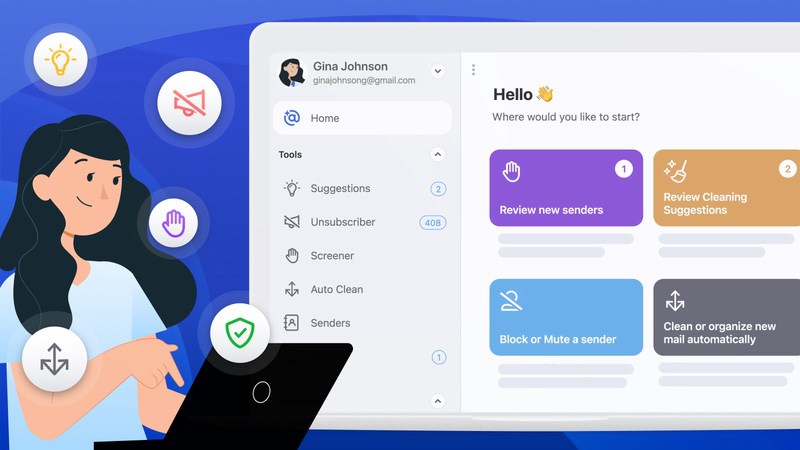

Tools like Clean Email help you:
- Sort messages by size using Smart Folders.
- Delete large attachments in bulk.
- Organize file-heavy inboxes with Auto Clean.
- Unsubscribe from emails you no longer need.
You can also review large attachments on your iPhone to clear space quickly, or optimize your iPhone storage if downloaded attachments are eating device space.
It doesn’t replace Gmail or Outlook. It simply makes storage manageable again.
Final Thoughts
For most people, sending large files via email comes down to using cloud storage links or a file transfer service. Direct attachments work only under 20–25 MB.
Once you understand the limits, the process becomes predictable — and far less frustrating.
FAQ
How do I email a file that is too large?
Upload it to cloud storage (Google Drive, OneDrive, Dropbox) and send the share link instead of attaching the file directly.
How can I email a file larger than 25MB?
You cannot attach it directly in Gmail or Yahoo. Upload it to cloud storage or use a file transfer service.
How do I send a 2 GB file in Gmail?
Upload it to Google Drive and insert the Drive link into your email. Direct attachment won’t work.
How do I bypass email size limits?
Use cloud storage links or file transfer services. Compression only helps for slightly oversized files.
How big of a file can you email?
Most providers allow 20–25 MB attachments. Larger files require cloud sharing.
How to send files over 25MB?
Upload to Google Drive, OneDrive, Dropbox, or use WeTransfer/Smash.
Why won’t my large attachment send?
It likely exceeds your provider’s attachment size limit or your storage quota is full.
What is the safest way to send large files?
Use encrypted cloud services, password-protected links, and expiration settings.