Does Clicking Unsubscribe Really Work?
Most businesses treat getting your email as an all-access pass to send all kinds of marketing messages.
You can always opt out of these exasperating emails. The CAN-SPAM Act of 2003 requires companies to provide an easy opt-out method and honor these requests promptly.
However, unsubscribing is easier said than done. Most unsubscribe links are buried deep in long emails or require multiple steps to complete. Sometimes, you’d be bombarded with “confirmation shaming” or multiple offers before you can unsubscribe.
Worst of all, not all the senders honor these requests.
Unsubscribing from Illegitimate Senders Can Backfire
Interacting with spam senders can backfire and trigger more junk emails flooding to your inbox.
⚠️ The most common reasons for this are replying to a spam email or opening a message that contains tracking pixels (invisible or disguised). Both of these actions can notify the sender you have an active email address and lead to additional spam.
💡 Tip: With Clean Email’s Screener, you can see a preview of any email you receive before you decide to block or approve it. This allows you to review a snippet without even opening the message and thus put those tracking monitors at bay.
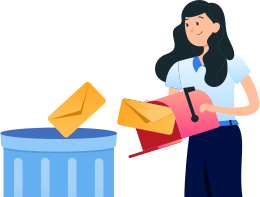
What to Do When Unsubscribing Doesn’t Work
Opting out from unwanted emails is simple and safe using the following methods.
Method 1: Through Your Email Provider
All email providers have a trainable spam filter. Every time you receive a spam message, report it, so your email provider learns to flag future emails like it as junk mail, and throws it out.
- Open your email provider account.
- Check the box on the left side of the junk messages.
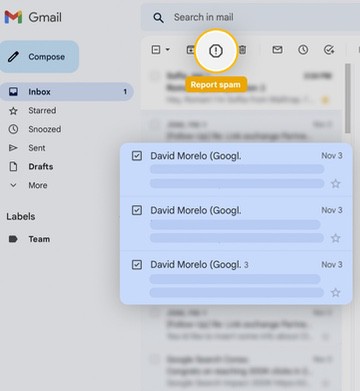
- For Gmail/Yahoo: Click the circular icon with the exclamation mark that says Report Spam.
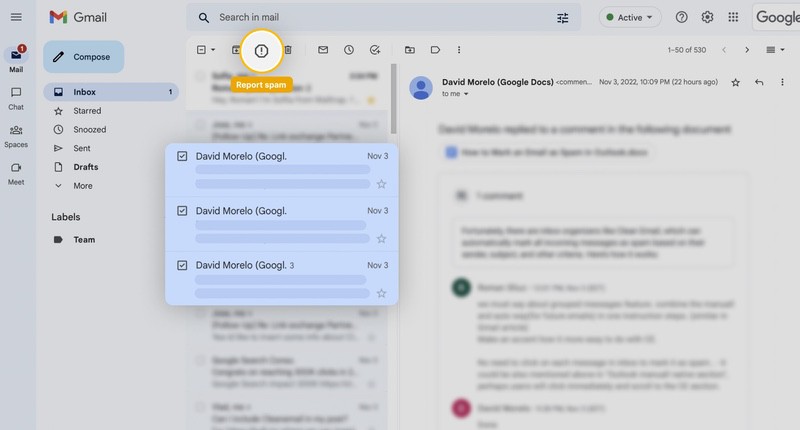
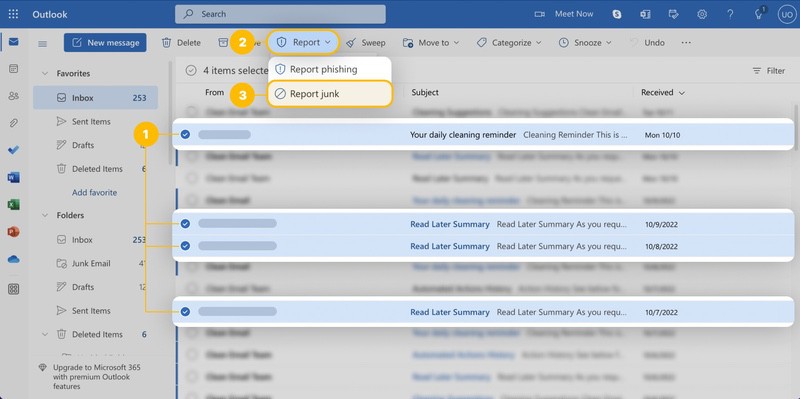
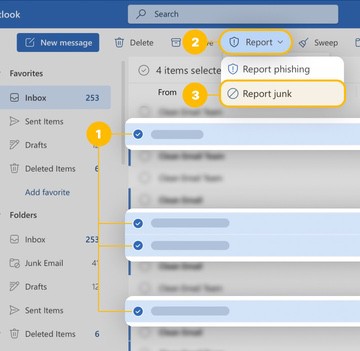
For Outlook: Click Report at the top of the screen, then choose Report Junk.
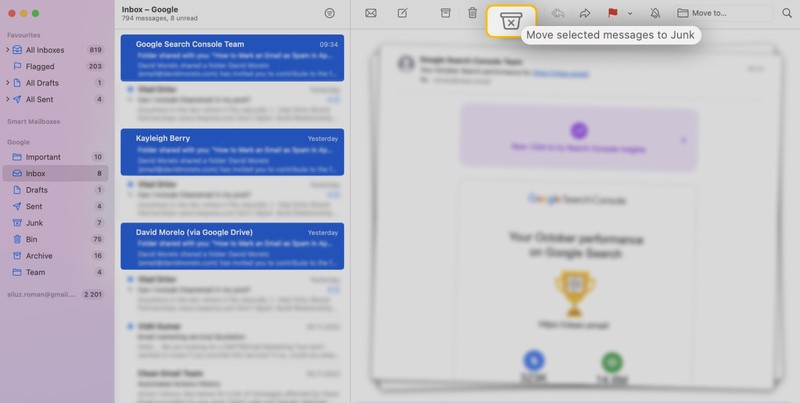
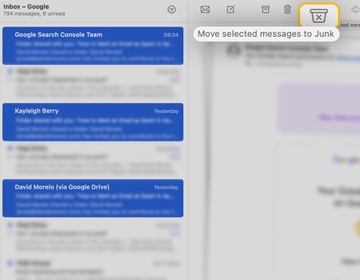
For Apple Mail: Click the Move selected messages to Junk button in the toolbar (or right-click the junk message(s) and select Move to Junk from the context menu).
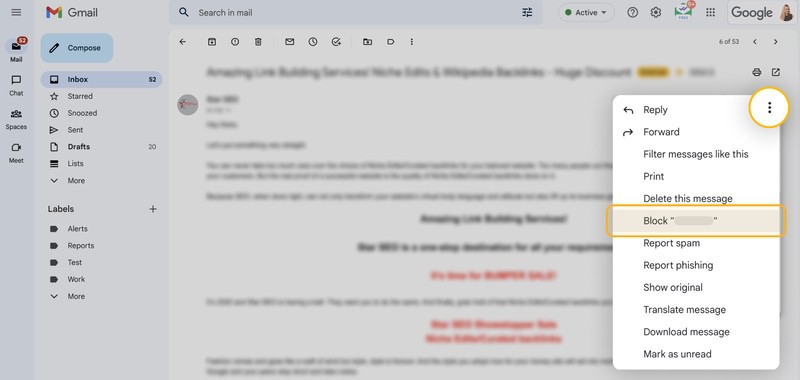
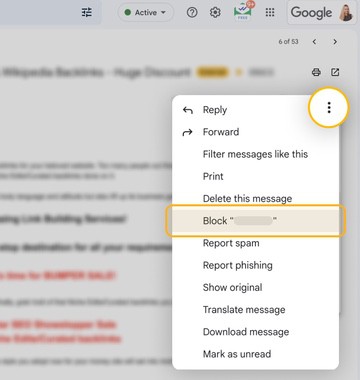
You can also block the sender so you don’t receive any future emails. In Gmail, just look for More (three dots) and choose Block “sender”. This method is applicable across various email providers.
Method 2: With Clean Email
Manually opting out from unwanted emails within your email provider can take hours. Gmail, Yahoo, and other email services lack an automated feature to complete this task in bulk, which means you have to select each message one by one.
The Clean Email app instead uses a high-end algorithm to intelligently bundle related emails, including those sent by spam senders. This safe unsubscribe method allows you to easily manage email subscriptions in bulk.
You can use three tools: Unsubscriber, Auto Clean, and Screener, and try them for free.
Using Unsubscriber
The Unsubscriber tool automatically sorts all subscription-based messages by the date you receive them, so the most recent ones will be at the top. For each message, you can choose to Keep Receiving, Unsubscribe, or apply another action such as Pause or Keep Newest.
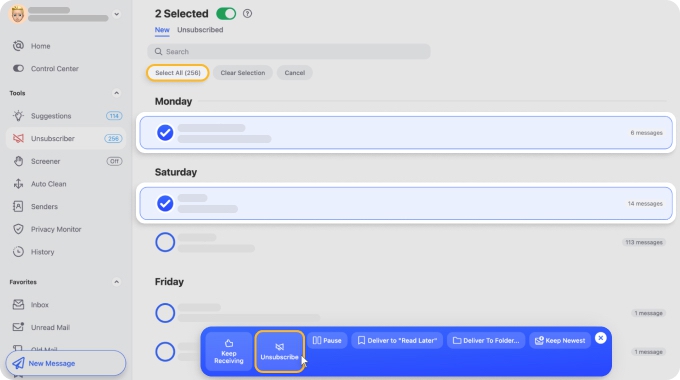
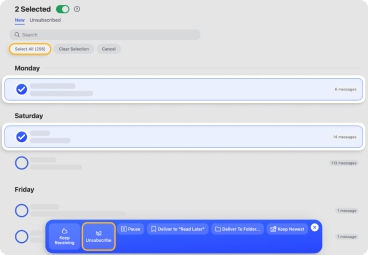
💡 Note: You can select multiple senders and mass unsubscribe, or even click Select All to opt out of all subscriptions you have at once.
Using Auto Clean
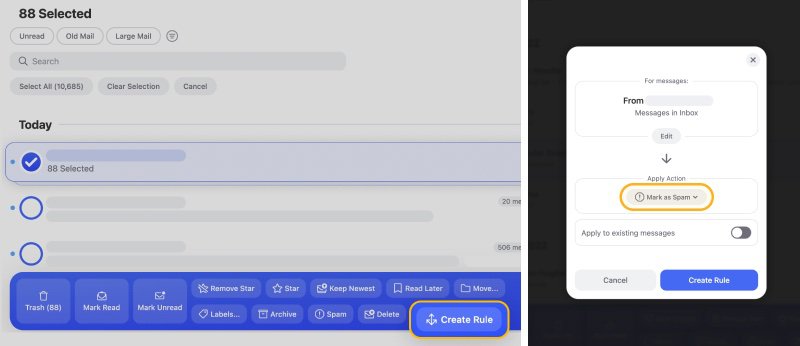
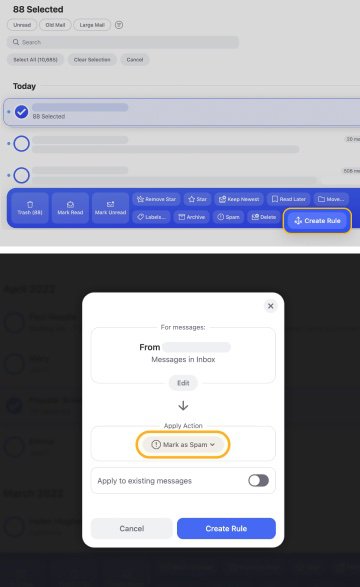
You can use Auto Clean to block individual senders, multiple senders, or even entire domains. This is great when senders don’t respect the unsubscribe request and keep sending you messages from other email accounts.
Using Screener
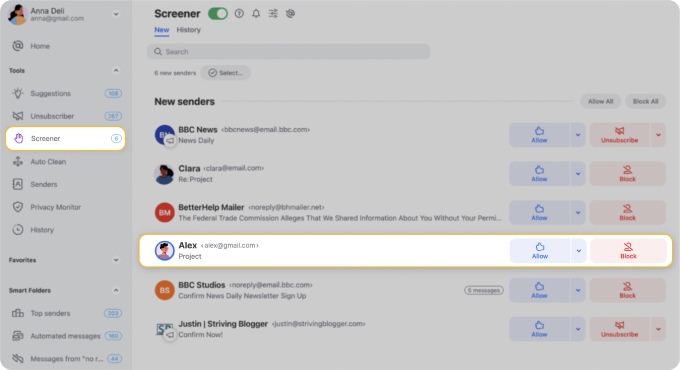
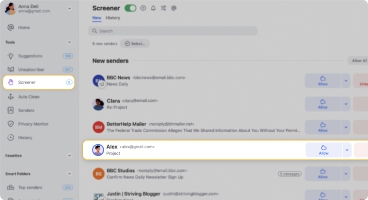
With the Screener tool, Clean Email intercepts all incoming messages that come from new senders. These messages are quarantined for your review instead of going straight to your inbox.
When there are new senders for review, the Screener button on the navigation menu will show the number of pending senders. From there you can block new senders or approve their messages.
Clean Email is committed to your security and privacy and operates a transparent business. Your data is yours and will never be shared or sold. The app also works with any mobile device so you can use it anywhere and with any email service provider.
Wrap-up
Unsubscribing isn’t a one-size-fits-all solution. It works well for legitimate senders, but with spam, it can be ineffective—or even risky.
The safest approach is to combine methods: unsubscribe from trusted sources, and rely on spam filters, blocking, and smart email management to handle the rest.
Related articles:
FAQ
Why do some unsubscribe links lead to preference centers instead of removing you instantly?
Many companies use preference centers to retain partial consent (e.g., fewer emails instead of none). This is a retention tactic, not a technical limitation.
Why do newsletters sometimes “restart” after you’ve unsubscribed months ago?
Your email may be re-added through a new signup flow, third-party data sharing, or account activity that resets communication consent.
Why do some emails have no unsubscribe option at all?
Transactional or system emails (receipts, security alerts, account updates) are not considered marketing, so they aren’t required to include unsubscribe links.
Do companies always remove your data when you unsubscribe?
No. Unsubscribing usually stops marketing emails but doesn’t delete your data. Your information may still be stored for legal, transactional, or analytical purposes.