Quick Answer
If there’s no unsubscribe link in an email, you can still stop those messages by:
- Using an unsubscribe tool that detects hidden opt-out instructions
- Contacting the sender directly (if legitimate)
- Creating filters or rules to remove future emails
- Blocking the sender
The best method depends on whether the email comes from a real company or an unknown sender.
Do Emails Have to Have an Unsubscribe Link?
In the United States, emails from businesses are required to have an unsubscribe link, as mandated by the CAN-SPAM Act email regulations. This ensures recipients can opt out of future mail easily.
However, some users may find themselves unable to unsubscribe from email if the sender uses deceptive practices or fails to include the required link.
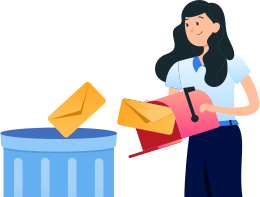
Why some emails don’t include an unsubscribe link
Even legitimate emails may appear without a visible unsubscribe option. This can happen when:
- the unsubscribe link is broken or hidden
- the email only includes unsubscribe instructions in the header
- the message is poorly formatted
- the sender ignores email regulations
In these cases, you’ll need to rely on alternative methods to stop unwanted emails.
Unsubscribe From Emails Without a Link: 5 Methods
The following methods will help you unsubscribe from newsletters you signed up for, as well as manage unwanted emails that don’t provide a visible unsubscribe option.
1. Use an email cleaner app like Clean Email
This method is ideal for efficiently managing large volumes of unwanted emails in bulk, especially newsletters and promotional content lacking a visible unsubscribe link.
📌 Clean Email can permanently unsubscribe you from emails even if there’s no visible unsubscribe link in the email body. It scans the email’s metadata for the List-Unsubscribe tag, provided by the sender, to process the request.
If the tag is present, the app either sends a request to the specified address or completes the unsubscribe form automatically. No manual work is required, and you can choose multiple subscriptions and opt out of them at a time.
However, if the sender hasn’t included the List-Unsubscribe tag, no service would be able to unsubscribe you. In such cases, you can automatically delete or filter those emails instead.
To use the app’s Unsubscriber feature:
- Go to https://app.clean.email and sign in with your email account.
- Click the Unsubscriber tool.
- Select the subscription(s) that you would like to opt out of.
- Click Unsubscribe in the action bar at the bottom, and the app handles the rest.
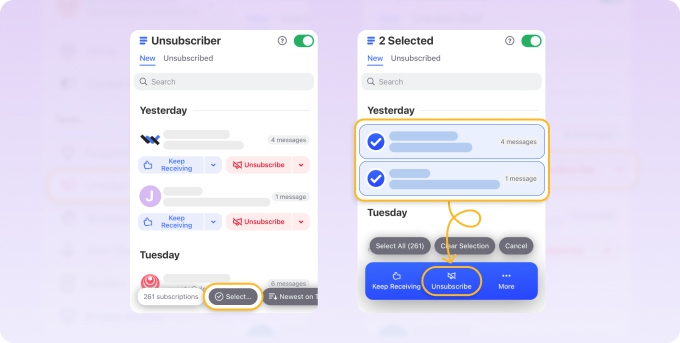
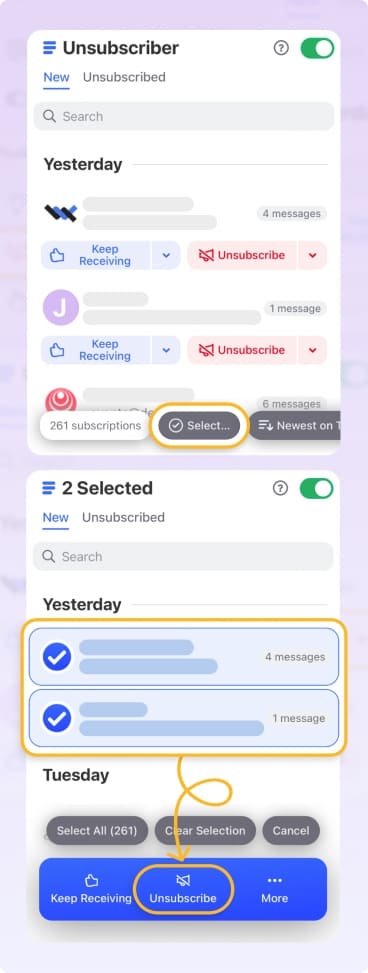
Moreover, if you decide to stop all your newsletters, the app also simplifies mass unsubscribing, too. With the Select All feature, you can opt out of all promotions at once.
2. Email the sender to request removal from the list
Use this method when dealing with legitimate organizations or newsletters where the sender has not included an unsubscribe link.
Another way to deal with unwanted messages that don’t offer an unsubscribe option is to directly contact the sender.
Simply send a message requesting removal from the list, and optionally include a reason.
✅ Result: The sender may manually remove your email from their mailing list if they comply with your request.
⚠️ Risks: Contacting unknown or suspicious senders may confirm your email address as active, potentially increasing spam.
3. Filter messages from companies in your inbox
Best for emails that frequently appear from senders using the same custom domain, when unsubscribing isn’t possible.
Set up filtering rules in your email client to automatically filter emails, deleting or moving messages from persistent senders to a separate folder.
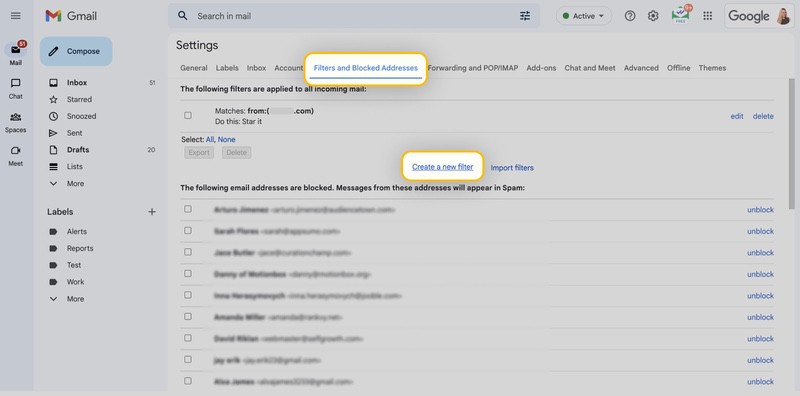
This feature is commonly available across various email providers. For instance, in Gmail, you can easily create such filters:
- Go to Settings → See all settings.
- Open Filters and Blocked Addresses.
- Click Create a new filter.
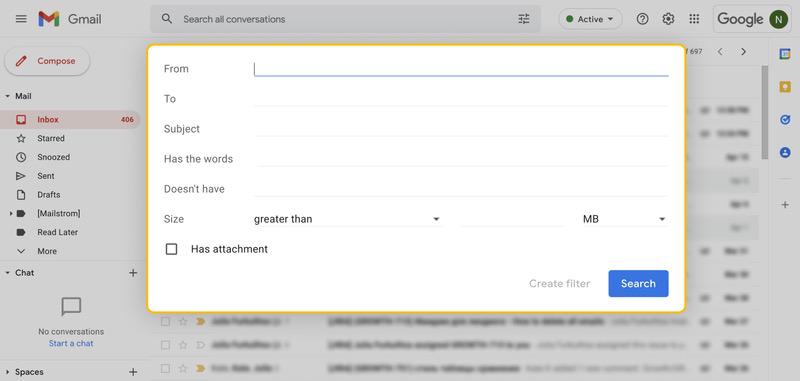
- Enter sender, domain, or keywords.
- Choose an action (delete, archive, mark as read, etc.)
- Click Create filter to finish.
✅ Result: New emails from certain senders or domains are automatically redirected to your Spam or Trash folder, or permanently deleted, avoiding the Inbox folder.
📌 Disadvantages: Filtering doesn’t stop emails from being sent, so they may still consume storage space unless set to delete permanently. Also, you need to set up filters manually for each sender which can be rather time-consuming.
4. Block the sender
Email blocking is effective for persistent unwanted senders whose emails you no longer wish to receive at all, especially when other methods fail.
If the sender consistently sends emails without providing an unsubscribe option, consider blocking them.
For instance, to block emails on Gmail:
- Open the message.
- Click the three-dot menu.
- Select Block.
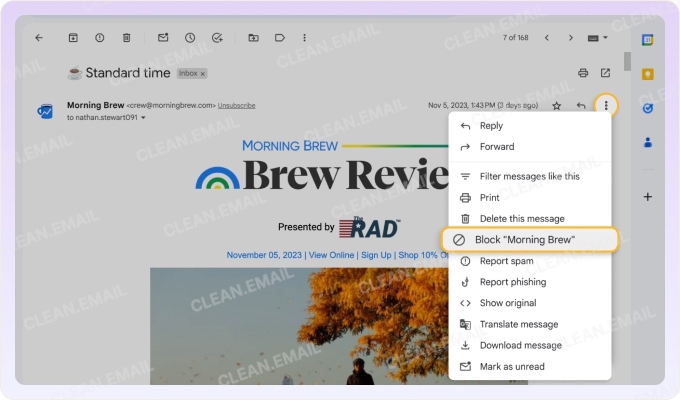
✅ Result: Future emails from this sender will go directly to your Spam folder.
📌 Disadvantage: Blocking a single sender won’t stop emails from other addresses using the same domain.
5. Mark unwanted emails as spam or report phishing
Best for handling persistent spam or phishing attempts where no unsubscribe link is present, and contacting the sender is unsafe.
If you must review a suspicious email, only open it in your Spam folder. Email providers like Google block tracking attempts ("phoning home") from spam emails in this folder, preventing spammers from confirming your email is active.
Even in the Spam folder, avoid clicking on links, attachments, or unsubscribe buttons, as these may be malicious. For more guidance, check out how to unsubscribe from emails without opening them.
To report spam or phishing in Gmail:
- Open a message from the sender.
- Click the three vertical dots and choose Report phishing or Report spam.
- Confirm the action.
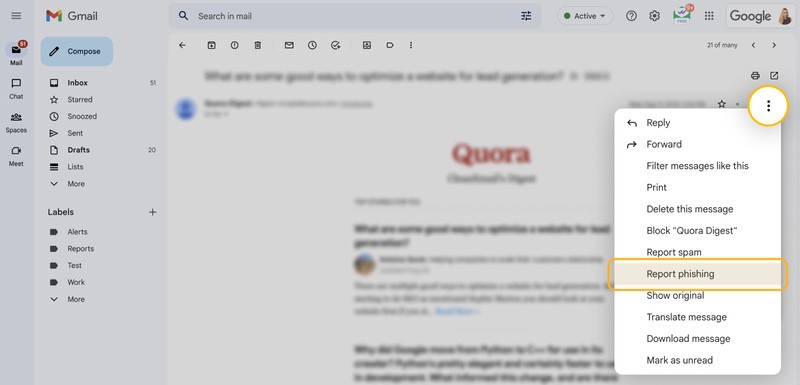
✅ Result: Reporting an email as spam or phishing helps your email provider filter similar messages in the future, improving your inbox security.
📌 Disadvantages: Reporting spam is not guaranteed to stop all similar emails, and highly persistent spammers may bypass filters over time.
If a website doesn't honor your unsubscribe requests, you can report them to the Federal Trade Commission (FTC) via ReportFraud.ftc.gov.
If you are a victim of a subscription bombing incident, your inbox may become cluttered with hundreds of spam emails, which are difficult to handle manually. In this case, try using Screener from Clean Email to prevent spam from new senders from reaching your inbox.
Conclusion: What to Do in Each Situation
Unsubscribing from emails without a direct link is possible using alternative methods like unsubscribe tools, filters, blocking, or contacting the sender.
- Legitimate newsletter → use an unsubscribe tool or contact the sender.
- Recurring promotional emails → use filters or domain-based rules.
- Single persistent sender → block the sender.
- Unknown emails → mark as spam.
FAQs
How do I stop emails that won't unsubscribe?
You can use an unsubscribe tool like Clean Email, contact the sender, or create rules to automatically delete or move future messages.
How to stop getting emails from companies without an unsubscribe link?
For emails lacking an unsubscribe option, mark them as spam or junk in your email provider. This action trains your email provider to filter future messages from such senders into your spam folder.
Why do I get emails I never subscribed to?
Your email may have been shared through third-party lists, data leaks, or collected from public sources.
What to do instead of clicking unsubscribe?
Instead of clicking unsubscribe, you can block the sender, create a filter to automatically delete future emails, mark the message as spam, or report phishing.