Why New York Times emails frustrate subscribers — and how people respond
The New York Times is widely trusted, but its emails still test inbox patience. Clean Email’s Q1 2025 research shows that The New York Times ranks #22 among the most spam-flagged senders and #30 among the most unsubscribed senders. That combination tells an important story about user behavior.
People don’t doubt the credibility of the NYT. They’re overwhelmed by volume.
What makes New York Times emails feel annoying
NYT emails usually arrive in clusters, often across multiple categories at once:
- Daily and weekly newsletters Morning briefings, breaking news alerts, opinion roundups, and topic-specific digests.
- Content recommendations “You may have missed,” “Recommended for you,” and trending story emails.
- Subscription and promotional updates Trial reminders, special offers, event promotions, and product announcements.
Each message is useful on its own. The problem is accumulation. Subscribing to just a few newsletters can quietly turn into a steady stream of emails every day — sometimes several per day — even for readers who already visit the site or use the app.
Over time, this creates inbox fatigue rather than distrust.
Spam vs unsubscribe: how NYT readers stop the flood
The New York Times falls into a middle-ground category in Clean Email’s data:
- Appears in both spam and unsubscribe actions
- Slightly more likely to be unsubscribed than outright blocked
This makes sense. NYT readers often still value:
- Account notices
- Billing updates
- Subscription confirmations
Marking all NYT emails as spam feels too extreme for a paid, information-critical service. At the same time, navigating dozens of individual newsletter toggles takes effort. When the inbox gets noisy, some users skip fine-tuning and escalate straight to spam.
In short: NYT emails aren’t unwanted — there are just too many of them.
Why many users unsubscribe instead of marking spam
For established media brands like The New York Times, users generally prefer a surgical approach:
- Unsubscribe from newsletters they don’t read
- Reduce promotional emails
- Keep account and subscription messages intact
This explains why NYT shows up relatively low on unsubscribe rankings compared to pure marketing senders — but still high enough to signal friction. Readers want control, not a total blackout.

Managing New York Times emails more cleanly
Clean Email makes this balance easier. Instead of unsubscribing one newsletter at a time or risking missed account emails, you can:
- See all NYT newsletters in one place
- Unsubscribe from multiple digests at once
- Move NYT content to a Read Later folder
- Keep billing and account emails untouched
Clean Email groups NYT messages by sender and domain, so decisions are faster and safer — no guessing, no inbox regret. → Try it for free
How to Unsubscribe from New York Times Emails in Clean Email
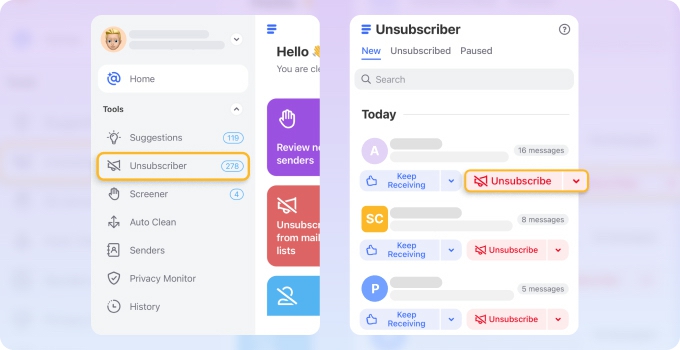
Unsubscribing from New York Times emails in Clean Email is a matter of a single click:
- Go to: https://app.clean.email/
- Sign in with your mail account.
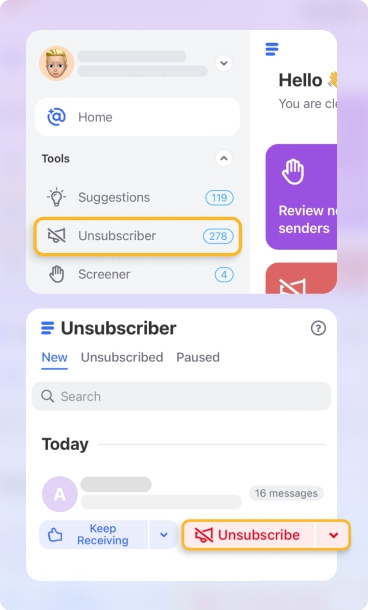
- Select the Unsubscriber feature from the left pane.
- Find The New York Times in the list of active subscriptions.
- Click the Unsubscribe button next to your NYT subscription.
That way, you keep the journalism you value and lose the inbox overload.
How to Stop Getting Emails from New York Times: 3 Methods
Being one of the most respected newspapers in the world, The New York Times has no reason to employ shady tricks to keep its subscribers from leaving. In fact, it provides several unsubscribe methods to make unsubscribing easy on all devices.
1. How to unsubscribe from the New York Times newsletter on mobile
If you have the New York Times mobile app installed on your Android or iOS device, then you can follow the steps below to unsubscribe from newsletters:
- Launch the mobile app.
- Tap the user icon in the top-right corner.
- Select Account Settings.
- Scroll down and tap View All under Newsletters.
- Scroll all the way to the bottom and tap Manage subscriptions under Your Current Subscriptions.
- Tap the Remove option next to each subscription you no longer want to receive.
While you’re at it, you should also consider opting out from receiving updates about the latest New York Times events, special offers, products, and articles by tapping the relevant option under Updates and special offers on the subscription management page.
2. How to stop emails from The New York Times in a browser
The good news is that you don’t need to have the New York Times app installed on your mobile device just to unsubscribe from newsletters—your web browser is enough:
- Open your web browser and enter the following URL: www.nytimes.com
- Log in to your account.
- Click Account in the top-right corner and select the Account option from the drop-down menu.
- Go to the Email and settings tab.
- Click View all under Newsletters.
- Scroll all the way to the bottom and tap Manage subscriptions under Your Current Subscriptions.
- Click the Remove option next to each subscription you no longer want to receive.
The Emails and Settings tab also contains a button that lets you opt out from receiving updates and special offers about the latest New York Times events, special offers, product updates, and article recommendations, so make sure to click it as well if you’re not interested in them.

Subscriptions Often Come in Clusters
Major brands send emails from 3–6 different addresses. Clean Email spots them all so you can unsubscribe in bulk or auto-delete future emails from that domain.
Try It for FREE3. Unsubscribe from New York Times newsletter in your email providers
Just like all other senders of subscription emails and newsletters, New York Times is required by law to include an unsubscribe link in all messages. This link is located at the very bottom, and it says “Unsubscribe.”
- Go to your inbox and open any NYT subscription message.
- Scroll down and find the unsubscribe link. Click on the link.
- Click the View all button next to the Find newsletters heading.
- Choose which types of messages you want to stop.