Key Takeaways
- If Outlook spam filtering suddenly feels broken, first check whether you are using classic Outlook, new Outlook, or Outlook.com, because the junk settings are different in each.
- In classic Outlook, No Automatic Filtering is still a major reason spam reaches the inbox.
- A sender or domain on your Safe Senders list can make Outlook look like it is “missing” spam.
- If the problem appeared suddenly for many users, it may be worth checking Microsoft 365 service health. Microsoft provides a service health dashboard for admins.
- If Outlook is working but still not strict enough, a screening layer for new senders can help reduce junk that slips through repeated sender changes.

Why Is My Outlook Spam Filter Not Working?
Usually, one of these things is happening:
- the filter is set too low
- No Automatic Filtering is still enabled
- a sender was marked safe
- another Outlook rule is interfering
- you are following instructions for the wrong Outlook version
- a recent change in Outlook’s interface made the settings harder to find
- there may be a Microsoft-side incident affecting mail behavior
The first goal is to figure out whether this is a local settings issue or a wider Outlook problem.
Fix 1 - Make Sure You’re Checking the Right Version of Outlook
Before changing anything else, confirm whether you are using:
- classic Outlook for Windows
- new Outlook for Windows
- Outlook.com / Outlook on the web
Microsoft explicitly says the classic Junk E-mail Options steps do not apply to new Outlook for Windows. New Outlook uses a different junk and spam filtering interface that works similarly to Outlook on the web.
A lot of “spam filter not working” complaints are really version-mismatch problems: users are trying to follow classic Outlook steps in new Outlook, or assuming a setting disappeared when it was actually moved.
Fix 2 - Disable “No Automatic Filtering” in Classic Outlook
If you use classic Outlook, open:
Home > Junk > Junk E-mail Options
Then check the current protection level. Microsoft says the default is No Automatic Filtering, which means Outlook is not using stronger automatic junk protection unless you switch to another option.
If that setting is selected, change it to Low or High, then monitor the Junk folder for a few days.
Fix 3 - Raise the Protection Level to High
If filtering is enabled but too much junk still reaches your inbox, the next fix is to make the filter more aggressive.
Microsoft’s guidance is clear: a higher protection level catches more junk, but also increases the chance of false positives.
That tradeoff is usually worth it if your inbox is getting hit hard. Just make sure you check Junk regularly for wanted messages until you know how Outlook behaves with the stronger setting.
Fix 4 - Check Safe Senders and Contacts
If a suspicious sender or domain is on your Safe Senders list, Outlook may keep delivering those messages even when they look like spam.
Microsoft also notes that Outlook contacts are considered safe senders by default, and in some managed work or school environments, some directory entries may be treated as safe as well.
That means one overlooked trusted entry can make the filter look broken when it is actually following your allow rules.
Fix 5 - Mark Junk as Junk, and Legitimate Mail as Not Junk
When spam reaches the inbox, do not just delete it. Mark it as Junk. When legitimate mail lands in Junk, mark it as Not Junk.
Microsoft specifically documents this reclassification workflow, and it is one of the easiest ways to help Outlook handle similar messages more accurately over time.
This fix is simple, but it is still one of the most practical.
Fix 6 - Review Rules and Blocked/Allowed Sender Settings
If you created mailbox rules, they may be moving messages in ways that make filtering look inconsistent.
Also review your:
- blocked senders
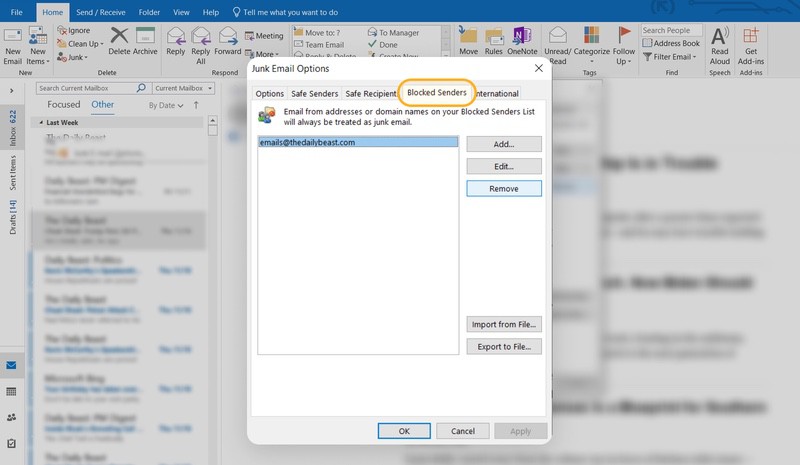
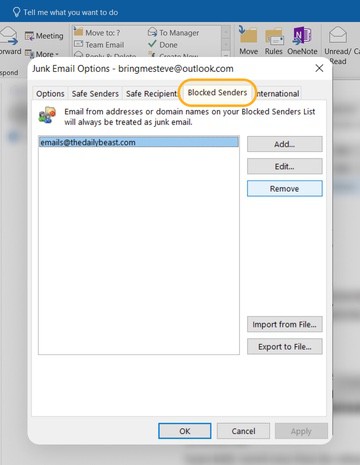
- safe senders
- allowed domains
- web junk settings if you use Outlook.com or new Outlook
Microsoft’s support pages for Outlook and Outlook Web App both describe blocked and allowed sender management as part of controlling junk mail behavior.
If you have not checked these settings in a long time, they are worth reviewing before assuming the filter is broken.
Fix 7 - Is This a Microsoft-Side Outage? How to Check
If Outlook’s junk filtering changed suddenly and dramatically, especially across multiple accounts or users, it may be worth checking whether Microsoft is reporting a service issue.
Microsoft provides a Service health dashboard for Microsoft 365 admins that shows active incidents and advisories, including service interruptions. Microsoft’s documentation says admins can use it to see whether there is an active service issue and view details on affected services.
For regular users, this usually means:
- Check whether other people are reporting the same Outlook problem.
- Ask your Microsoft 365 admin to review service health.
- Avoid over-editing settings if the issue appeared suddenly and looks widespread.
New Outlook Junk Filter Issues (2025-2026)
A real source of confusion over the last couple of years has been the transition between classic Outlook and new Outlook.
Microsoft’s support content now repeatedly separates classic Outlook junk-filter documentation from new Outlook documentation, and Microsoft also documented a prior service-side issue involving the visibility of Junk Email Optionsin classic Outlook before stating that the issue was fixed.
That does not mean Outlook is always “broken.” But it does mean users have had good reason to be confused when:
- Junk-filter settings looked different after a switch to new Outlook.
- Older instructions no longer matched the interface.
- Settings appeared missing or changed after updates.
When Outlook Is Working - But Still Not Enough
Sometimes the built-in filter is functioning exactly as designed, but the inbox still feels unprotected because spam comes from new or rotating senders.
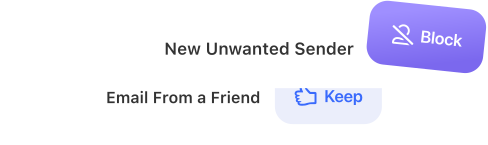
A tool like Clean Email’s Screener can add a second review layer by separating messages from new senders before they mix into the main inbox. That is different from Outlook’s built-in filter, which mainly decides whether a message looks like junk.
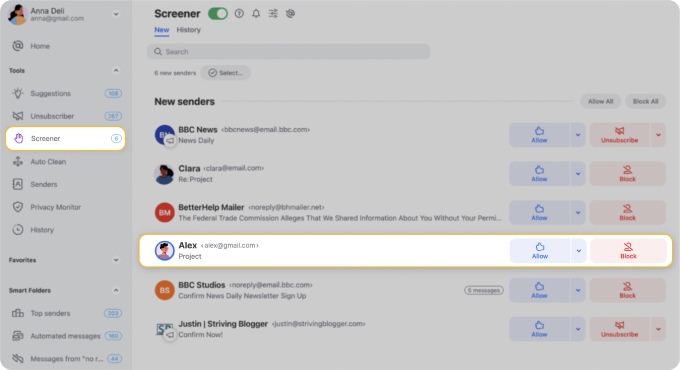
In the Screener tab, you can review unknown senders individually and block them immediately, or choose to deliver their messages to the desired folder.
Learn how to stop junk email in Outlook and mark Outlook messages as spam.
FAQs
Is Outlook’s spam filter broken right now?
Not necessarily. First check whether you are using classic Outlook, new Outlook, or Outlook.com, then review your junk settings. If the change was sudden and widespread, ask your Microsoft 365 admin to check Microsoft’s service health dashboard.
Why did Outlook stop filtering spam after an update?
A common reason is that you switched to new Outlook, where the junk-filter settings differ from classic Outlook, or a setting changed during the transition. Microsoft’s support pages separate the two experiences clearly.
Why is Outlook sending spam to my inbox?
Common causes include No Automatic Filtering, a protection level that is too low, trusted senders, conflicting rules, or version-specific settings issues.
Does Outlook.com have different junk settings?
Yes. Outlook.com and new Outlook use a different settings flow from classic Outlook.
Should I keep blocking spam one sender at a time?
That can help with persistent senders, but it is often inefficient when spam comes from constantly changing addresses. In those cases, stronger junk settings or a screening layer for new senders usually works better.