Key Takeaways
- AOL Mail has a built-in spam filter, plus up to 500 filters and 1,000 blocked addresses.
- If spam keeps reaching your inbox, marking messages as Spam helps train AOL’s filter.
- If wanted mail lands in Spam, marking it Not Spam can help future messages reach your inbox.
- If you’ve hit the AOL 500-filter limit, delete outdated rules and combine overlapping ones.
- If AOL is blocking your legitimate outgoing email, that’s usually a sender-side deliverability problem, not a mailbox setting.
AOL Mail Spam Protection at a Glance
| Feature | What it does | Main limitation |
|---|---|---|
| AOL spam filter | Automatically detects junk email | Limited user control |
| AOL filters | Move emails to folders or Trash | Limited to 500 filters |
| Blocked addresses | Stops mail from specific senders | Limited to 1,000 entries |
| Mark as Spam | Helps train AOL’s filter | Improves results over time, not instantly |

Does AOL Mail Have a Spam Filter?
Yes, AOL Mail has a built-in spam filter that works automatically in the background. It also lets you mark messages as Spam or Not Spam, block senders, and create filters to move incoming mail to folders or Trash.
So how does AOL decide what counts as spam? It appears to rely on a mix of user feedback, automated pattern detection, and sender reputation. Messages from domains or IPs with a poor reputation are more likely to be flagged, and repeated user actions – like marking similar emails as spam – help AOL improve future filtering.
The filter helps, but it doesn’t catch everything. Some spam still slips through, and sometimes real messages end up in the Spam folder too.

How to Set Up and Adjust AOL Spam Filter Settings
The AOL spam filter is enabled by default. What you can control are the surrounding settings – mainly blocked addresses, filters, and the option to block all senders except contacts.
To access these settings on desktop:
- Log in to your AOL Mail account.
- Click the Settings gear icon in the top-right corner.
- Select More Settings.
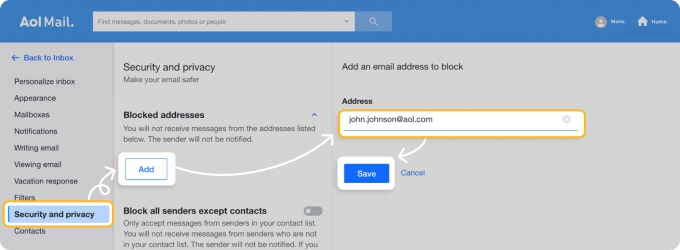
- Go to Security and privacy to manage blocked addresses, or Filters to review and manage your existing mail rules.
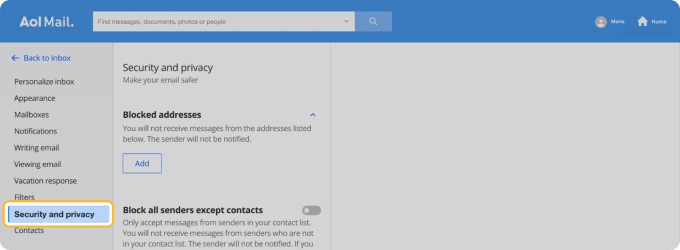
From there, you can:
- add or remove blocked addresses,
- turn on Block all senders except contacts,
- create filters based on sender, subject, or message content,
- send matching mail to a folder or Trash.
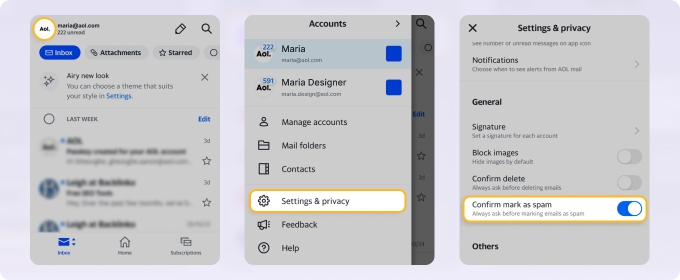
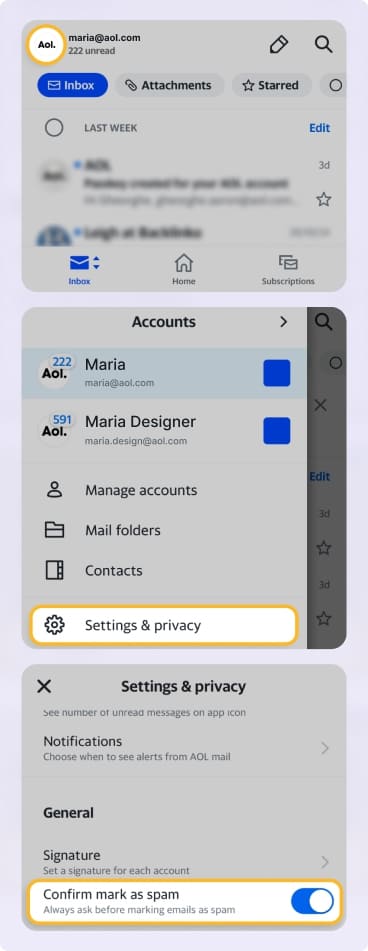
On mobile, spam filtering still works automatically, but the available settings are much lighter.
What to Use When AOL’s Built-In Tools Aren’t Enough
AOL’s native tools are enough for basic spam control, but they do have limits: only 500 filters, only 1,000 blocked addresses, and a lot of manual upkeep if the spam keeps changing.
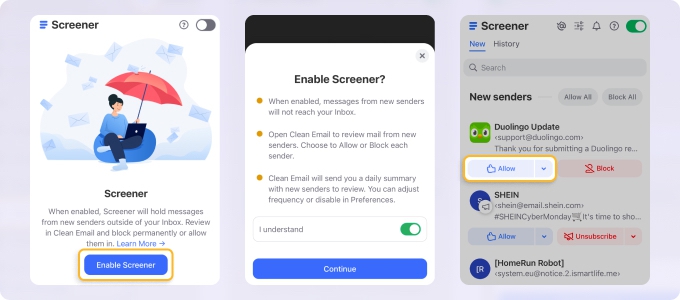
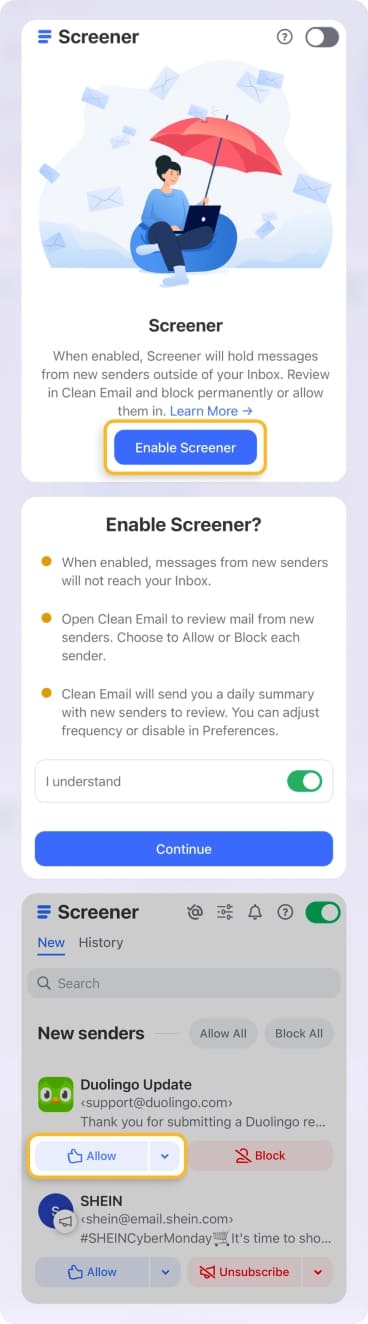
When AOL’s built-in spam controls stop being effective, a tool like Clean Email can add another layer of spam protection. Its Screener feature holds messages from new senders for review before they reach your inbox, which can be especially useful during spam surges or when unwanted mail keeps slipping past AOL’s native filter.
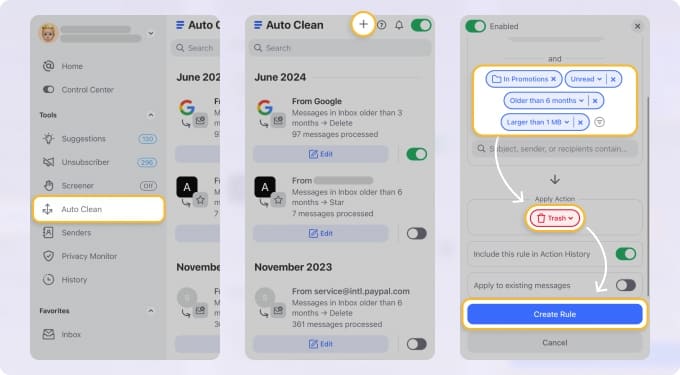
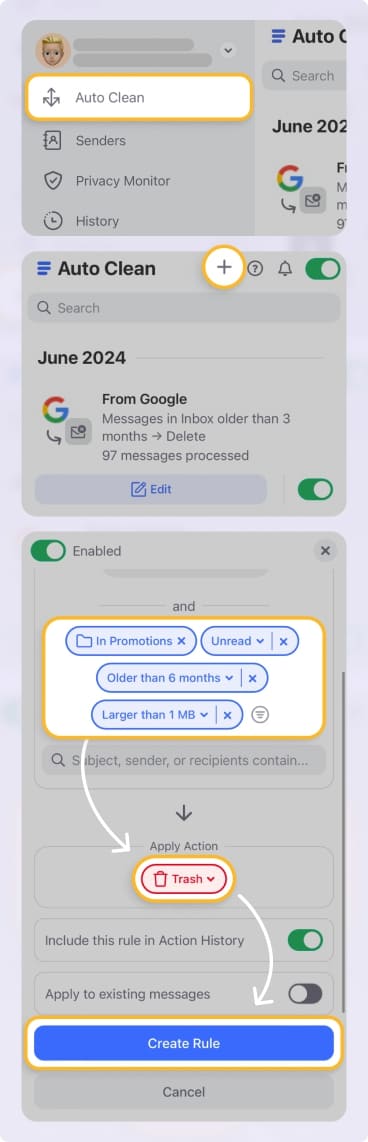
If you regularly hit AOL’s filter limits, Clean Email’s Auto Clean rules can also help handle repeated spam patterns without relying so heavily on AOL’s 500-filter cap.
When AOL Spam Filter Is Not Working
If junk email is landing in your inbox, the first step is simple: mark it as Spam instead of just deleting it. That gives AOL feedback and can help similar messages get filtered more accurately in the future.
If spam still gets through, review your filters and blocked-sender settings to make sure an old rule isn’t causing confusion. And if the problem is the opposite – legitimate emails going to Spam – mark them as Not Spam and follow our dedicated guide on how to stop emails from going to Spam in AOL Mail.
Be careful with unsubscribe links in suspicious emails. In obvious spam, clicking them can confirm that your address is active instead of solving the problem.
What to Do When You Hit the 500-Filter Limit
This is also one of the biggest AOL Mail pain points, so it should be handled early.
AOL allows up to 500 filters. Once you reach that limit, you can’t create another rule until you remove an old one.
If your AOL spam filter feels “full,” do this:
- Open Settings.
- Go to More Settings.
- Open Filters.
- Review your current rules.
- Delete filters you no longer need.
- Merge overly specific rules into broader ones where possible.
In real life, this problem usually shows up when people try to control spam from one sender at a time. That works for a while, but eventually the filter list fills up with outdated rules, duplicate patterns, and sender-specific fixes that no longer help.
A better approach is to save AOL’s limited filters for recurring patterns that matter, not every random spam address that appears once.
What to Do If AOL Flagged Your Email as Spam
This is a different issue from receiving too much spam.
If you run a business, send newsletters, or use your own domain and AOL users aren’t receiving your messages, the problem is usually on the sender side. In other words, AOL may be treating your mail source as suspicious.
If your mail is getting flagged, start by checking your email authentication and taking a hard look at your recent sending activity. A sudden spike in volume, aggressive campaigns, or weak setup can all cause problems.
If nothing obvious stands out, ask your mail administrator to investigate or contact AOL Postmaster support. This is a deliverability issue, not something most regular AOL users can fix from mailbox settings.
How to Train AOL’s Spam Filter
One of the few things users can directly influence is feedback. When junk lands in your inbox, mark it as Spam instead of just deleting it. When a legitimate message is filtered by mistake, mark it as Not Spam.
That helps AOL better understand what belongs in your inbox over time.
Need to Block a Specific Sender?
AOL also lets you block specific senders in Settings → More Settings → Security and privacy. This is useful for repeat senders, but it’s less effective against spam campaigns that rotate addresses.
For the full step-by-step process, see our guide on how to block emails on AOL.
Extra AOL Spam Protection Recommendations
If you’ve already adjusted settings and trained the filter, these habits still help:
- Don’t post your main email address publicly more than necessary.
- Use separate addresses for shopping, newsletters, and personal communication.
- Review your filters once in a while so old rules don’t keep causing problems.
- Avoid clicking suspicious links in spam messages.
- If you suddenly get flooded with junk, check your bank, shopping, and account-security emails too – sometimes spam floods are meant to hide a real alert.
FAQs
What should I do if the total number of spam filters has reached 500 in AOL?
Delete outdated or redundant rules in Settings → More Settings → Filters. Once you reach AOL’s 500-filter limit, you have to remove old filters before adding new ones.
Why is my AOL email getting so much spam?
Usually because your address was exposed through leaks, sign-ups, purchases, or public posting online. In some cases, a sudden spike can also be part of a spam bombing attack.
How do I report spam email to AOL?
On the web, open the message, click the Spam button at the top of the screen. In the AOL mobile app, open the message, tap the three-dot menu, and select Mark as spam.
Can I turn off the spam filter in AOL Mail?
For most users, no practical “off” setting is available. AOL Mail’s spam protection should be treated as always on, with user control focused on filters, blocked senders, and spam reporting.
What if AOL is blocking my legitimate outgoing email?
That usually points to a sender-reputation or mail-server issue. In that case, check your authentication and sending setup or work with your mail administrator.