1. Try Google Gemini
With Google Gemini, you can use AI to increase your productivity in Gmail (as well as other Google apps.) For emails, you can summarize message threads, receive suggestions for replies, create email drafts, locate details from received messages, and my personal favorite, search using natural language.
📌 With Gmail open, simply click the Gemini icon on the top right and enter a prompt or select a preset in the sidebar.
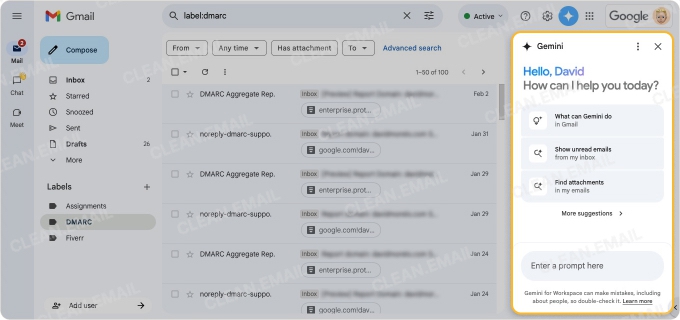
For businesses, Gemini is part of Google Workspace plans, and for individuals, you can use Gemini with a Google One AI Premium subscription. It can be accessed via the browser and as Gmail AI on iPhone and Android.
Read more about how safe Gemini is.

2. Integrate Third-Party Tools
Beyond Google Gemini, you can check out more affordable third-party tools to optimize Gmail productivity. Although not an AI add-on like Gemini, Clean Email is my preferred supplementary tool for effectively managing messages.
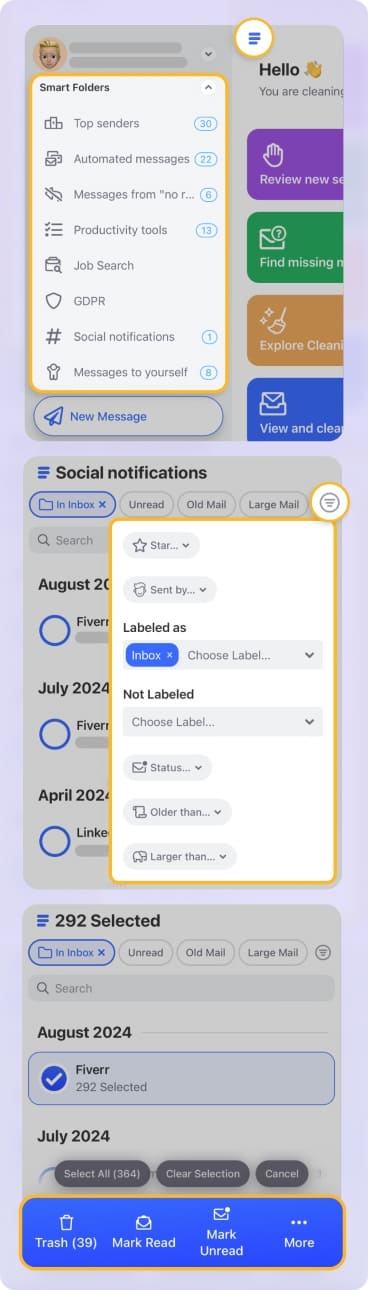
Clean Email provides these smart features for intuitive, time-saving mailbox management:
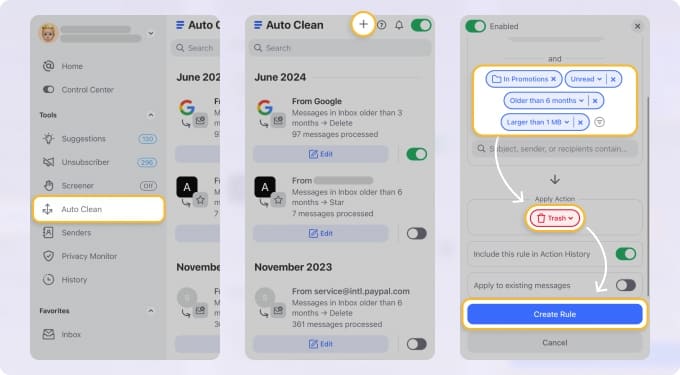
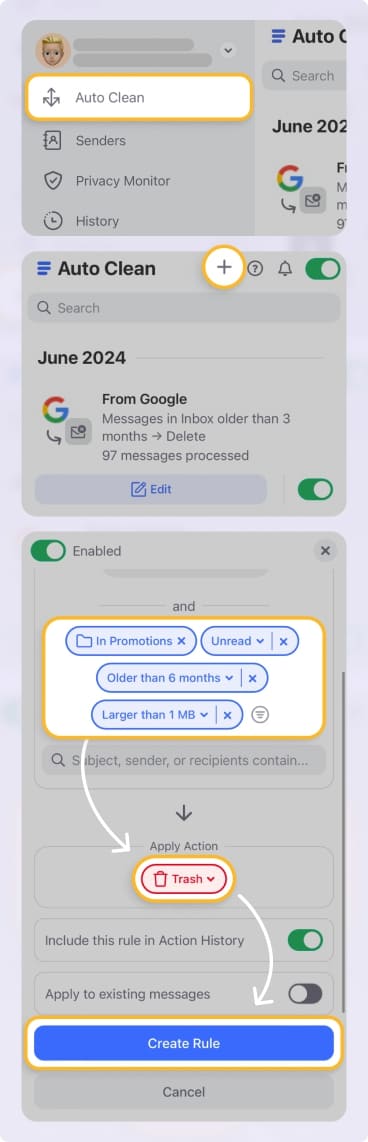
- Auto Clean for creating custom inbox rules to do things like move, mark, archive, or delete emails automatically.
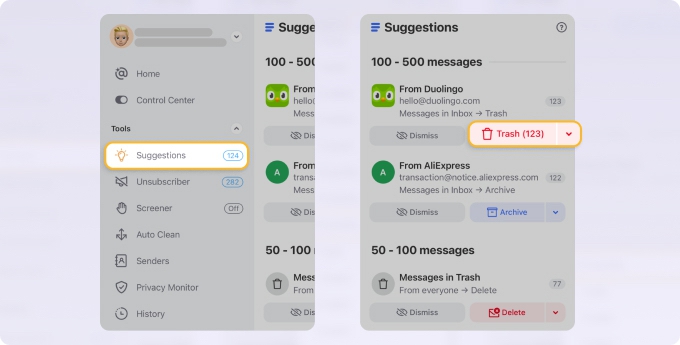
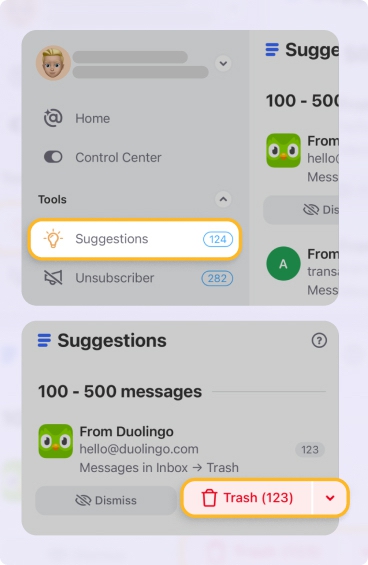
- Cleaning Suggestions for receiving recommendations on tidying up your inbox.
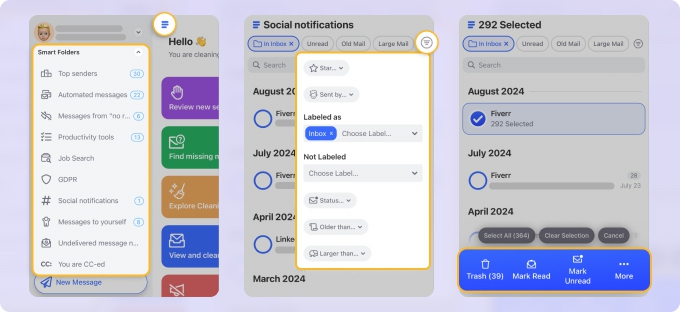
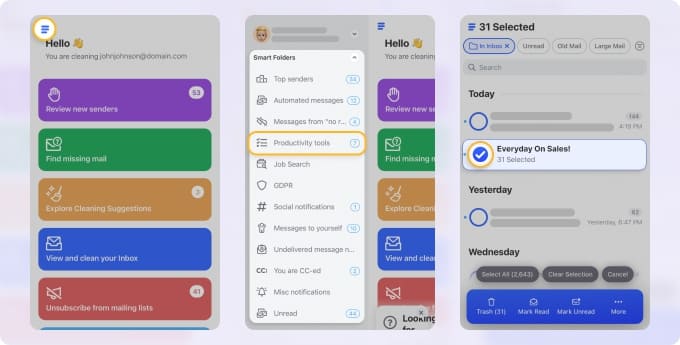
- Smart Folders which are pre-made folders that automatically filter related emails.
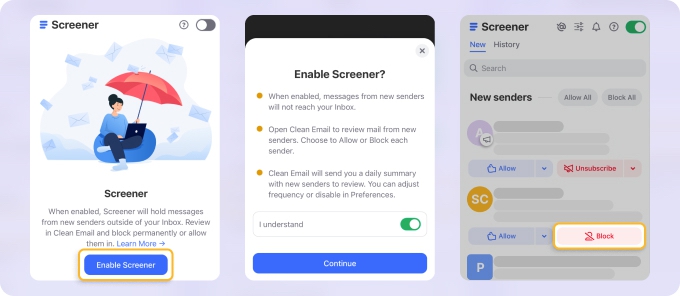
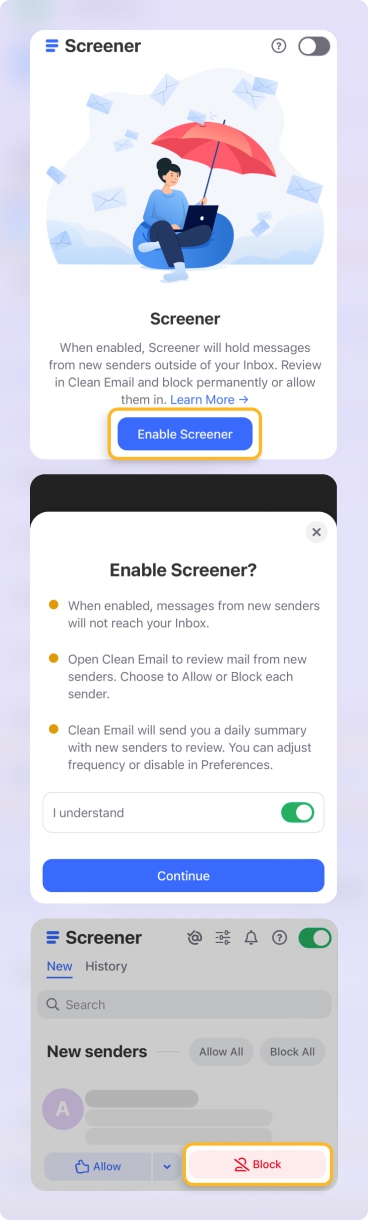
- Screener for reviewing messages from unknown senders before they enter your inbox and then allowing or blocking them.
…and many more!
Best of all, it’s available for Gmail and other IMAP email accounts on the web, Mac desktop, iOS and Android devices.
3. Create Email Templates
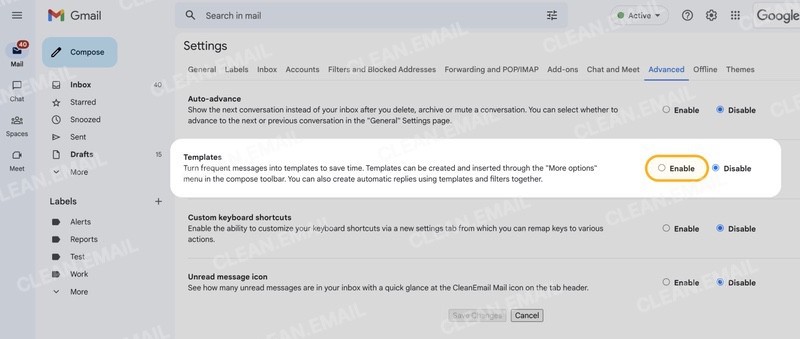
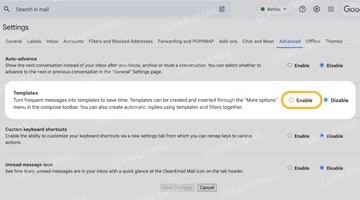
One of the best Gmail tips and tricks I use for saving time is setting up email templates. You can create reusable templates for messages you compose often and then make minimal adjustments if needed. As a bonus, you can create templates for automatic replies when you set up Gmail filters.
📌 To enable the feature in the Gmail Settings, go to the Advanced tab, choose Enable next to Templates, and click Save Changes at the bottom.
4. Set Up Multiple Inboxes
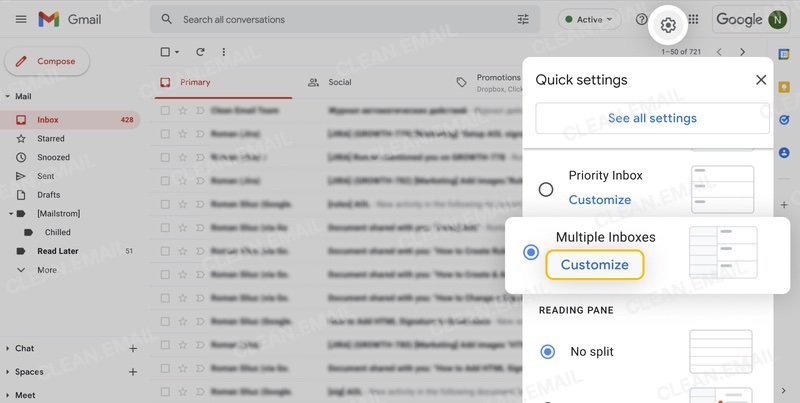
If you often look for emails with a particular label, that have a star, or are saved to your drafts, you can set up multiple inboxes for these types of groups and others.
This allows me to see up to five groups all conveniently in one spot when I open my inbox.
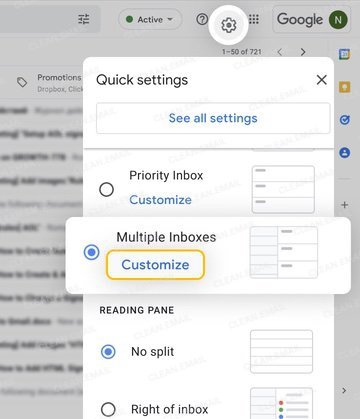
📌 Head to the Gmail Settings and select the Inbox tab. At the top, choose Multiple Inboxes in the drop-down menu and then enter the search criteria for the groups you want to see. Hit Save Changes when you finish to see your inbox refresh with the updated layout.
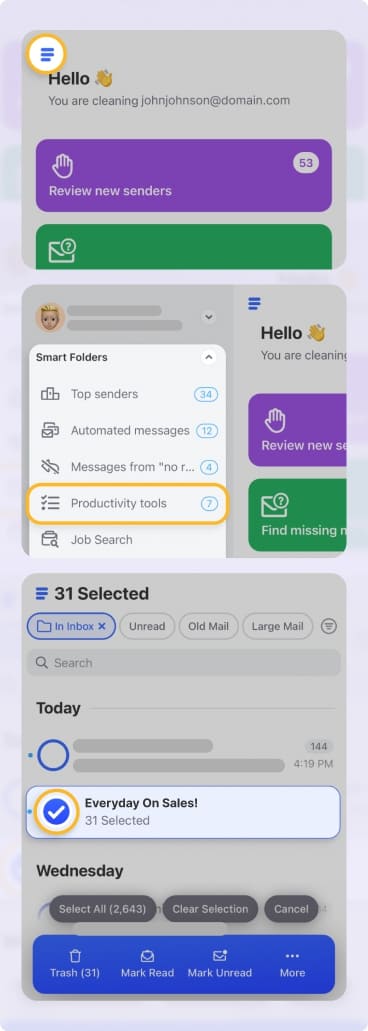
💡 Tip: With Clean Email’s Smart Folders, you can easily view related emails filtered into folders automatically for you! There’s no set up or the need for search criteria. Just expand Smart Folders in the menu and pick a folder to review.
5. Show the Unread Message Count
Because Gmail doesn’t currently offer an official desktop app, do you may keep the application open in your web browser all day like I do? One of those simple Gmail tricks that can be super helpful in this situation is the ability to show an unread message count in the Gmail tab of your browser.
The nice thing about this is that you don’t need to use a specific browser like Google Chrome or install an extension.
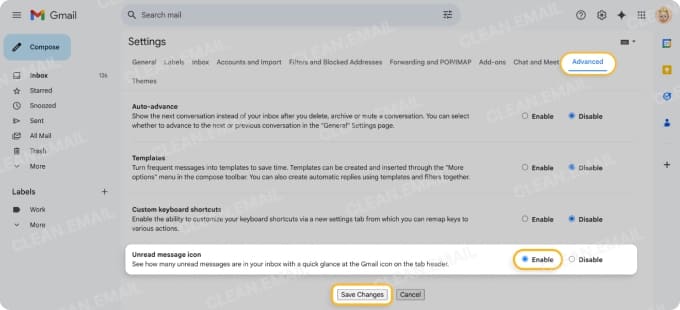
📌 To turn on this feature, visit your Gmail Settings and select the Advanced tab. Next to Unread message icon, choose Enable and then click Save Changes at the bottom.
You’ll then see the number of unread emails you have in the browser tab where Gmail is open.
6. Customize the Stars or Indicators
Another useful Gmail tip is if you’re in the habit of marking important messages you receive. For better email management, you can customize the stars and indicators available in Gmail.
For instance, I use a yellow star for emails I want to read later and a red star for those that need research before I reply.
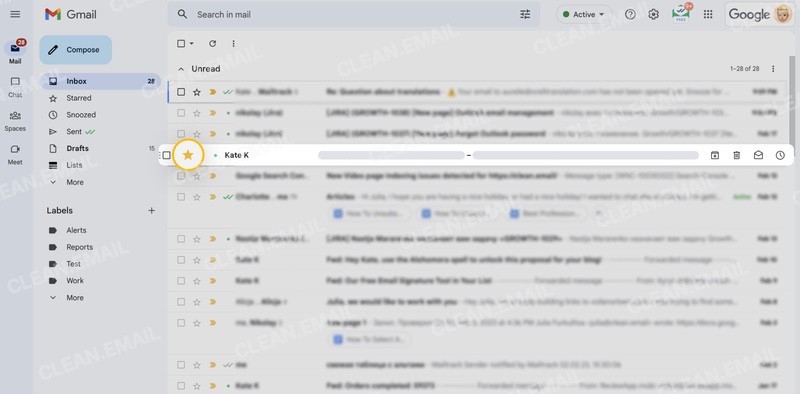
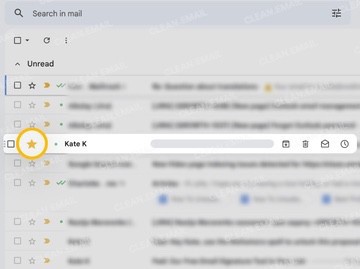
Along with six different star colors in Gmail are six unique icons. You can try them all or choose only the ones you want to use.
📌 In the Gmail Settings, go to the General tab, and move down to the Stars section. Then, either choose a preset or drag the stars or icons you want to the In use row with those you don’t want in the Not in use row. Click Save Changes at the bottom.
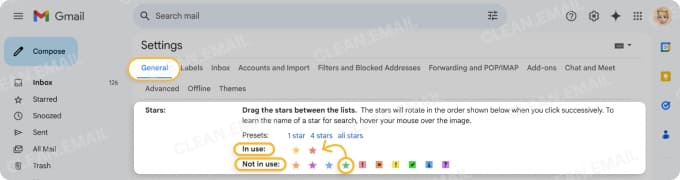
To rotate between the stars and icons you pick, simply click the star icon for an email. With each click, you’ll see the next star or icon in your list.
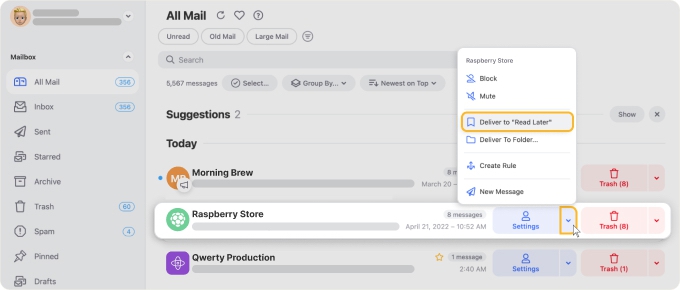
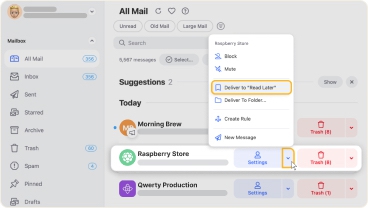
💡 Tip: For designating emails that you want to read when you have more time, check out Clean Email’s Read Later feature. You can manually or automatically deliver messages to this section and then head to Read Later to see the emails in one handy place.
7. Enable Nudges to Follow Up
The Nudge feature in Gmail has been around for some time. While some users find it distracting, I actually find it a useful one. And you will too if you need a little help with email follow-ups.
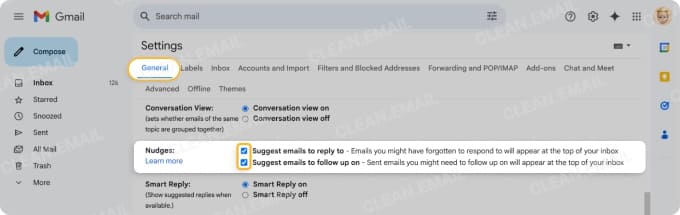
When you enable Nudges in Gmail, you’ll receive a banner-type message in your inbox reminding you to reply to important emails or follow up on sent messages where you haven’t received a reply. And the feature is available for both businesses and individuals.
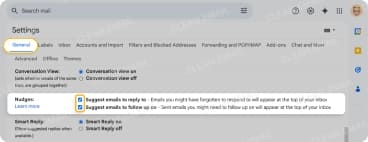
📌 What’s great about this feature is that you can turn it on to try it out or turn it off if it’s not for you. Open your Gmail Settings, head to the General tab, choose the suggestions you want to use in the Nudges section, and click Save Changes.
8. Share Your Calendar Availability
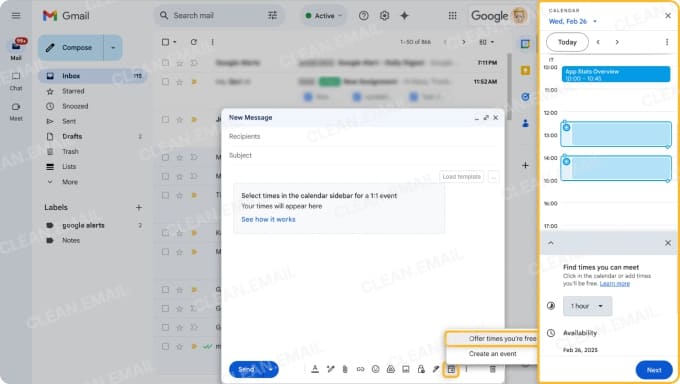
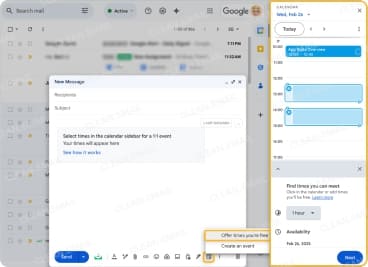
To avoid the back-and-forth with planning events, I use this next feature that integrates Google Calendar with Gmail. Not only can you create an event directly from an email, but even better, insert and send the dates and times you’re available. Your recipient can then simply pick one of your times and you’re both set.
📌 You’ll see this convenient option when you compose or reply to an email. Click either the Calendar icon or More options menu at the bottom of a message. Choose Offer times you’re free and follow the prompts to add your availability to the email.
9. Turn On Hover Actions
Many times, you want to take an immediate action on an email you see in your message list. With hover actions in Gmail, you can perform email triage by archiving, deleting, marking, or snoozing an email without even opening it. This simple trick helps me move through my inbox to quickly take care of messages.
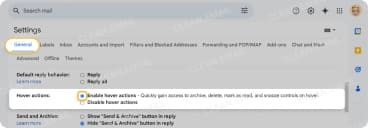
📌 To turn on hover actions, open the Gmail Settings and go to the General tab. Choose Enable hover actions in the same named section and click Save Changes at the bottom.
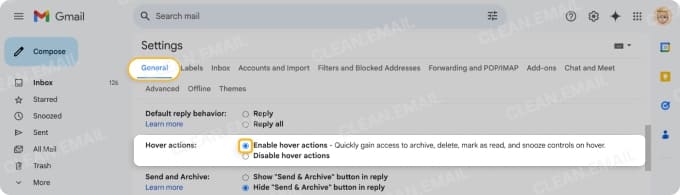
When you return to your inbox, hover your cursor over an email and select one of the actions that display to the right.
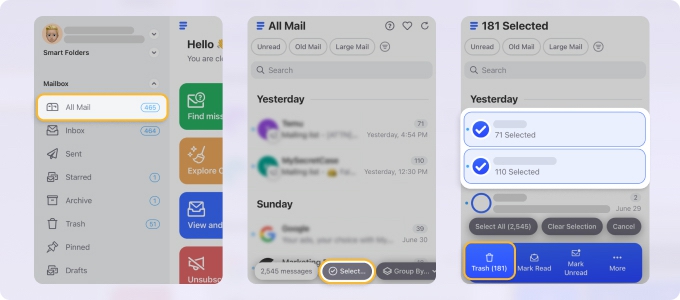
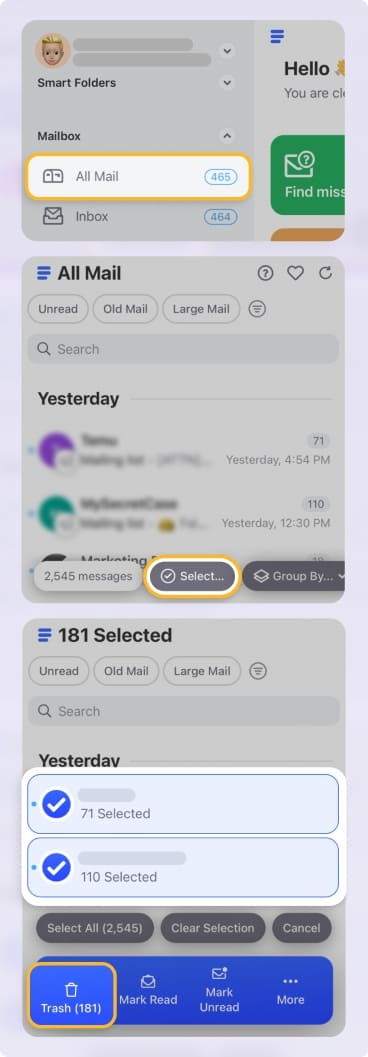
💡 Tip: Prefer to manage messages in bulk to stop email overwhelm? With Clean Email, you can easily act on multiple messages without the need to continue loading more emails like in Gmail. Simply use the Select or Select All option at the top of your mailbox and then choose an action for those messages!
10. Use Layouts for Business Emails
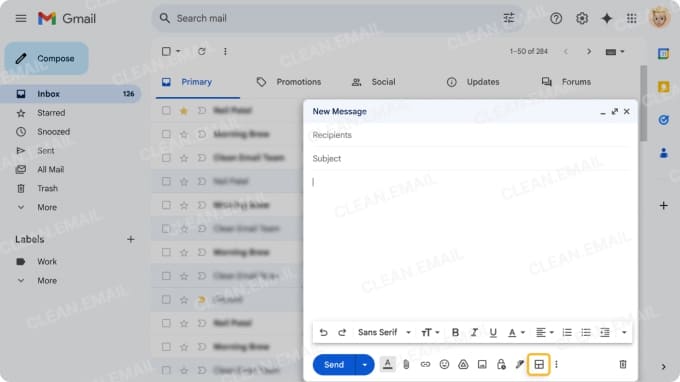
This final item in my list of Gmail tips and tricks is ideal if you use the application for business with a Google Workspace account. You can insert a layout in a new email for an announcement, service, newsletter, or referral. Once you pick the layout you want, you can customize it for your particular company and purpose. You can also save layouts to reuse later.
📌 In the Compose window, click the Select a Layout icon at the bottom. Then, choose the layout, edit it to your liking, and insert it in the message.
11. Master Gmail Search Operators
Gmail’s search bar can do far more than match a name or keyword. Search operators are short commands that tell Gmail exactly what to look for, so you can pull a single email out of thousands in seconds instead of scrolling.
An operator is the command followed by a variable, like is:unread or from:. The real power comes from combining them – just separate each operator with a single space.
📌 Type these directly into the Gmail search box:
- from:amazon.com – everything from a sender or domain
- to:me – messages addressed directly to you
- subject:invoice – a word in the subject line
- has:attachment or filename:pdf – emails with attachments, narrowed by file type
- is:unread – messages you haven’t opened
- label:receipts – emails under a specific label
- older_than:6m / newer_than:2w – relative date ranges
Syntax matters: a typo, a missing colon, the wrong case on OR, or a missing space in a combination can return zero results. Combine operators for precision, for example from:amazon.com has:attachment older_than:1y.
💡 Tip: For the full list of 50+ commands with real-world examples, see our guide to Gmail search operators and how to combine them. Clean Email’s own search and Smart Folders complement native Gmail search by grouping messages (by sender, size, age, or topic) so you can act on a whole batch at once rather than one operator query at a time.
12. Learn a Few Keyboard Shortcuts
If you live in your inbox, keyboard shortcuts are the single fastest way to speed things up. Gmail offers more than 70 of them, and they cut down the repetitive mouse movement that strains your hand and wrist over a long day.
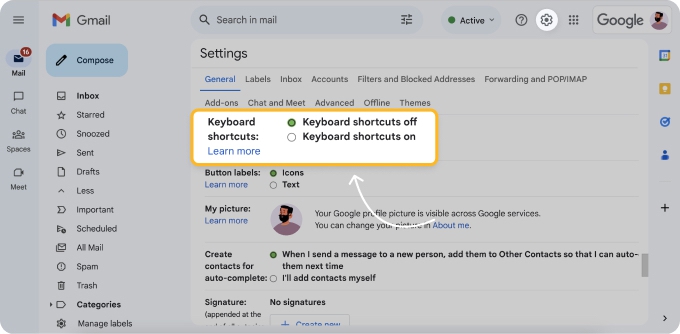
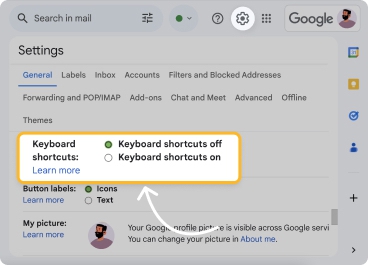
📌 Turn them on first: click the Settings gear, choose See all settings, scroll to the Keyboard shortcuts section, select Keyboard shortcuts on, and click Save Changes at the bottom.
Then start with these:
- c – compose a new email
- e – archive the selected message
- / – jump to the Search box
- r – reply, a – reply all, f – forward
- l – open the Label As menu
- # – delete the selected message
- ? – open the full shortcut cheat sheet anytime
13. Use the Plus (+) Trick to Create Instant Aliases
One of the simplest Gmail tricks is also one of the most underused: add a plus sign and any word to your address to create an instant alias. Gmail ignores everything after the +, so mail sent to johndoe+shopping@gmail.com still lands in johndoe@gmail.com but now it's tagged in a way you can sort and track.
📌 When you sign up for something, enter your address with a +keyword before the @, for example yourname+newsletters@gmail.com or yourname+banking@gmail.com. Every message to that variation arrives in your normal inbox, and you can filter on the alias to route it automatically or spot exactly who leaked or sold your address.
A couple of limits worth knowing: plus-sign aliases work for receiving mail only, and some websites reject the + symbol at signup. Your real address can also still appear in message headers.
14. Undo Send and Schedule Send
Gmail gives you control over the timing of your outgoing mail on both ends: a short window to pull a message back after you hit send, and the ability to send later at a time you choose.
📌 Undo Send gives you a brief cancellation window. Go to Settings → See all settings → General, find Undo Send, and set the cancellation period (5, 10, 20, or a maximum of 30 seconds), then Save.
Right after you send, "Message sent" appears in the bottom-left corner with an Undo option; click it within your window and the email reopens as a draft. Miss the window and the message is gone for good.
📌 Schedule Send lets you write now and deliver later. On the web, click the dropdown arrow next to the Send button and choose Schedule send, then pick a preset (like tomorrow morning) or Pick date & time for a custom slot. Scheduled messages wait under the Scheduled label in the left menu, where you can edit or cancel them before they go out.
💡 Tip: Undo Send only delays delivery, it can’t recall a message once the window closes. For the full rundown of what’s actually possible, see our guide on how to recall an email in Gmail.
15. Set Up Filters and Labels
Filters and labels are the backbone of an organized Gmail account. Filters automate what happens to incoming mail, and labels keep everything findable. Unlike traditional folders, Gmail labels let a single email carry more than one tag, so a receipt can live under both "Finance" and "Taxes" at once.
One catch: Gmail’s native filters don’t auto-update, need manual upkeep, and can’t be created from the mobile app – you'll need webmail or a third-party mobile app.
💡 Tip: For the full steps for creating filters and labels, check out our guides to filtering emails and automatically labeling emails in Gmail. Clean Email’s Smart Folders complement Gmail’s labels by grouping mail automatically without you having to build and maintain each filter by hand.
16. Catch Up on Long Threads with AI Overviews
The biggest change to Gmail in 2026 is Gemini 3-powered AI Overviews. Open a sprawling thread with dozens of replies and Gmail now condenses the whole conversation into a short card at the top. Conversation summaries are rolling out to everyone at no cost; the ability to ask questions about your inbox with AI Overviews is part of the paid Google AI Pro and Ultra tiers.
📌 When a thread is long enough to benefit, a summary card appears automatically above the messages. On the web you can also open a thread and use Gemini to summarize it and draft a reply in one step.
17. The New Manage Subscriptions View
In July 2025 Gmail added a dedicated Manage Subscriptions view – a single screen that lists every sender you’re subscribed to, ranked by how often they email you, with an Unsubscribe button next to each. It’s the fastest native way to see who’s flooding your inbox.
📌 On the web, open the left-hand menu and go to More → Manage subscriptions. You’ll see each sender’s name, address, recent message count, and an Unsubscribe option, sorted by frequency.
💡 Tip: Gmail’s view still requires one unsubscribe action per sender, so a big cleanup takes a while. To see and remove many at once, Clean Email’s Unsubscriber handles bulk unsubscribes and can pause or screen senders too – compared side by side in this guide to seeing all your Gmail subscriptions.
18. Draft and Polish Emails with Help Me Write
Gmail’s AI writing tools moved from experiment to everyday in 2026. Help Me Write drafts a message from a one-line prompt, and Proofread cleans up grammar and tone before you send. Help Me Write is now free for everyone; Proofread sits in the Google AI Pro and Ultra plans.
📌 Open a compose window and click the Help me write (pencil) button, type what you want to say, and click Create. Then use Refine, Formalize, Elaborate, or Shorten to tune the draft. Polishing a rough draft this way is almost always faster than writing from scratch.
Our walkthrough of how to use Gemini AI in Gmail has real-world before-and-after examples of Help Me Write and the refine options.
19. Search Your Inbox in Plain Language
You no longer need to remember operators to find an email. Since 2025 Gmail’s "Most Relevant" search ranks results by context (your frequent contacts, most-opened messages, and content) instead of strictly by date, and Gemini lets you search in plain language. Google is extending this toward voice-driven, conversational search in the inbox through 2026.
📌 Tap the Gemini icon in the top-right (no separate app needed) and type or ask a natural-language question, or just search normally and let Most Relevant reorder the results.
20. The New AI Inbox
Google’s most ambitious 2026 change is AI Inbox, a new view that reorganizes Gmail around summaries, topics, and to-dos rather than a flat list of individual messages. It’s rolling out gradually, so treat it as an option to try rather than a switch that’s already flipped for every account.
📌 When AI Inbox reaches your account, you’ll be able to switch to it from Gmail’s inbox views. It groups related messages and pulls out action items automatically; you can still fall back to your standard inbox at any time.
21. Skim Your Inbox on Mobile with Gemini Summary Cards
If you triage email on your phone, Gemini summary cards in the Gmail app (rolled out for Android and iOS in 2025) give you the gist of a long message or thread right at the top, so you can decide whether to act now or later without reading every line.
📌 In the Gmail mobile app, open a long email or thread and tap the summary card at the top to expand Gemini’s bulleted rundown of the key points. If the card doesn’t appear, the message likely isn’t long enough for Gmail to summarize.
💡 Tip: Mobile AI features are lighter than the desktop set – advanced search, voice, and some writing tools work better on the web. Our Gmail AI on iPhone setup guide covers exactly what’s available on mobile and how to turn it on.
Final Thoughts
With these tips for using Gmail to its full potential, you can save time and move onto other tasks faster. But remember that Gmail email tricks can only do so much to boost productivity.
Learn more about what Clean Email can do for your Gmail inbox and how you can better manage your mailbox with it!