Key Takeaways
- A sudden increase in spam may happen after your address appears in a data breach, gets shared by a site you signed up with, or ends up on more marketing lists.
- You can stop junk by blocking senders, marking messages as Spam or Not spam, and reviewing your Security and Privacy settings.
- False positives happen when Yahoo sends legitimate emails to Spam instead of your inbox.
- Yahoo Mail has a Spam folder on desktop and mobile, but filter settings are still easier to manage on desktop.
- Yahoo automatically deletes messages in the Spam folder after 30 days.
How the Yahoo Spam Filter Works
The Yahoo Mail spam filter automatically scans incoming messages before they reach your inbox. This filtering happens server-side, which means Yahoo evaluates mail on its own systems rather than only on your phone, tablet, or computer.
To decide whether a message belongs in your inbox or Spam, Yahoo looks at signals like sender reputation, sending patterns, message content, and broader abuse trends across the Yahoo Mail network.
That larger network matters because when many users keep reporting the same sender or campaign as spam, Yahoo gets stronger evidence that similar messages should be filtered more aggressively.
Like any spam filter, it is not perfect. Some junk messages still get through, while some legitimate emails get flagged by mistake. It is also important to know that the Yahoo spam filter does not work retroactively – if a spam email is already sitting in your inbox, improving the filter later will not automatically move that old message out.
One of the easiest ways to improve results is to keep marking unwanted messages as Spam and legitimate ones as Not spam. That feedback helps, but it usually takes repetition. One correction is not always enough, especially with persistent senders or borderline marketing messages.

What Yahoo’s Spam Filter Can’t Do
Yahoo’s spam filter is useful, but it has some limits that can frustrate users trying to fine-tune it.
For example, Yahoo does not give you a true keyword-based spam blocking system, and it does not let you turn spam filtering into an automatic delete tool for all junk mail.
Many filtering actions are really about moving messages to Spam or to another folder, not permanently deleting them on arrival.
Mobile controls are also limited – while you can mark messages as Spam or Not spam in the app, more advanced filtering is easier on desktop, and iPhone users in particular do not get the same filter-rule flexibility that some Android or desktop workflows allow.
Free Yahoo Mail accounts also have tighter limits. Yahoo Mail Plus gives you more room for sender blocking – for example, higher blocked-address or domain limits than the free version – but it still does not turn Yahoo into a fully customizable anti-spam system. So upgrading may help at the margins, but it will not solve every spam problem on its own.
That means some spam problems are not caused by a broken Yahoo spam filter. They are simply outside what Yahoo’s built-in tools are designed to handle.
How Do I Filter Spam Better than Yahoo Can Offer?
If you want the closest thing to a more permanent fix, adding an extra screening layer helps most.
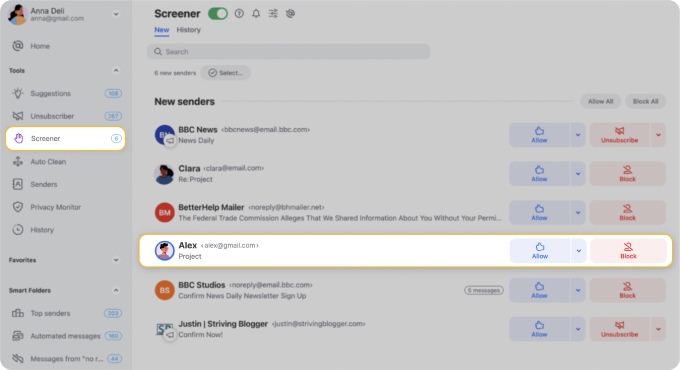
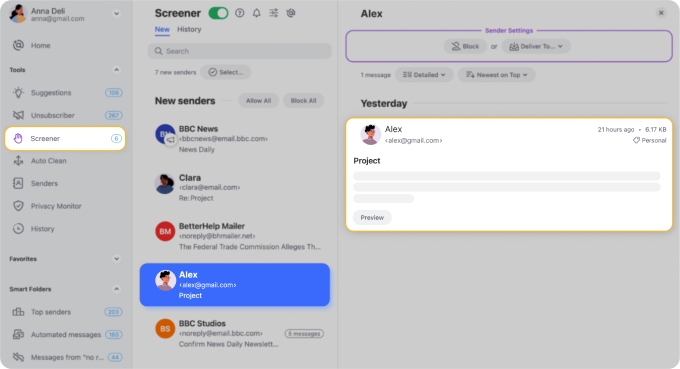
Clean Email’s Screener quarantines messages from unknown senders before they reach your inbox, which gives you more control than Yahoo’s default filter alone.
Here's how to enable Clean Email’s Screener feature:
- Navigate to https://app.clean.email/ and sign in.
- Select the Screener tool.
- Click the Enable Screener button.
- Review and confirm your understanding of how the tool operates, then click Continue.
- Personalize your Screener settings and click Enable Screener.
Now you can preview messages from unknown senders without actually opening them, so it doesn’t show that your account is active — which helps reduce spam.
In addition to its powerful Screener tool, Clean Email offers a range of other capabilities that help to stop spam emails in Yahoo. With features like Auto Clean, Smart Folders, and Cleaning Suggestions, the app provides a comprehensive solution for a clutter-free and spam-free email experience.
Why Is Yahoo Blocking Legitimate Emails?
Sometimes, you may notice that order confirmations, newsletters you actually want, or personal emails are ending up in Spam.
This is called a false positive, and it usually happens when Yahoo sees something suspicious in the sender’s reputation, email formatting, or sending behavior.
Here are a few things you can do if Yahoo is blocking legitimate emails:
- Open the message in Spam and mark it as Not spam.
- Add the sender to your contacts.
- Make sure the sender isn’t on your blocked list.
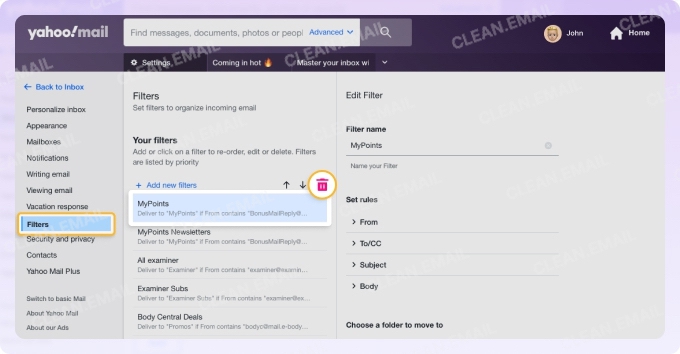
- Check whether a custom filter is moving those messages somewhere else.
To review those settings in Yahoo Mail, open the Settings gear, go to More Settings, then check Security and Privacy for blocked addresses and Filters for rules that may be misfiling messages.

If the same sender keeps getting flagged, it may be a sending-side issue rather than a Yahoo setting issue. In that case, the sender may need to review their email authentication or mailing practices.
💡 If a specific sender keeps slipping past Yahoo's filter, blocking them directly is the fastest fix. Messages from blocked senders should no longer appear in your inbox the same way, which helps you cut down on repeat junk from known sources.
Where Is the Spam Folder in Yahoo Mail?
If you want to review junk mail or rescue a legitimate email, you first need to know where the Spam folder is.
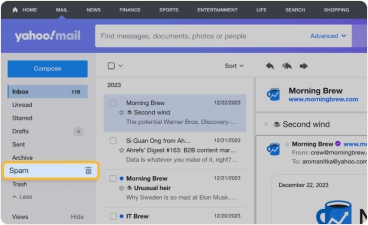
On desktop
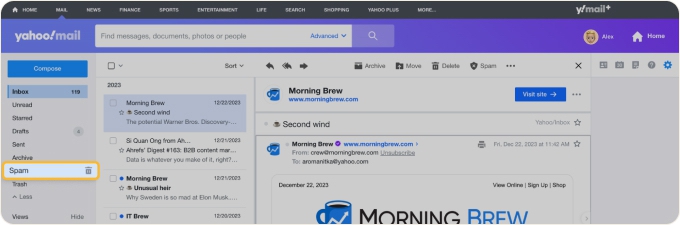
Open Yahoo Mail and look at the left-hand menu. You should see Spam listed there. If the sidebar is collapsed, expand it first.
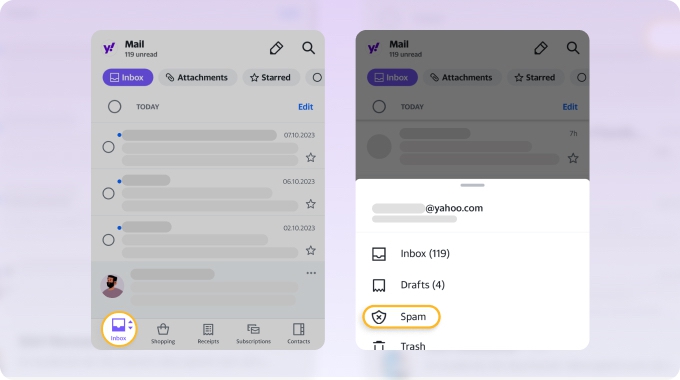
On iPhone or Android
Open the Yahoo Mail app, tap the Inbox icon on the bottom left, and look for the Spam folder in the folder list.
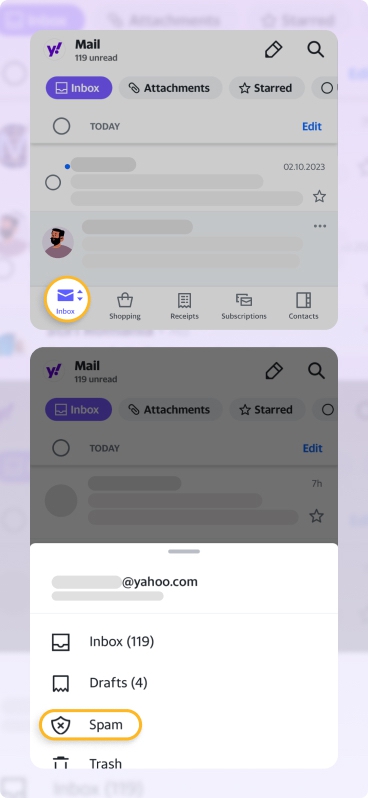
In the new Yahoo Mail interface
The Spam folder is still part of the main folder list, even if the layout looks a little different from older versions.
It is worth checking the folder regularly because false positives do happen – and Yahoo automatically deletes messages from Spam after 30 days, so waiting too long can mean losing an email for good.
Inbox Spam vs. Outbound Spam: Know Which Problem You Have
Most Yahoo spam problems involve unwanted messages landing in your inbox. But some users search for help because their Yahoo Mail account is sending spam they did not write.
These are two very different issues.
If spam is coming into your mailbox, you are dealing with filtering and sender control.
If messages are being sent from your account without your knowledge, that points to a possible account compromise, suspicious app access, or malware on one of your devices. In that case, you should change your Yahoo password immediately, review account recovery details, sign out of other sessions, and check recent account activity and connected apps.
FAQs
Does Yahoo have a spam filter?
Yes, Yahoo Mail includes a built-in spam filter that automatically tries to move suspicious messages to the Spam folder.
Why are legitimate emails going to Spam in Yahoo?
This usually happens because of false positives. Mark the message as Not spam, add the sender to your contacts, and make sure no custom settings are interfering.
Can you change Yahoo spam filter settings on mobile?
Yahoo’s mobile app gives you limited control. You can mark emails as Spam or Not spam, but more advanced filtering and sender management are easier to handle on desktop.